New to Shopify? Free trial, then $1/month for your first 3 months. Start free trial →
 Where is your store?
Ryviu works with both – pick yours to continue.








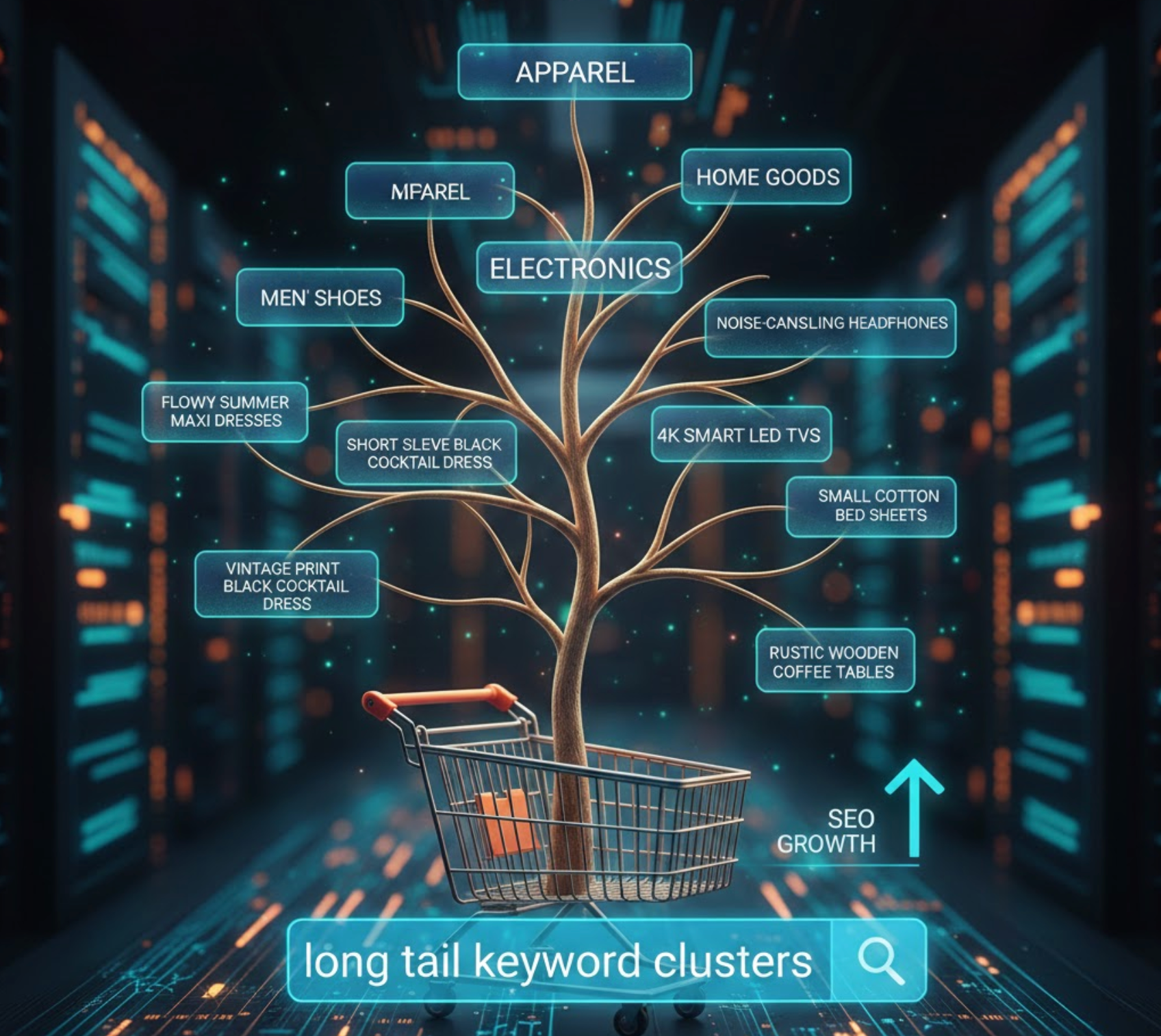
In today’s fast-changing eCommerce landscape, winning organic traffic is no longer just about ranking for a handful of broad, high-volume keywords like “fitness equipment” or “lip balm.” These keywords attract massive competition, require significant budgets to compete in ads, and often represent vague or early-stage search intent. As a result, many online stores struggle to break through, even with great products and well-designed websites.
To overcome this challenge, more businesses are shifting toward a smarter strategy, long-tail keyword clusters. This approach doesn’t just attract traffic; it attracts the right traffic. It allows eCommerce brands to meet customers exactly where they are in the buying journey and convert them at a significantly higher rate. By mastering keyword clusters, you create a scalable SEO foundation that strengthens your topical authority, improves your content quality, and enhances overall discoverability.
This guide will walk you through everything you need to know, from what keyword clusters are and why they matter, to how you can implement them step by step for real eCommerce growth.
To understand keyword clusters deeply, let’s break down the two parts:
Long-tail keywords are highly specific, descriptive, multi-word search phrases. Unlike broad keywords (e.g., “shoes”), long-tail keywords go deeper into characteristics, use cases, buyer concerns, and preferences. Because of this, they reflect clear purchasing intent.
Examples of long-tail keywords include:
These searches usually come from people who already know what they want, making them more likely to buy.
A keyword cluster is a collection of closely related long-tail keywords grouped under a shared topic or search intent. Instead of optimizing a page for one keyword, you optimize for a cluster—helping you rank for multiple variations at once.
For example, a cluster targeting “minimalist desk setup accessories” might include:
By grouping these keywords together, your content becomes more comprehensive and more relevant to search engines.
Because long-tail keywords rarely exist in isolation. Real customers phrase the same idea in multiple ways, and Google rewards content that understands and answers these variations. When you build keyword clusters, you create pages that appear relevant across a wide spectrum of searches. This increases traffic, authority, and conversion rates all at once.
Implementing keyword clusters offers benefits that go far beyond simple rankings. They create compounding SEO advantages that strengthen your store as it grows. Let’s explore these benefits in more detail.
Long-tail keywords typically represent shoppers who are moving closer to making a purchasing decision. For example, the difference between these two keywords is enormous:
Because clusters focus on these ready-to-buy users, the traffic they attract is more qualified, more focused, and more likely to convert.
Broad keywords are dominated by major retailers and global brands. If you are a growing eCommerce store, competing head-to-head with them is unrealistic. However, long-tail queries have much lower competition. When you cluster them, you can:
This creates upward SEO momentum that can significantly boost your entire website.
One of the greatest advantages of keyword clustering is scalability. Rather than relying on a few big keywords, your content can rank for dozens, or even hundreds, of variations within a cluster. As a result, you can:
This makes your SEO more stable and less vulnerable to algorithm changes.
Google increasingly rewards websites that demonstrate depth, expertise, and relevance within a topic. When you use keyword clusters:
This signals to search engines that your site is a trusted resource, making it easier to rank new pages later.
Long-tail cluster pages naturally answer more questions, provide more detailed information, and address multiple user scenarios. This leads to:
All of this contributes to improving both SEO performance and customer satisfaction.
Understanding the types of clusters helps you plan content more strategically. Let’s explore them more thoroughly with examples and explanations.
These clusters revolve around the specific qualities buyers search for, such as color, size, price, material, or feature.
Example: “gel memory foam mattress topper queen size”
Cluster variations:
These clusters are perfect for category pages, filtered collections, and detailed product pages.
These keywords come from users who have a specific pain point they want to solve.
Example: “humidifier for dry skin issues”
Variations include:
These clusters help you create highly strategic, trust-building content that bridges problems and your products.
Users search for comparisons when narrowing down their final choice. These keywords represent extremely high intent.
Example: “AirPods Pro alternatives for Android”
Variations:
These clusters work well for blog posts, buying guides, and reviews.
These focus on user constraints like pricing, quality, or brand preferences.
Example: “best gaming chair under $200”
Variations include:
These clusters are extremely conversion-driven.
These capitalize on holidays, cultural trends, or social media movements.
Example: “Christmas gift ideas for plant lovers”
Variations:
These clusters help you tap into high-demand cycles with precision.
To ensure a smooth process, here is a refined, detailed workflow with logical transitions between each step.
Begin by identifying the foundational pillars of your store, your product categories and subcategories. These serve as the seed topics that your clusters will grow from.
For example, if you sell home fitness equipment, seed categories might include:
These categories form the backbone of your cluster-building strategy.
Once you have your seed topics, the next step is gathering long-tail variations. These can be sourced from:
Use these to extract keywords that represent:
Collect as many variations as possible before grouping them.
Now that you have a list of long-tail phrases, group them based on shared intent. This step is crucial because correctly grouped clusters help you create focused, authoritative content.
For example, the seed keyword “yoga mat” may lead to clusters such as:
Each cluster represents a unique user need that can become its own page, section, or article.
Once clusters are defined, assign each one to a specific type of content or page:
This ensures that every cluster directs users to the right destination, enhancing both SEO and conversion potential.
To help search engines understand your site structure, link:
This creates a tightly connected network of content, improving crawlability and topical authority.
To maximize the effect of your keyword clusters, apply them across multiple parts of your site.
Integrate clusters naturally into:
This helps category pages rank for multiple variations of the same search intent.
Use long-tail clusters to enrich product pages with:
This supports SEO while helping customers make informed decisions.
Content like tutorials, comparisons, and solution-focused posts can target clusters such as:
These articles help drive valuable informational traffic toward product pages.
Create curated collections such as:
These collections convert extremely well because they align perfectly with long-tail intent.
To ensure your keyword clustering strategy delivers lasting, scalable results, it’s important to apply a set of consistent best practices. These guidelines help you maintain clarity, improve ranking potential, and ensure that each cluster contributes meaningfully to traffic, user experience, and conversions.
To maximize relevance, every page should focus on one primary keyword cluster rather than mixing multiple unrelated topics. This helps Google understand the page’s core intent and prevents content dilution. By keeping each page tightly aligned with one cluster, you strengthen topical authority and ensure your content answers user needs thoroughly and clearly.
Search engines reward content that reads organically, so long-tail variations should flow smoothly throughout the page. Instead of inserting keywords mechanically, weave them into headings, explanations, FAQs, and product descriptions in a conversational tone. This enhances readability, builds trust with users, and helps your content rank for a broader range of related queries.
To fully address the search intent behind each cluster, enhance your pages with valuable content blocks such as comparison tables, FAQs, benefit breakdowns, troubleshooting tips, and smart shopping filters. These structured elements help answer multiple query variations within the cluster, making your page more comprehensive and more likely to rank for long-tail searches.
Over time, customer interests evolve, new competitors emerge, and search behaviors shift. Refresh your cluster pages every three to six months to keep them aligned with current trends, new products, updated pricing, and emerging user questions. Regular updates signal freshness to Google and help maintain long-term ranking stability.
Every keyword cluster should ultimately connect users to relevant products. Make sure the content naturally leads visitors toward the items you sell through strategically placed internal links, curated product lists, and contextual recommendations. This ensures your SEO traffic not only increases visibility but also contributes directly to conversions and revenue growth.
To help you visualize how clusters work in real scenarios, here are some practical examples.
Main Topic: “Vegan Skincare for Sensitive Skin”
Cluster includes:
This cluster helps your blog attract traffic from buyers seeking safe, gentle skincare solutions.
Main Collection: “Travel-Friendly Hair Tools”
Cluster may include:
This collection answers practical problems for travelers and converts extremely well.
In an era where competition is fierce and customer expectations are more specific than ever, long-tail keyword clusters help you compete smarter. Instead of chasing vague, high-competition keywords, you can target precise customer needs, earn trust, and convert significantly better. Over time, these clusters build a strong, interconnected SEO ecosystem that boosts your authority, drives consistent organic traffic, and supports every stage of the buyer's journey.
By structuring your content around intent-based clusters, you enhance your visibility, improve user satisfaction, and create a long-term SEO engine that continues delivering value as your store grows.