New to Shopify? Free trial, then $1/month for your first 3 months. Start free trial →
 Where is your store?
Ryviu works with both – pick yours to continue.









One of the key elements affecting the long-term success of your brand is its dependability, reliability, and trustworthiness.
The fact that 88% of consumers feel driven to act after carefully reading positive evaluations about a business and 90% of customers read reviews before making a purchase shows the significance of brand reviews.
However, reviews are not that easy to acquire. There are many product reviews apps to install. In this article, I’d like to talk about Ryviu and Stamped.io, and why you should use Ryviu instead of Stamped.io.
Rating: 4.9
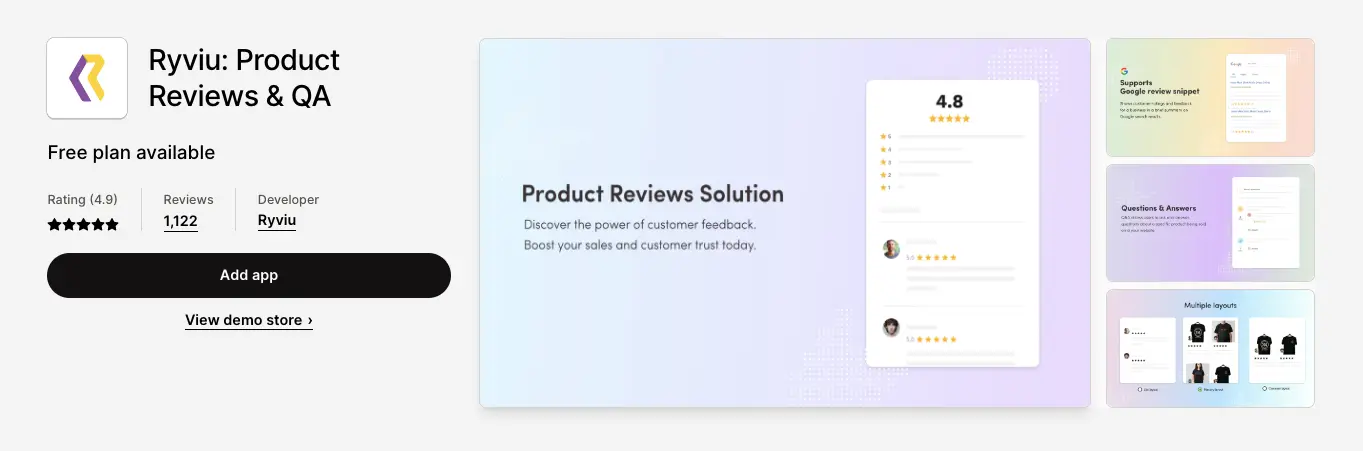
Ryviu is a platform for user product reviews that helps stores quickly and easily establish social proof. Your conversion and sales are aided by it. Both free and paid memberships are available. You can save 25% on the annual total charge if you upgrade your account to an annual plan.
Here are the hilight features of Ryviu:
Rating: 4.7
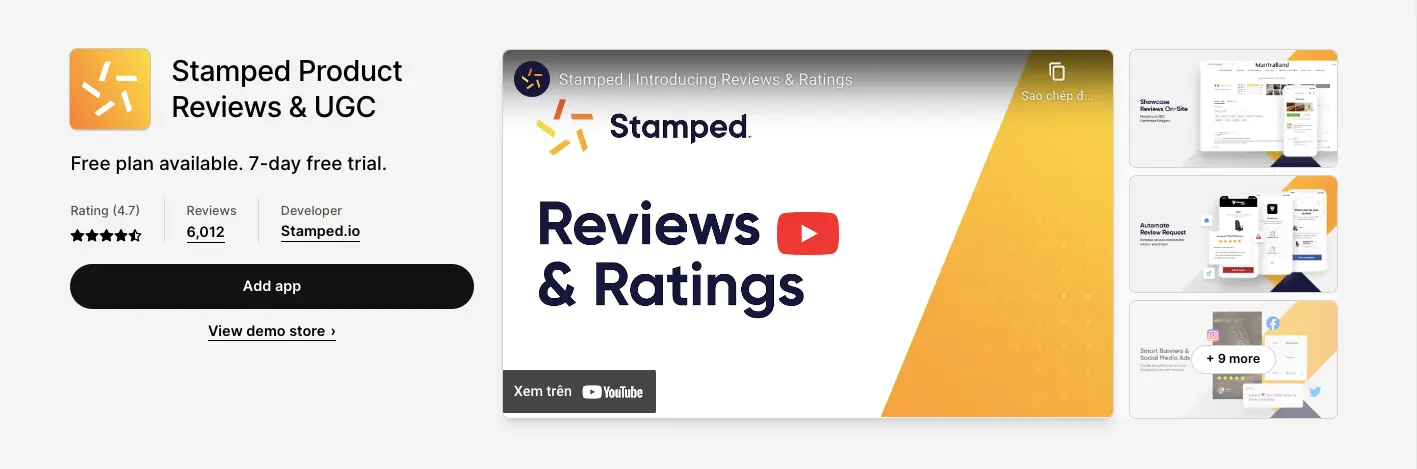
Stamped helps you to collect reviews from customers. It enables you to send emails to gather reviews with photographs, display reviews, and have Q&A sessions on your store. Moreover, it offers Free and Paid membership:
Basic: $23/month
Premium: $59/month
Business: $149/month
Here is a list of features available with Stamped.io:
With the above reasons and the rating shown on Shopify store through user reviews, I believe that you can see the benefits that Ryviu brings to you. Ryviu is a better choice.
If you have any feedback or suggestions for service improvement, please contact us.