New to Shopify? Free trial, then $1/month for your first 3 months. Start free trial →
 Where is your store?
Ryviu works with both – pick yours to continue.








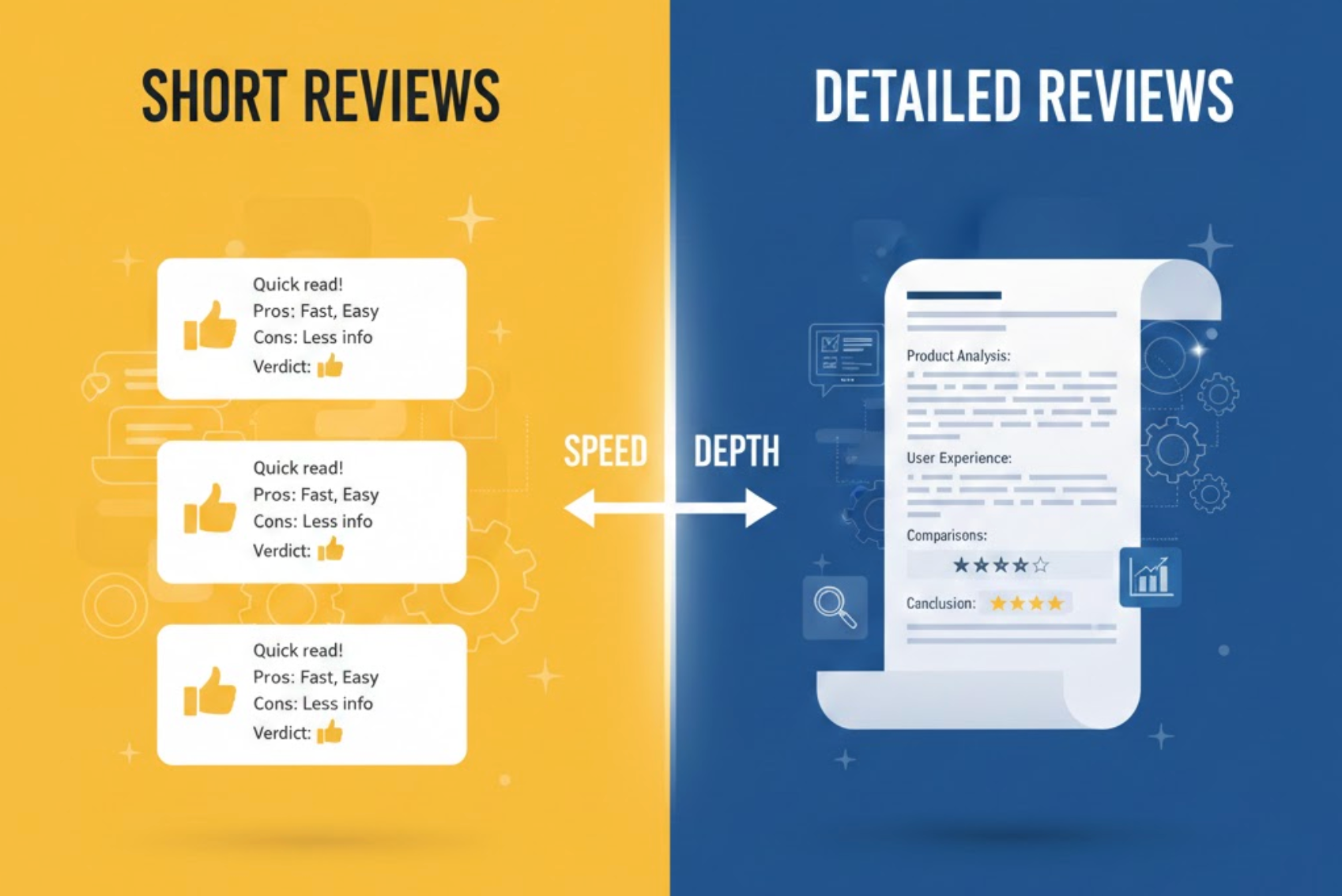
Customer reviews are no longer just a “nice-to-have” feature on eCommerce websites, they are a core conversion driver. In a crowded market where products often look similar and pricing differences are minimal, reviews become the deciding factor that pushes shoppers toward or away from a purchase.
However, not all reviews influence buying behavior in the same way. Some shoppers rely on short, punchy feedback to validate their decision quickly, while others seek long, detailed reviews to reduce uncertainty and perceived risk. Understanding how these two review types perform, and how they complement each other, can give brands a clear competitive advantage.
So the question is not simply whether short or detailed reviews convert better, but how and when each type works best within the buyer journey. Let’s break it down.
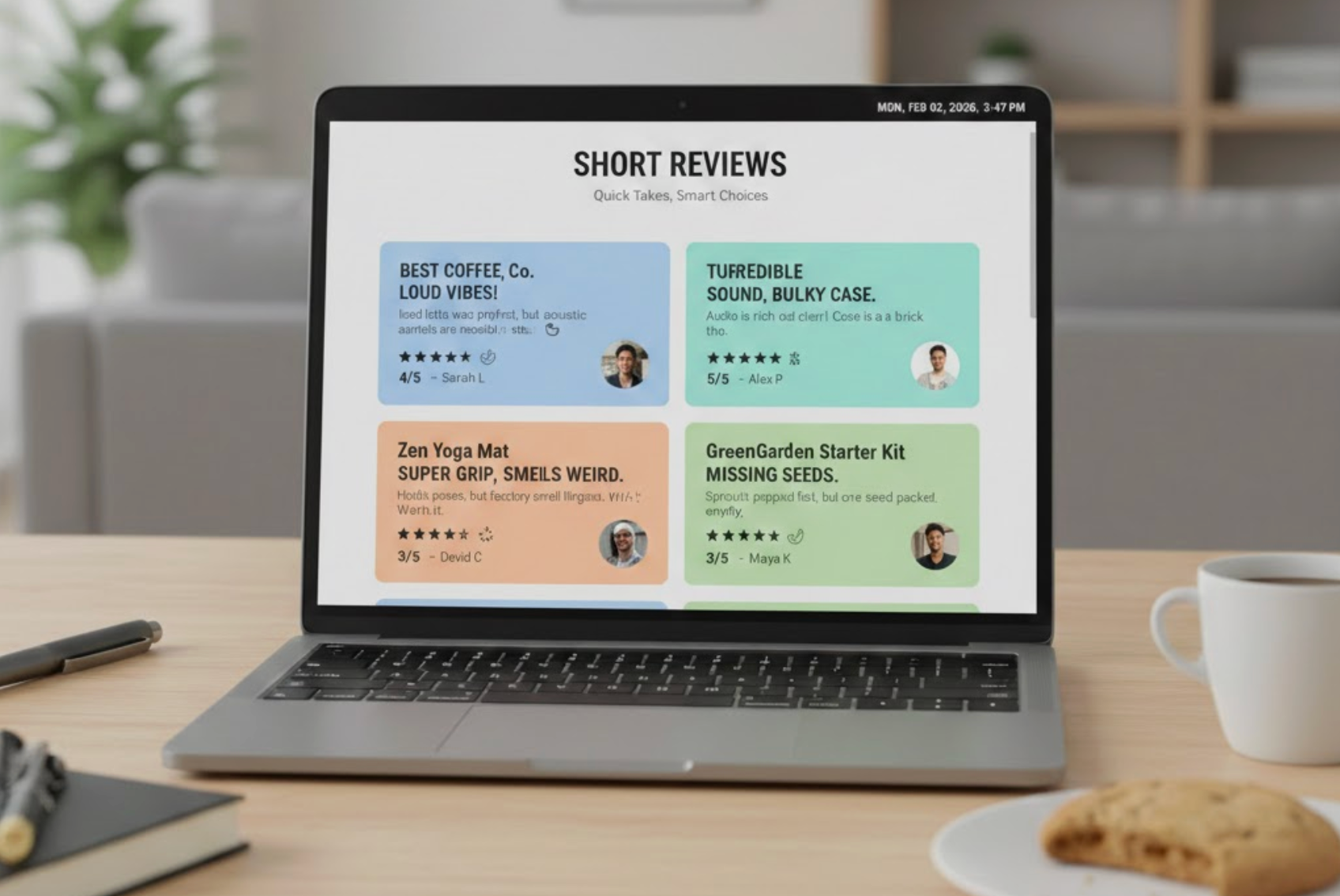
Short reviews are brief pieces of customer feedback, typically one sentence or a few words long. They focus on a general impression rather than an in-depth explanation of the experience.
Common examples include:
These reviews usually appear alongside star ratings and are easy to scan at a glance. Because of their simplicity, they dominate most eCommerce review sections in terms of volume.
While short reviews may seem basic, their real power lies in how quickly they communicate approval. As a result, they play a crucial role in the early stages of decision-making, especially when shoppers are browsing rather than researching deeply.
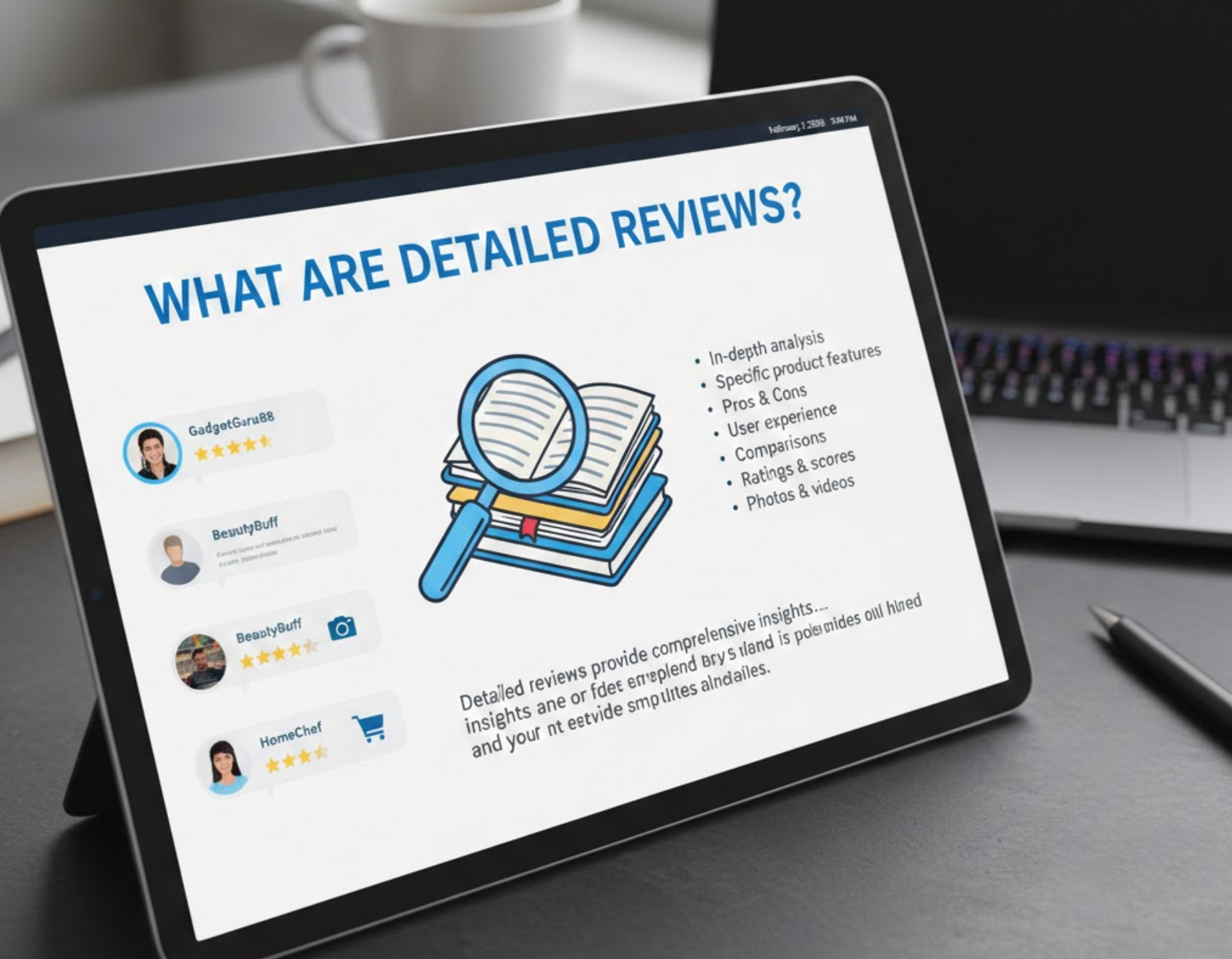
Detailed reviews provide a much richer perspective on the customer experience. Instead of offering a quick judgment, they explain why the customer liked or disliked the product.
A detailed review may include:
Because they require more effort to write and read, detailed reviews are fewer in number, but often much higher in perceived value. They serve as mini case studies that help potential buyers imagine themselves using the product.
As shoppers move closer to making a purchase, these reviews often become the final reassurance they need to move forward.
One of the biggest advantages of short reviews is speed. Shoppers don’t need to invest time or mental effort to understand them. A quick scroll through dozens of positive one-liners can instantly signal that a product is safe and popular.
This is especially important in today’s fast-paced shopping environment, where attention spans are limited and users often multitask. The easier it is to validate a product, the faster a decision can be made.
As a result, short reviews are particularly effective for:
Short reviews scale extremely well. When a product accumulates hundreds or thousands of brief reviews, it creates overwhelming social proof.
From a psychological standpoint, shoppers tend to trust the collective opinion of many people more than the opinion of a few, even if each individual comment is short. Seeing a high review count reduces perceived risk and reinforces the idea that the product is widely accepted.
This transition from individual feedback to collective validation is where short reviews shine.
Most eCommerce traffic today comes from mobile devices, where users scroll quickly and rarely read long blocks of text. Short reviews fit perfectly into this behavior pattern.
They allow shoppers to confirm product quality without interrupting their browsing flow. Instead of stopping to read, users can glance, feel reassured, and keep moving toward checkout.
Because of this, short reviews often perform exceptionally well at the top of the product page.
Despite their strengths, short reviews are not enough on their own, especially in competitive markets.
They often:
For higher-priced or unfamiliar products, this lack of depth can create hesitation rather than confidence. Shoppers may feel that something important is missing, prompting them to leave the site in search of more information elsewhere.
This is where detailed reviews step in.
Detailed reviews feel more human and more honest. When customers share specific scenarios, mention minor drawbacks, or explain how their expectations were met, or exceeded, it signals authenticity.
From a buyer’s perspective, these reviews answer the unspoken question: “Can I trust this?”
The more effort a reviewer puts into explaining their experience, the more credible it feels. This emotional trust often translates directly into higher conversion rates, especially for first-time buyers.
One of the most powerful aspects of detailed reviews is their ability to address objections naturally.
Instead of marketing claims coming from the brand, reassurance comes from real users discussing:
As shoppers read these experiences, their doubts are gradually resolved. This reduces friction, minimizes hesitation, and keeps users on the product page longer, an important signal for conversion optimization.
Detailed reviews consistently perform better for products that involve:
In these scenarios, buyers are not looking for speed, they are looking for certainty. Detailed reviews provide the depth required to justify the purchase emotionally and logically.
However, detailed reviews are not without challenges.
They:
If a product page only shows long blocks of text without summaries or filters, shoppers may feel fatigued rather than reassured. This makes presentation and structure just as important as the content itself.
The Strategic Answer: Conversion Depends on Intent
There is no universal winner when it comes to review length. Short reviews and detailed reviews serve different psychological needs at different stages of the buyer journey, which is why asking which one converts better in isolation often leads to misleading conclusions.
Short reviews help shoppers feel comfortable quickly. They reduce uncertainty at a glance, signal popularity, and reassure buyers that choosing this product is socially validated. Detailed reviews, on the other hand, help shoppers feel confident deeply by providing context, explanations, and real-life usage insights that justify the purchase decision.
The highest-converting stores recognize this distinction. Instead of forcing every shopper into the same review experience, they intentionally design review sections that adapt to intent, supporting fast decisions for confident buyers and deeper reassurance for cautious ones.
Top eCommerce brands rarely present reviews as a single, undifferentiated list. Instead, they use a layered presentation that mirrors how shoppers naturally consume information.
A high-performing structure usually includes:
This layered approach ensures that no shopper feels forced to read too much too early, or left without details when hesitation appears. By guiding users smoothly from quick validation to deeper confidence, brands can support higher conversion rates across different buyer mindsets.
Beyond layout, control plays a crucial role in how reviews influence conversion. Allowing shoppers to filter reviews by:
empowers them to research based on their own priorities. This sense of control reduces friction and builds trust, because buyers feel they are discovering information rather than being pushed toward a decision.
As shoppers move naturally from a high-level overview to specific experiences, this smooth transition keeps them engaged and informed, bringing them closer to checkout instead of overwhelming them with unnecessary content.
Both short and detailed reviews perform significantly better when they are supported by clear visual and structural trust signals. This is where having a well-optimized review system makes a meaningful difference.
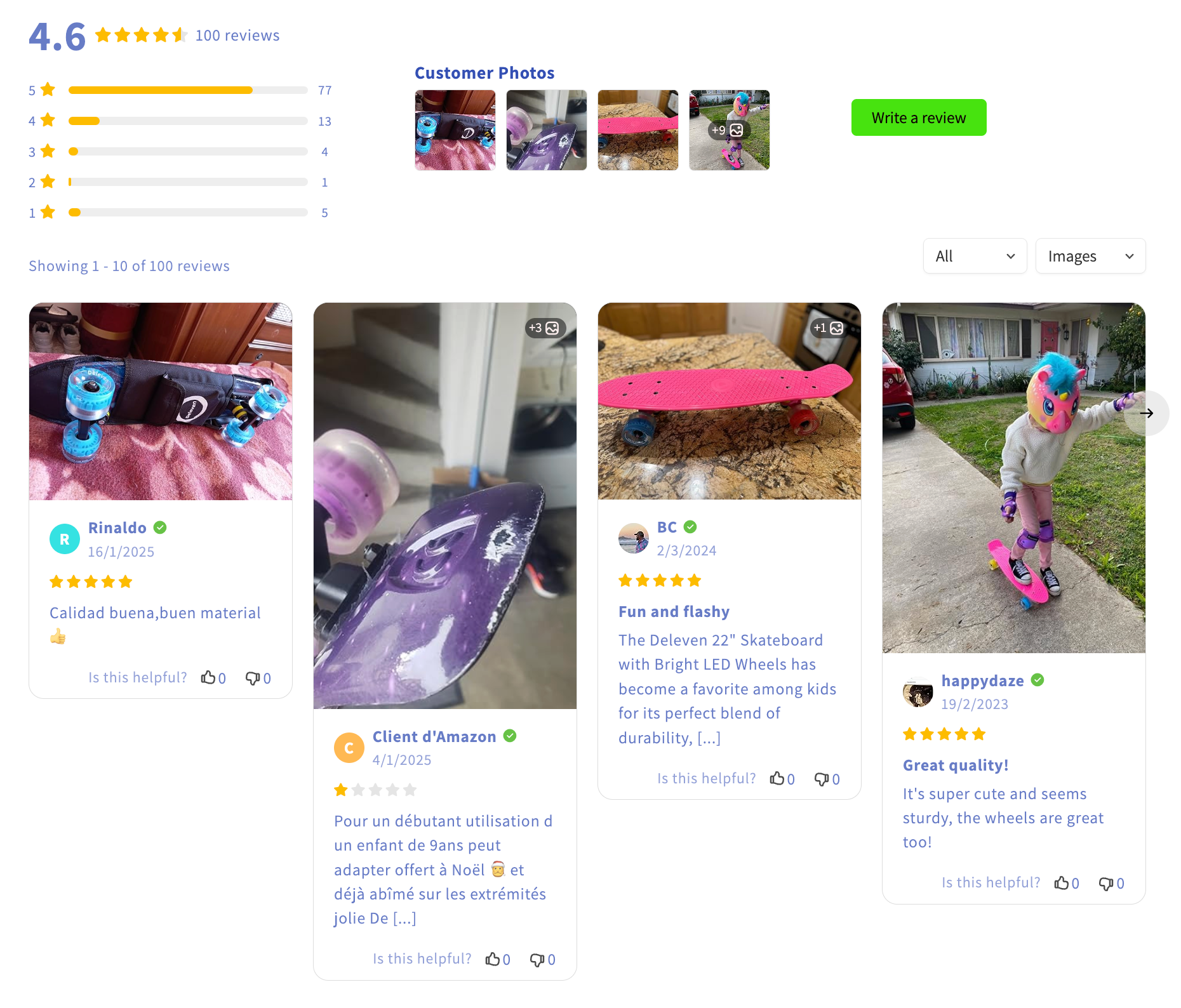
Elements such as:
help reviews feel authentic, current, and easy to scan. Platforms like Ryviu are designed to support this balance by helping merchants collect, organize, and display both short and detailed reviews in a structured, shopper-friendly way.
Two stores may sell similar products and collect similar customer feedback. However, the store that organizes, highlights, and presents its reviews more effectively will almost always convert more visitors into buyers.
Winning brands don’t ask, “Should we use short or detailed reviews?”
They ask, “How can we guide shoppers from quick trust to deep confidence with as little friction as possible?”
That mindset, focused on buyer psychology and experience rather than review length alone, is what separates average stores from consistently high-converting ones.
Short reviews convert better when speed, simplicity, and volume are the primary drivers of decision-making. They reassure shoppers quickly and support fast, low-risk purchases.
Detailed reviews convert better when trust, reassurance, and depth are required to overcome hesitation, especially for higher-value or unfamiliar products.
The strongest conversion strategy is not choosing one format over the other, but combining both in a structured, intentional way that aligns with how real people shop.
In today’s competitive eCommerce landscape, the brands that win are those that let shoppers decide how much proof they need before confidently clicking “Buy Now.”