New to Shopify? Free trial, then $1/month for your first 3 months. Start free trial →
 Where is your store?
Ryviu works with both – pick yours to continue.








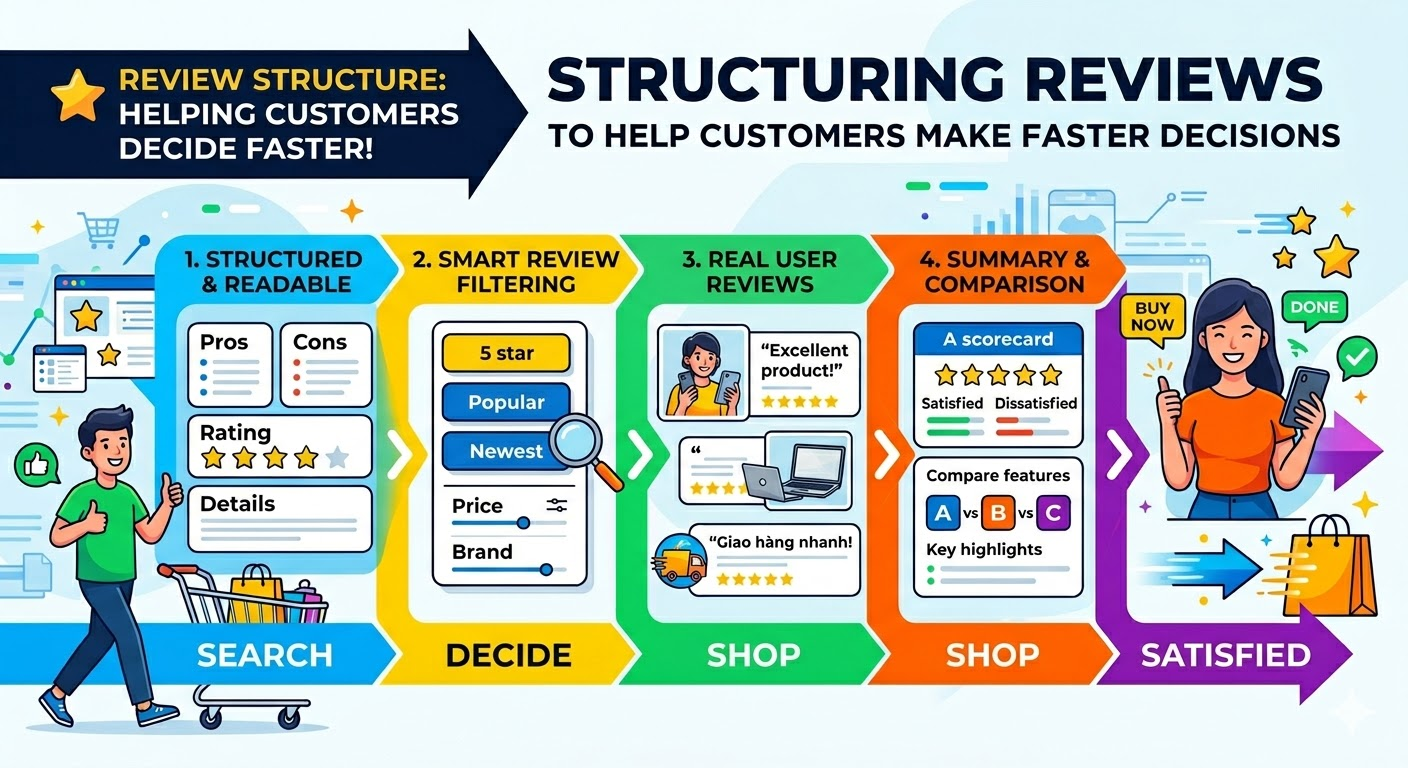
In today’s fast-moving digital landscape, customers rarely have the time or patience to read through long, unstructured reviews. Instead, they scan, compare, and decide within seconds. This makes the structure of your reviews just as important as their content. A well-structured review system doesn’t just present opinions; it guides decision-making. By organizing feedback in a clear, digestible way, brands can reduce friction, build trust, and accelerate conversions. This article explores how to structure reviews effectively so customers can make faster, more confident decisions.
Customers today are overwhelmed with choices, and unstructured information only adds to the confusion. Clear product information starts even before reviews, with well-optimized product titles that help users immediately understand what they’re looking at. When reviews are scattered or difficult to navigate, users are more likely to abandon the page than spend time deciphering them. Structure transforms raw feedback into a decision-making tool. Beyond usability, structured reviews also enhance credibility. When customers can quickly identify patterns, pros, and cons, they perceive the information as more trustworthy. This leads to quicker decisions and fewer doubts during the buying process.
To understand how structure directly impacts customer behavior, let’s break down its key benefits:
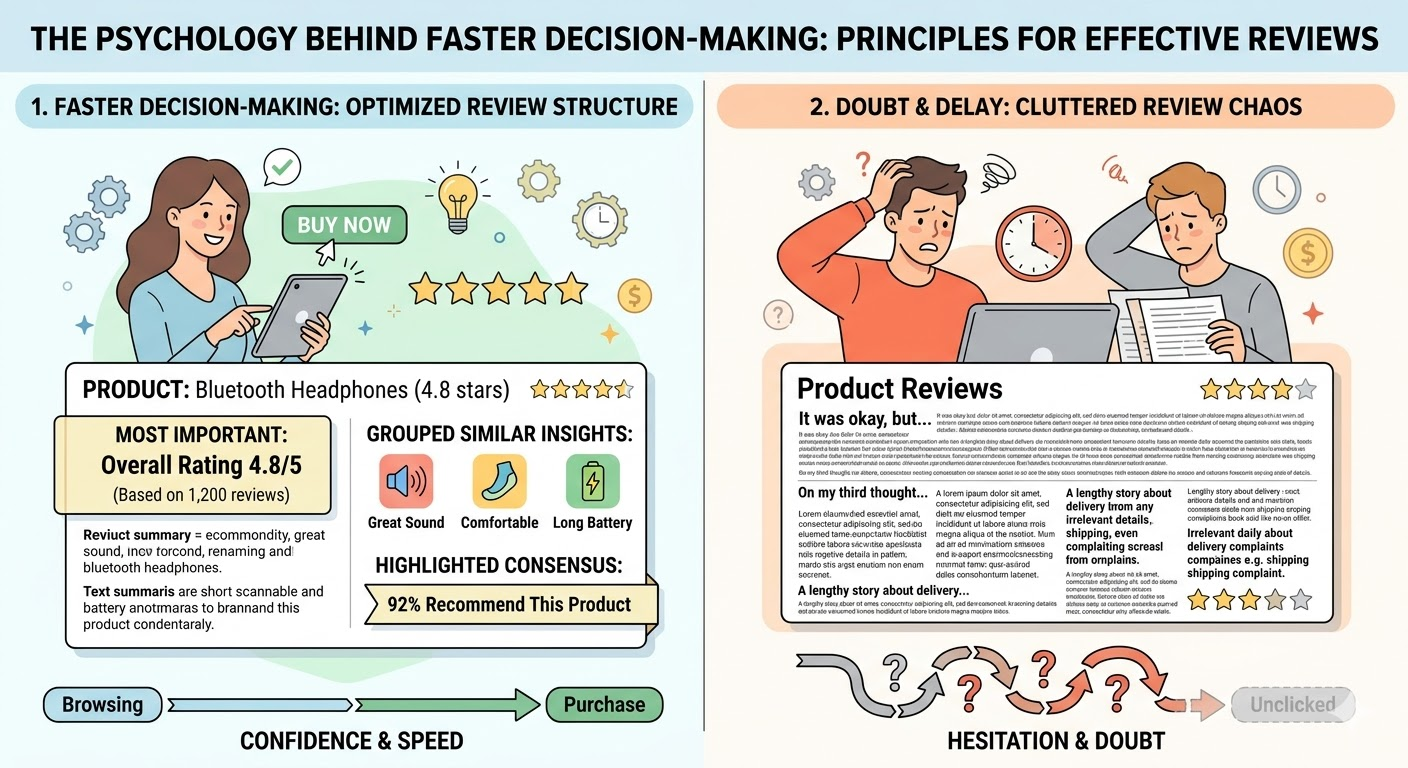
Human brains are wired to seek shortcuts when processing information. Instead of analyzing every detail, customers rely on cues like summaries, ratings, and highlighted insights. Structured reviews align perfectly with this natural behavior. When reviews are easy to scan, customers feel more confident in their choices. This confidence reduces hesitation and shortens the decision-making cycle. In contrast, cluttered or overly long reviews can create doubt and delay action.
To better align your review structure with user psychology, consider these principles:
One of the most effective ways to improve review usability is by dividing content into clear sections. Instead of presenting a wall of text, structured segments allow users to focus on what matters most to them. This approach caters to both quick scanners and detail-oriented readers. Segmented reviews also make it easier to compare products. Customers can quickly jump to specific sections like quality, pricing, or usability without reading everything. This flexibility significantly speeds up decision-making.
To implement this effectively, organize reviews into the following sections:
Not every customer wants to read dozens of individual reviews. Many prefer a quick overview that captures the general sentiment. Review summaries serve as a shortcut, helping users grasp key insights within seconds. A strong summary doesn’t just shorten content; it distills meaning. By identifying recurring themes and common feedback, summaries provide clarity without sacrificing depth. This makes them especially valuable for mobile users.
To create effective review summaries, focus on:
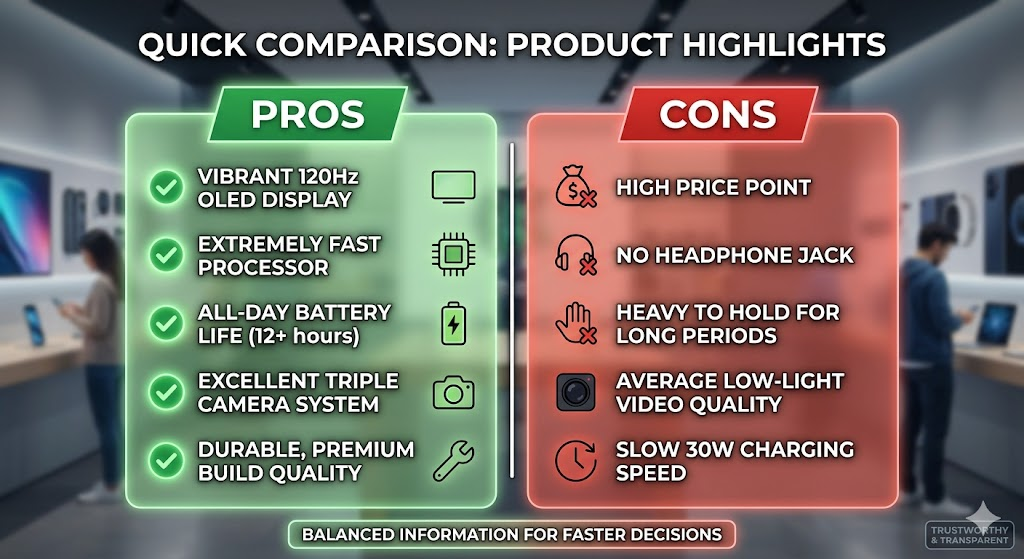
Customers often make decisions by weighing benefits against drawbacks. A clear pros-and-cons format simplifies this process by presenting balanced information upfront. This transparency builds trust and speeds up evaluation. When users can instantly see strengths and weaknesses, they don’t need to dig through multiple reviews. This reduces effort and increases satisfaction with the decision-making experience. It also prevents frustration caused by hidden or unclear information.
To optimize this format, make sure to:
Text alone is not always enough to guide users effectively. Visual elements like star ratings, icons, and progress bars can significantly improve comprehension. Adding review headlines helps users quickly identify key insights without reading full paragraphs. These cues allow customers to process information faster than reading alone. Visual hierarchy also helps users navigate reviews more intuitively. By emphasizing key data points, you can guide attention toward the most important insights. This reduces the time needed to evaluate a product.
To enhance readability with visuals, consider:
Not all reviews carry the same weight in the eyes of customers. Verified buyer feedback is often seen as more credible and trustworthy. Highlighting these reviews can significantly influence decision-making. When users know that feedback comes from real purchasers, they are more likely to trust it. This trust reduces hesitation and increases confidence in the product. It also helps filter out low-quality or irrelevant reviews.
To make the most of verified feedback, you should:
Different customers have different needs, and a one-size-fits-all review section may not address them effectively. Organizing reviews by use case helps users find relevant insights faster. This personalization improves the overall experience. For example, a beginner and an expert may have completely different expectations. By grouping reviews accordingly, you make it easier for each user to find what matters to them. This reduces confusion and speeds up decisions.
To implement use-case organization, try:
Not all customers are looking for the same information. Some may want to see the most recent reviews, while others prefer the highest-rated ones. Filters and sorting options give users control over their experience. This flexibility reduces the time spent searching for relevant information. Instead of scrolling endlessly, users can quickly narrow down what they need. This leads to faster and more satisfying decisions.
To improve usability with filters, include options like the following:
The quality of your review structure depends on the input you receive. If customers submit unstructured feedback, it becomes harder to organize and display effectively. Encouraging structured submissions solves this problem at the source. By guiding users to provide specific types of feedback, you create more consistent and useful reviews. This not only improves readability but also enhances the overall value of your review system.
To encourage better submissions, consider:
Mobile users have even less patience for unstructured content. Small screens require concise, well-organized information that can be quickly scanned. Optimizing review structure for mobile is essential. A mobile-friendly review system prioritizes clarity and simplicity. By reducing clutter and focusing on key insights, you create a smoother experience. This directly impacts conversion rates on mobile devices.
To optimize for mobile, focus on:
Manually organizing reviews can be time-consuming and inconsistent. This is where dedicated tools come into play. They automate the process, ensuring reviews are structured effectively without extra effort. A good review management tool not only collects feedback but also organizes it intelligently. It helps highlight key insights, filter content, and present information in a user-friendly way. This makes it easier for businesses to maintain a high-quality review system.
To understand how the right tool can support your strategy, consider these capabilities:
Implementing structured reviews doesn’t require a complete overhaul. Small, incremental changes can already make a significant impact. The key is to focus on clarity, usability, and consistency. Start by identifying the biggest pain points in your current review system. Then, prioritize changes that will have the most immediate effect on user experience. Over time, these improvements will lead to faster decision-making and higher conversions.
To get started, follow these steps:
As your review system evolves, maintaining structure manually becomes increasingly challenging. This is where a solution like Ryviu can quietly support your efforts. It helps streamline review collection and presentation without requiring complex setup. Rather than forcing a rigid system, it allows flexibility while still promoting clarity. Features like review filtering, verified buyer tags, and customizable layouts naturally align with the principles discussed above. This makes it easier to create a review experience that feels intuitive and helpful.
When choosing a tool to support structured reviews, look for:
Reviews are no longer just a collection of customer opinions; they are a critical part of the buying journey. When structured effectively, they become powerful tools that guide users toward faster decisions. This benefits both customers and businesses alike.
By focusing on clarity, organization, and usability, you can transform your review system into a seamless experience. Customers will spend less time searching and more time confidently making purchases. This ultimately leads to higher satisfaction and stronger brand trust.
In a competitive market, the brands that win are those that remove friction. Structuring reviews is one of the simplest yet most impactful ways to do exactly that.