 New to Shopify? Free trial, then $1/month for your first 3 months. Start free trial →
 Where is your store?
Ryviu works with both – pick yours to continue.









Selling fashion online has its challenges, and one of the biggest is helping customers find the perfect fit. Without the ability to try clothes on, shoppers often hesitate to make a purchase, or worse, they buy and return items that don’t fit as expected. This is why having a comprehensive, accurate, and easy-to-read size guide is no longer optional for online fashion stores, it’s essential for customer satisfaction, brand credibility, and profitability.
When shopping online, customers rely entirely on product images, descriptions, and reviews to decide what to buy, but none of these can replace the experience of trying clothes on. That’s where a size guide becomes essential. It serves as a bridge between virtual browsing and physical fitting, helping shoppers visualize how a piece of clothing might fit their unique body type.
A detailed size guide provides clarity and reassurance at a crucial stage in the buying process. Instead of guessing whether a “Medium” will be too tight or too loose, customers can compare their exact body measurements to your chart and feel confident in their choice. This guidance is especially important for categories like fashion, where fabric type, cut, and style can all affect how an item fits.
Moreover, a size guide helps create a consistent and trustworthy shopping experience. When customers see that your brand provides clear, accurate sizing information, they perceive your store as professional and customer-focused. It shows that you care about helping them find the right fit rather than simply pushing a sale.
By reducing uncertainty, size guides also play a huge role in lowering cart abandonment rates. Many shoppers hesitate at checkout because they’re unsure if an item will fit properly. When your store offers an easy-to-read and reliable size chart, that hesitation fades, leading to higher confidence, fewer returns, and more completed purchases.
In short, a well-crafted size guide doesn’t just improve the shopping experience; it directly supports your conversion rates, customer satisfaction, and brand credibility.
For fashion stores, it’s also a reflection of professionalism. It shows that your brand cares about fit, detail, and customer satisfaction, which are the key factors in building long-term trust and loyalty.

One of the biggest issues in fashion eCommerce is high return rates due to incorrect sizing. According to industry reports, over 40% of clothing returns are related to poor fit or inaccurate size information.
By offering a detailed size guide, you minimize this risk significantly. When shoppers can easily compare their measurements to your guide, they are more likely to choose the right size the first time.
Fewer returns not only save on logistics and restocking costs but also improve operational efficiency and sustainability, both financially and environmentally beneficial outcomes.
A well-designed size guide gives shoppers confidence that what they see is what they’ll get. When customers feel certain about their purchase, they’re more likely to complete the checkout and become repeat buyers.
Beyond just listing numbers, adding visual diagrams or fit examples (e.g., showing how the same dress looks on models of different sizes) helps users relate and make informed decisions.
The goal is to eliminate hesitation. The more trust customers have in your size accuracy, the more they’ll trust your entire brand.
When customers hesitate due to size uncertainty, they delay or abandon purchases. A good size guide removes that hesitation, making the path from “add to cart” to “checkout” much smoother.
Fashion stores that invest in clear and interactive size charts often report higher conversion rates because shoppers are more confident in their purchase decisions.
Including quick-access links like “Find Your Size” or “View Size Chart” directly beside the size selector can make a big difference in guiding users seamlessly toward a sale.
If your online store caters to a global audience, size variations can be confusing. For example, a size “M” in the US is not the same as an “M” in Europe or Asia.
A detailed size guide that includes regional conversions (US, UK, EU, AU, and CM/IN) ensures shoppers from around the world can accurately find their fit.
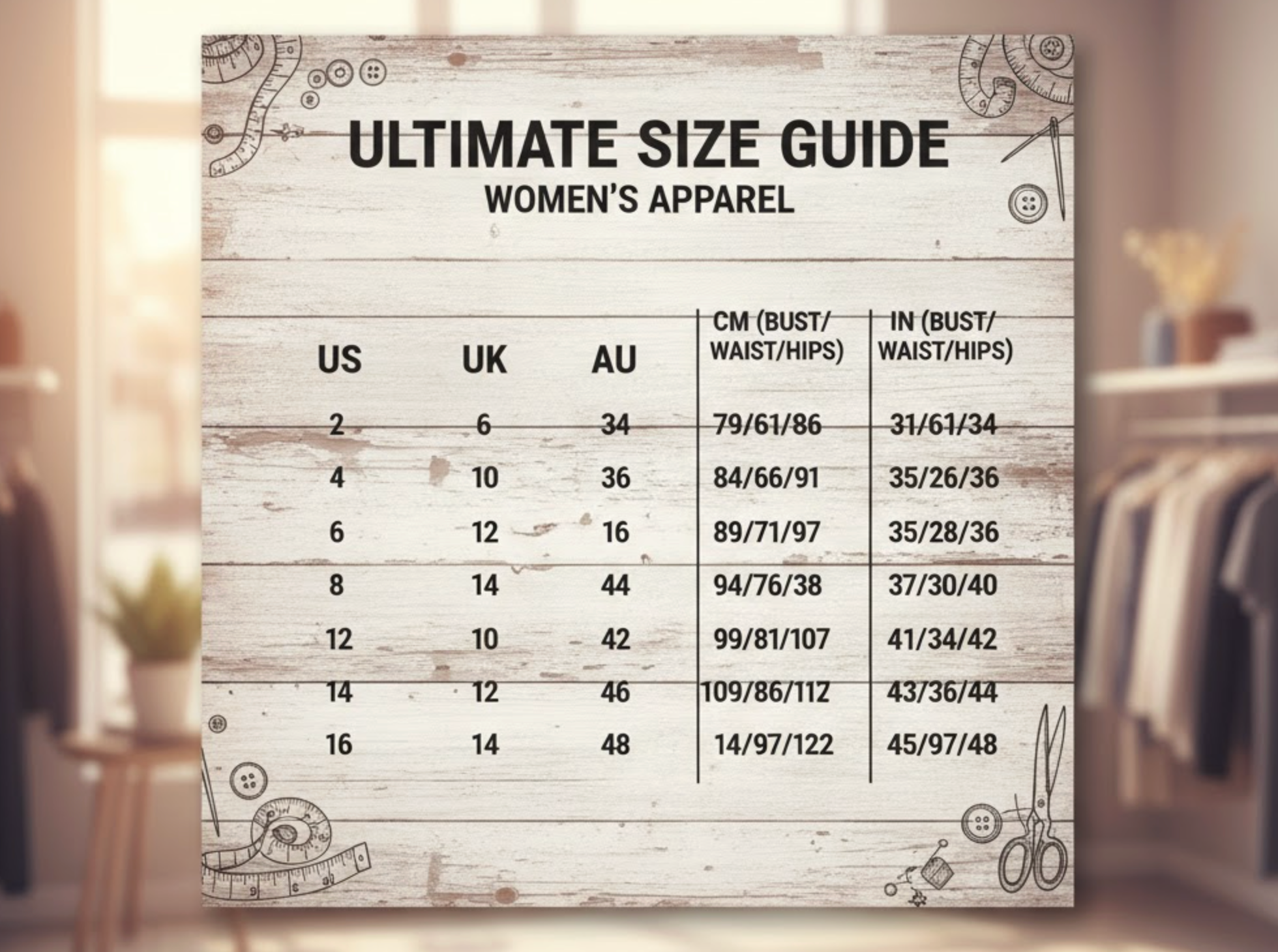
Adding measurement tips, such as how to measure bust, waist, and hips, also helps eliminate confusion, especially for international customers unfamiliar with your sizing standards.
A thoughtful size guide shows that your brand pays attention to detail. It communicates that you care about helping customers find the perfect fit, not just making sales.
Brands that neglect this aspect often appear untrustworthy or unprofessional, especially in the fashion industry where fit and comfort are everything.
In contrast, a clear and branded size chart enhances your image, strengthens your reputation, and signals reliability, essential for repeat purchases and word-of-mouth referrals.
Over time, a great size guide does more than reduce returns, it improves your customer relationships. Shoppers begin to trust your sizing consistency, making future purchases easier and faster.
This not only increases customer lifetime value (CLV) but also boosts your store’s reputation through positive reviews and fewer complaints. In the long run, you build a loyal customer base that trusts your brand for quality and fit.
A size guide is more than just a chart, but it’s also a critical part of your fashion store’s user experience and business success. It builds confidence, reduces costly returns, and enhances your brand’s credibility.
In a world where competition in online fashion is fierce, the small details, like helping your customers find their perfect fit, can make all the difference. By investing in a clear, accurate, and visually appealing size guide, you’re not just improving the shopping experience, you’re strengthening your entire brand.




