New to Shopify? Free trial, then $1/month for your first 3 months. Start free trial →
 Where is your store?
Ryviu works with both – pick yours to continue.









Testimonials are designed to reduce hesitation and build confidence. They act as social proof, showing potential customers that others have already taken the leap and had a positive experience. However, when testimonials appear without names, photos, or any identifying details, they often fail to do their job. Instead of reassuring shoppers, they introduce doubt.
In today’s digital environment, where fake reviews and AI-generated content are increasingly common, credibility is fragile. Small missing details can significantly change how trustworthy a brand feels. This is why testimonials without names often feel unreliable, even when the message itself is positive.
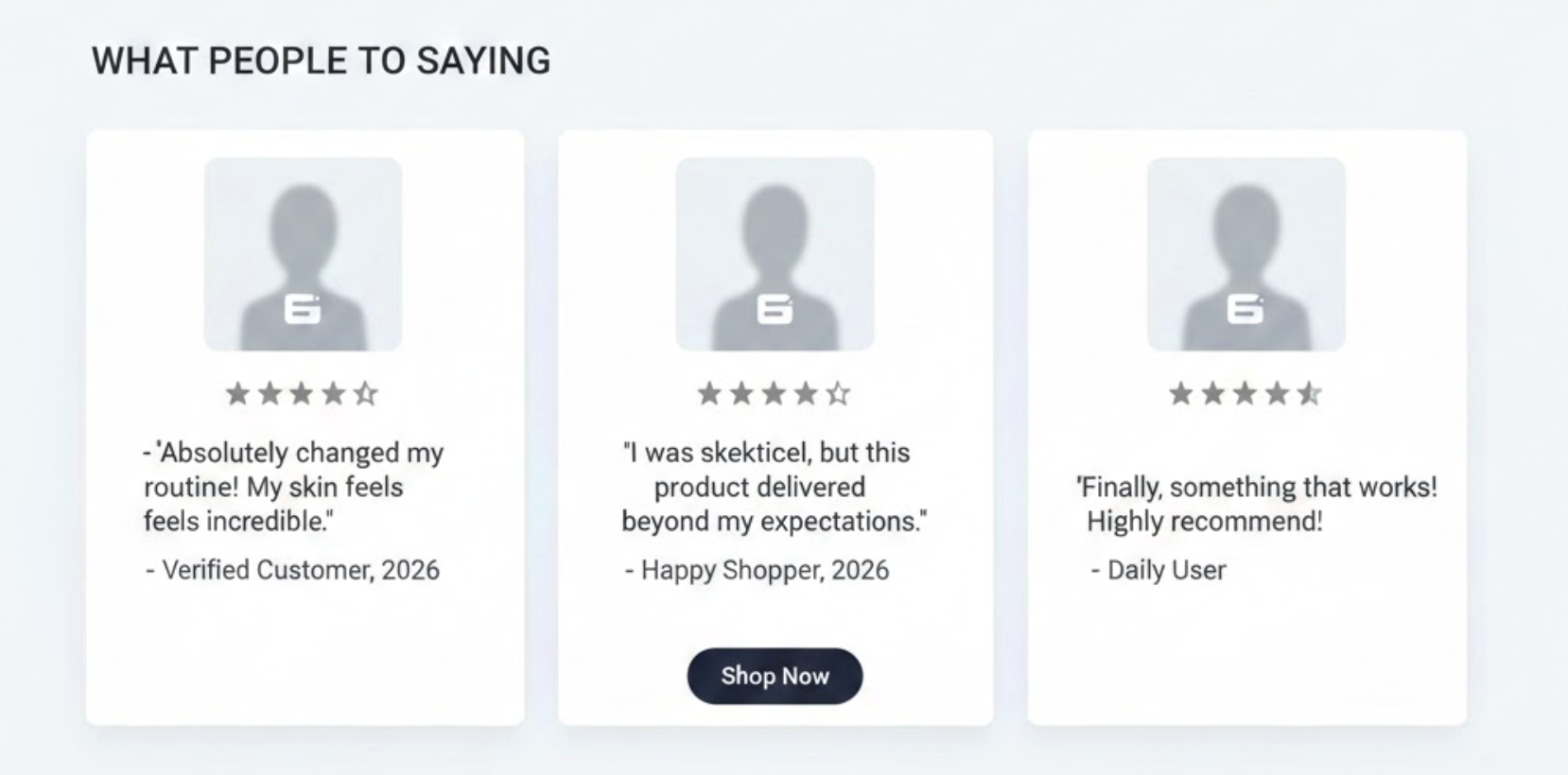
Trust is fundamentally human-to-human. People instinctively look for signals that confirm another real person is involved. When a testimonial includes a name, photo, role, or location, it signals authenticity and presence. It feels like a real person is speaking, not just a line of marketing copy.
Without these identifiers, testimonials feel abstract. Shoppers subconsciously question whether anyone actually said this or whether the brand wrote it themselves. Even minimal identifiers, such as a first name and initial, can dramatically increase perceived trust because they restore the human element behind the feedback.
Modern shoppers are more skeptical than ever. Years of exposure to fake reviews, incentivized testimonials, and overly polished praise have trained consumers to look for warning signs. An anonymous testimonial closely matches the patterns people associate with fabricated reviews.
When names are missing, shoppers often assume the worst, even if the testimonial sounds genuine. This suspicion doesn’t just weaken the testimonial, it can reduce trust in the entire page. In some cases, anonymous testimonials may do more harm than having no testimonials at all.
A name does more than identify a person, it provides context. When testimonials include names, job titles, industries, or customer types, readers can quickly assess relevance. They begin to think, “This person is similar to me, so their experience matters.”
Without names or descriptors, testimonials become generic statements that could apply to anyone—or no one. They lack specificity and emotional pull, making it harder for shoppers to imagine themselves achieving the same results.
Attaching a name to feedback implies responsibility. It suggests that the reviewer is confident enough in their opinion to stand behind it publicly. This perceived accountability plays a major role in how honest a testimonial feels.
Anonymous testimonials, on the other hand, feel consequence-free. Shoppers may wonder if the feedback has been edited, exaggerated, or selectively chosen. Even subtle doubts can interrupt the decision-making process and slow down conversions.
Effective social proof reduces uncertainty by feeling real and verifiable, even if shoppers never actually verify it. Names, photos, timestamps, and purchase indicators all suggest that the testimonial exists beyond the page itself.
When testimonials lack identifying details, they lose this sense of verifiability. Instead of answering doubts, they leave unanswered questions, which keeps uncertainty high and confidence low during critical buying moments.
While testimonials with names are generally more trustworthy, there are specific situations where anonymity is reasonable and even expected. Industries involving personal health, financial security, or private communities often require extra discretion, and customers may hesitate to share identifiable details publicly.
However, to maintain credibility, anonymity should never stand alone. In these cases, brands must rely on additional trust signals to bridge the gap between privacy and authenticity.
While named testimonials are ideal, many customers still prefer privacy when leaving feedback. The challenge for merchants is finding a way to maintain trust without forcing shoppers to reveal personal information. This is where review platforms play a critical role by reinforcing authenticity beyond just names.

Instead of relying on identity alone, Ryviu strengthens testimonials through multiple trust-building signals that reassure shoppers even when names are limited or hidden.
Testimonials without names feel unreliable because they remove the human, accountable, and verifiable elements that trust depends on. They can trigger suspicion, reduce emotional connection, and fail to reassure shoppers at critical decision points.
In contrast, testimonials that include names, or are supported by strong verification and visual proof, restore confidence and credibility. In a landscape where trust is hard-earned and easily lost, even small details like a name can make a meaningful difference in how customers perceive a brand.