New to Shopify? Free trial, then $1/month for your first 3 months. Start free trial →
 Where is your store?
Ryviu works with both – pick yours to continue.








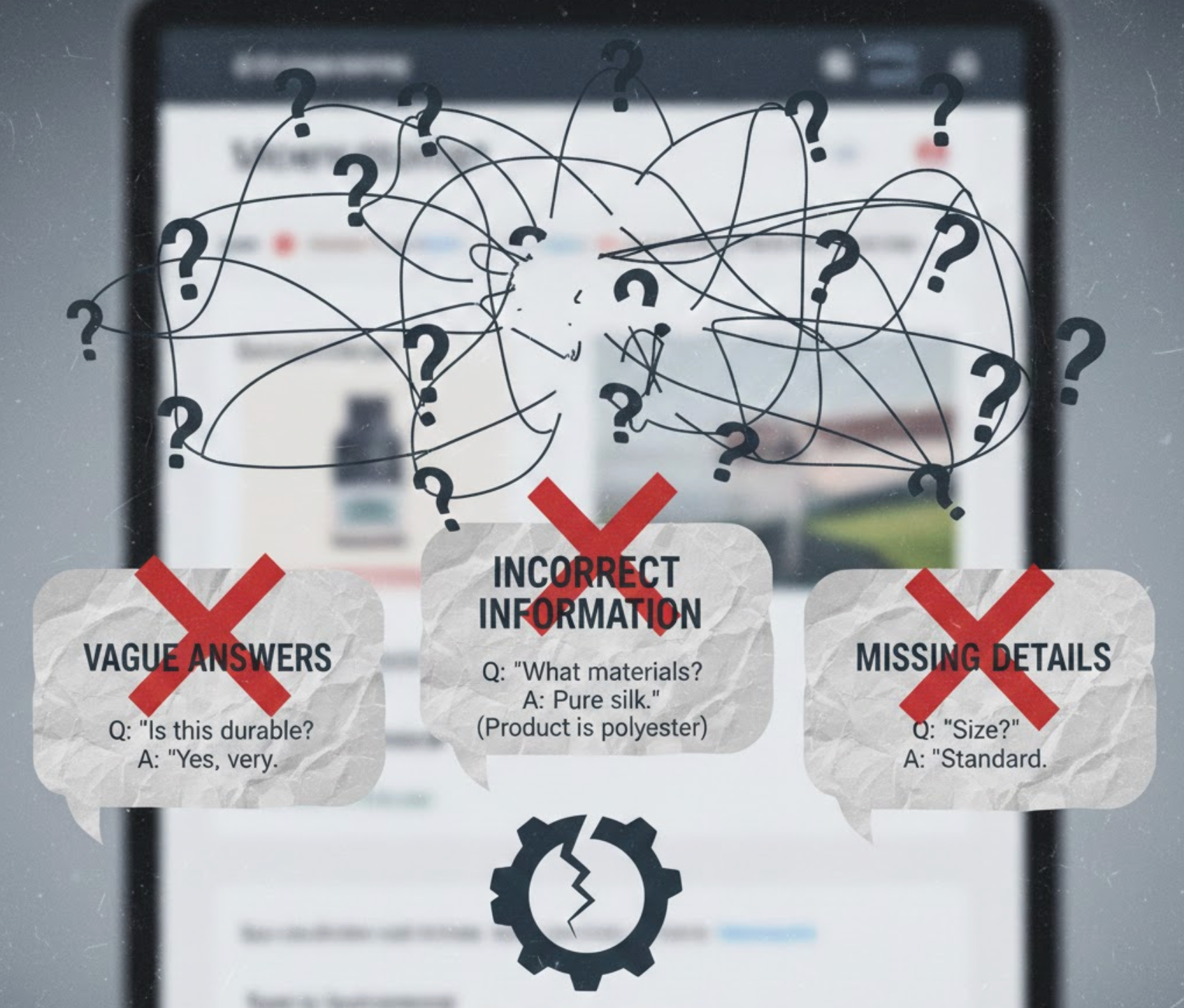
Product Q&A sections have become a crucial part of the online shopping experience. Today’s customers rely on them to clarify doubts, validate assumptions, and gain confidence before making a purchase. When managed effectively, a Q&A section can reduce friction, shorten decision time, and even lower customer support workload.
Unfortunately, many businesses overlook this feature or manage it inconsistently. As a result, Q&A sections often introduce uncertainty instead of clarity. Below are the most common mistakes brands make in product Q&A sections, and how to fix them in a strategic, customer-focused way.
For many shoppers, the Q&A section represents a direct line to the brand. When questions remain unanswered for extended periods, it sends an unintended message that customer concerns may not be a priority. This hesitation becomes especially damaging when customers are comparing similar products and looking for fast reassurance.
Timely responses communicate reliability and attentiveness, helping customers feel supported throughout the buying journey rather than abandoned at a critical decision point.
To prevent unanswered questions from weakening customer confidence, it’s essential to put clear processes in place that ensure timely and consistent responses.
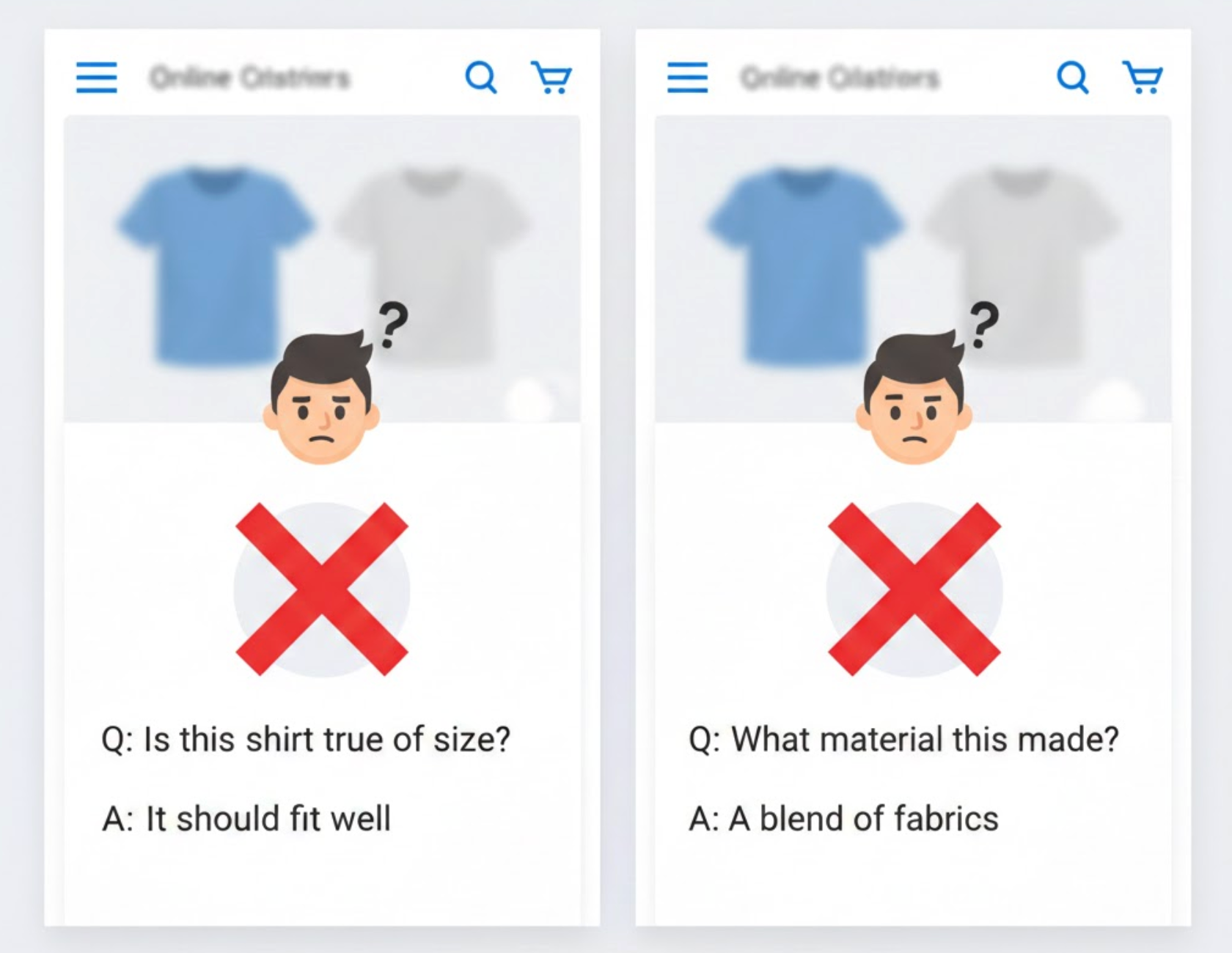
Speed alone does not guarantee effectiveness. Many Q&A sections suffer from responses that are technically correct but lack meaningful detail. Short, generic replies often fail to resolve customer concerns and can leave shoppers unsure about whether the product truly fits their needs.
High-quality answers should educate, reassure, and eliminate uncertainty by offering practical, scenario-based information.
Improving answer quality starts with a more thoughtful approach to how questions are addressed and what level of detail customers truly need.

When the same questions appear repeatedly, it usually signals a deeper issue with product content clarity. Answering the same inquiry over and over again may resolve individual concerns, but it does little to improve the overall shopping experience.
Repeated questions are valuable insights that reveal where customers feel uncertain or confused, making them a powerful tool for optimization.
Rather than treating repeated questions as isolated incidents, businesses should use them as signals for deeper content improvements.
User-generated answers can add authenticity, but they also introduce the risk of misinformation. Without moderation, inaccurate details or outdated assumptions may remain visible, potentially misleading future customers and creating false expectations.
Inconsistent or incorrect information can quickly erode trust and lead to increased returns or negative reviews.
Maintaining accuracy in your Q&A section requires active oversight and a clear system for validating shared information.
Although Q&A sections and reviews serve different purposes, customers naturally use them together. Reviews offer social proof and real-world experiences, while Q&A resolves specific doubts that arise during evaluation. When these two elements are disconnected, shoppers may struggle to piece together a complete understanding of the product.
Aligning Q&A and reviews creates a more cohesive and informative product page experience.
Creating a stronger connection between Q&A and reviews involves aligning how both sections support the customer decision-making process.
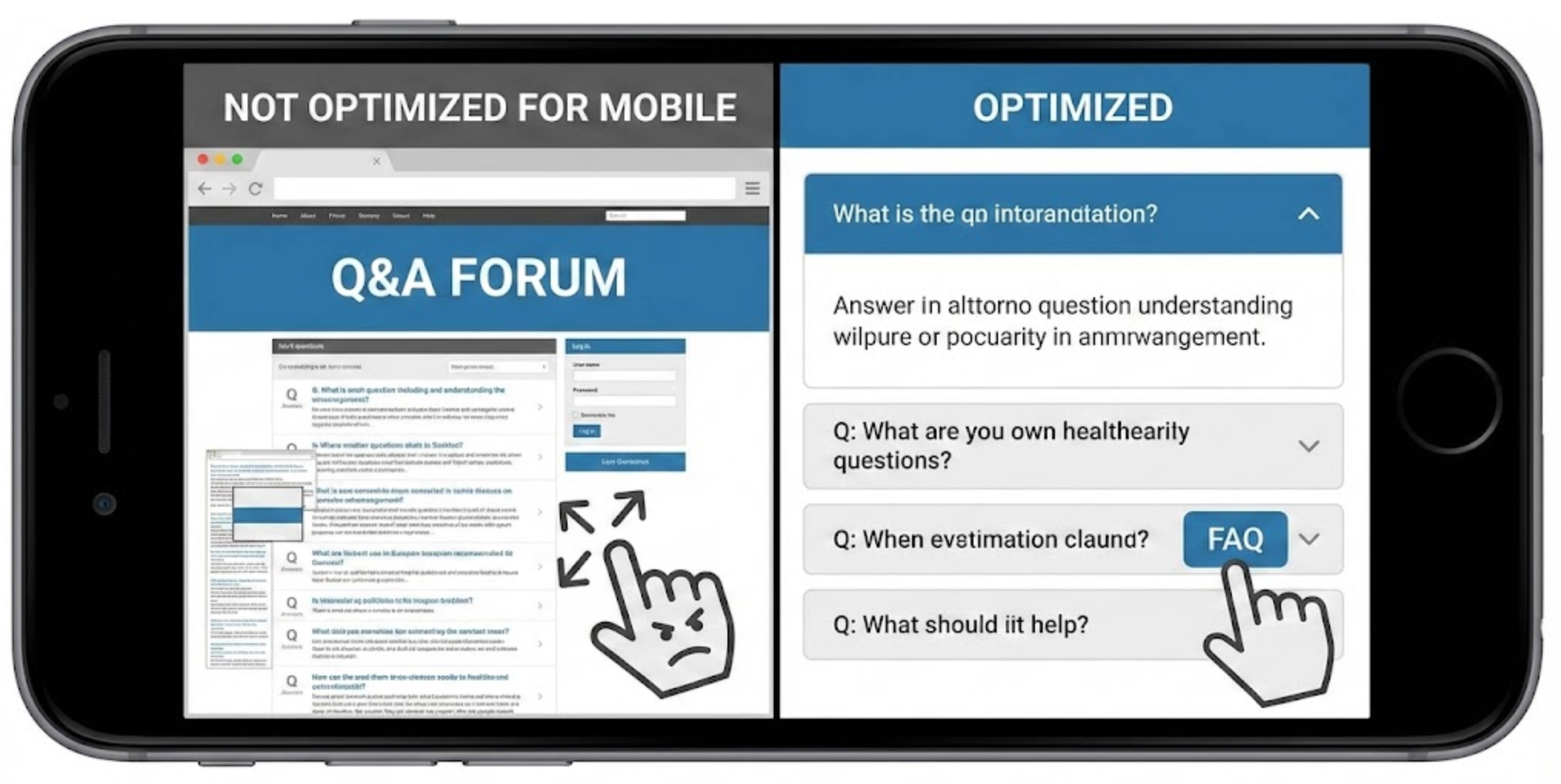
With mobile shopping now the norm rather than the exception, poor mobile usability can severely limit Q&A effectiveness. Dense text, hard-to-tap elements, or awkward layouts make it difficult for mobile users to find and interact with answers.
A mobile-friendly Q&A experience ensures customers can quickly access information, regardless of device.
Addressing mobile usability issues begins with rethinking how Q&A content is structured and displayed on smaller screens.
An inactive Q&A section can unintentionally suggest low engagement or limited product usage. Even satisfied customers may not think to contribute unless prompted, leaving valuable insights untapped.
Encouraging participation helps create a dynamic, ever-growing knowledge base that benefits both current and future shoppers.
Building a more active and valuable Q&A section requires intentional efforts to invite and sustain customer engagement.
Product Q&A sections are a powerful yet often underestimated component of the buying journey. When neglected, they introduce uncertainty and friction at critical decision points. When managed strategically, they become a trusted source of clarity that supports conversions and long-term customer satisfaction.
By responding promptly, delivering detailed and accurate answers, encouraging participation, and continuously optimizing based on customer behavior, businesses can transform their Q&A sections into a meaningful competitive advantage. A strong Q&A experience doesn’t just answer questions, it builds confidence, credibility, and momentum toward purchase.