New to Shopify? Free trial, then $1/month for your first 3 months. Start free trial →
 Where is your store?
Ryviu works with both – pick yours to continue.








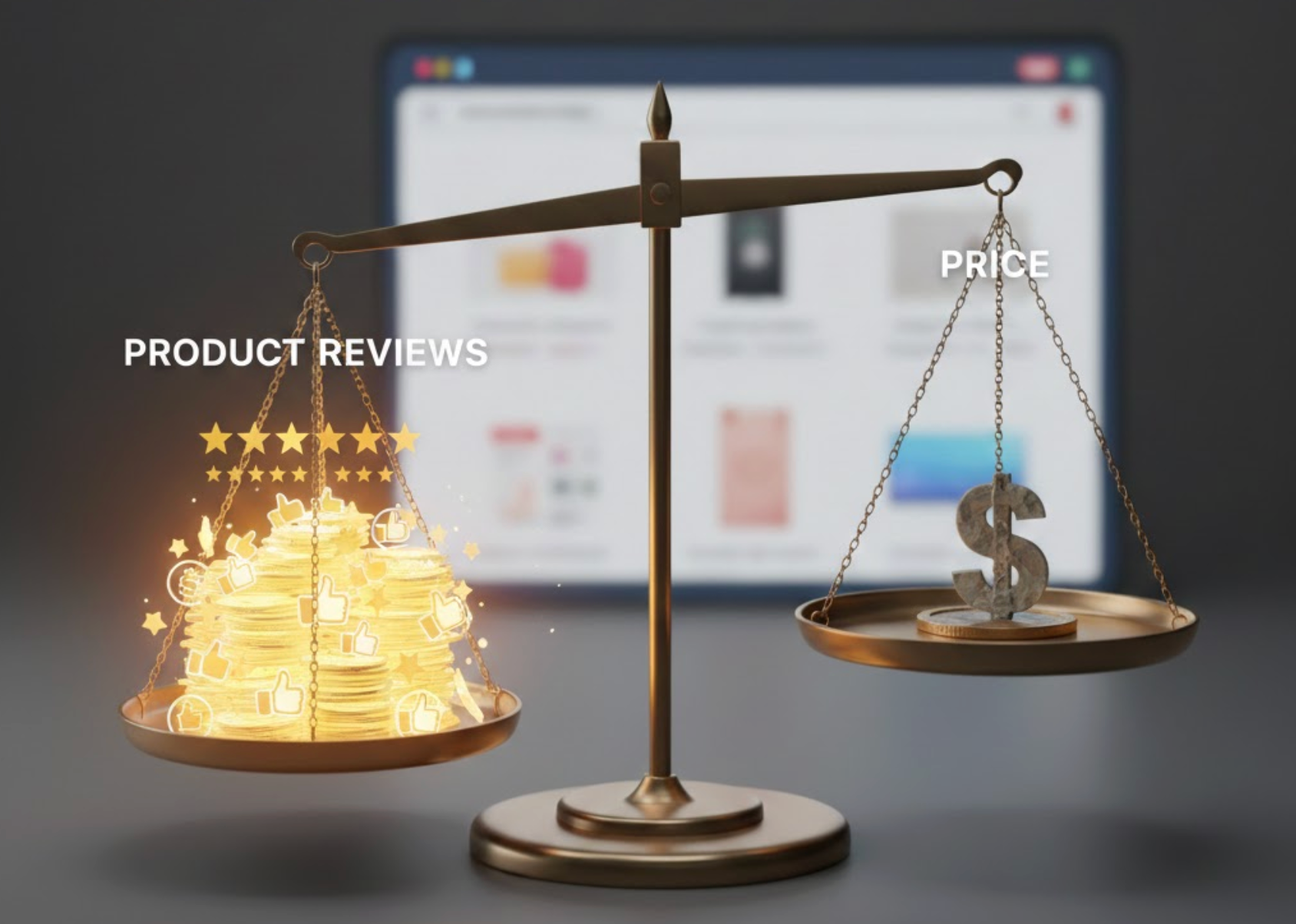
Price has long been seen as the primary driver of purchasing decisions in online shopping. Many businesses compete aggressively by offering discounts, flash sales, and lower prices to attract customers. However, as eCommerce continues to mature, shoppers are becoming more selective and value-driven rather than purely price-focused.
Today, product reviews often carry more influence than price because they provide trust, reassurance, and real-world insight. When faced with dozens of similar products, customers are far more likely to rely on the experiences of others than on a cheaper price tag. This shift reflects a deeper change in consumer psychology, where confidence and credibility outweigh short-term savings.
Shopping online always involves a degree of uncertainty. Customers cannot physically inspect products, assess materials, or test performance before making a purchase. This lack of direct interaction makes trust a critical factor in the buying decision.
Product reviews help reduce this uncertainty by offering honest perspectives from people who have already bought and used the product. When shoppers read detailed reviews or see user-generated photos, they gain reassurance that the product matches its description. Even if the price is higher, this sense of reliability often justifies the additional cost.
In contrast, a lower-priced product with few or no reviews may feel risky. Customers may question the product’s quality, the seller’s credibility, or the likelihood of receiving adequate support after purchase, making reviews far more persuasive than price alone.
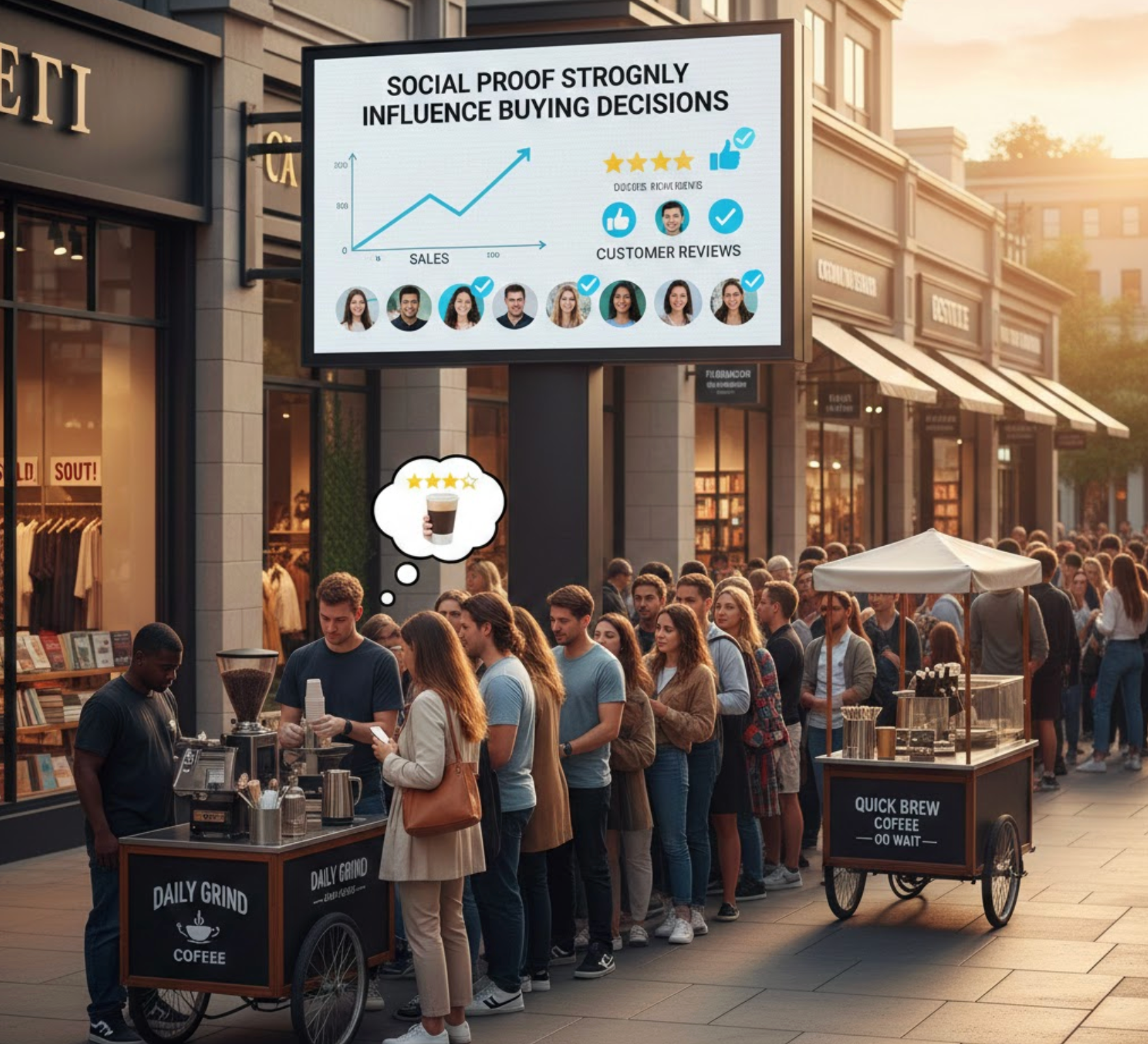
Humans naturally look to others for guidance, especially when making decisions that involve spending money. Product reviews serve as a strong form of social proof, showing that other customers have already taken the risk and evaluated the product.
When a product has many positive reviews, it creates a sense of popularity and acceptance. Shoppers assume that if many others are satisfied, the product must be a safe and worthwhile choice. This collective approval can make a higher price feel reasonable and justified.
On the other hand, a cheaper product with little social proof may struggle to gain traction. Without visible validation from other buyers, customers often hesitate, proving that social confidence often outweighs financial savings.
Fear of regret is a major barrier in online shopping. Customers worry about receiving poor-quality products, dealing with complicated returns, or wasting money on items that do not meet expectations. These concerns often stop buyers from completing a purchase.
Product reviews address these fears by offering clarity and reassurance. Buyers frequently share their experiences with quality, sizing, performance, and long-term use, helping future customers make informed decisions. This transparency significantly lowers the emotional risk of buying online.
As a result, shoppers are more comfortable paying a slightly higher price when reviews help eliminate uncertainty. The feeling of confidence and security often matters more than saving a small amount of money.
Price only tells customers how much they need to pay, it does not explain what they are getting in return. Product reviews add essential context by describing how a product performs in real-life situations and whether it truly delivers value.
Through reviews, customers learn about product details that may not be obvious from descriptions alone, such as durability, comfort, ease of use, or unique benefits. These insights help shoppers understand why a product may cost more and whether that cost is justified.
At the same time, reviews can reveal the drawbacks of cheaper products, such as poor build quality or short lifespan. This encourages buyers to focus on long-term value rather than upfront price, shifting decision-making power toward reviews.

In today’s fast-paced digital environment, shoppers want to make decisions quickly and efficiently. Star ratings offer a simple and instantly recognizable summary of a product’s overall performance and customer satisfaction.
A product with a high star rating immediately signals quality and reliability, even before a customer reads individual reviews. This quick visual cue helps buyers narrow down options and feel confident in their choice, especially when comparing similar products.
When faced with multiple alternatives, many shoppers prefer a higher-priced product with excellent ratings over a cheaper option with average or unclear feedback. In this way, star ratings often have a stronger impact than price comparisons.
Product reviews do not only influence individual purchases, they also shape how customers perceive a brand over time. Consistently positive reviews create an image of reliability, professionalism, and customer-focused service.
When customers trust a brand based on reviews, they become less sensitive to price changes. They are more likely to return for repeat purchases, recommend the brand to others, and choose it again even when competitors offer lower prices. This trust-driven loyalty provides long-term value that discounts alone cannot achieve.
Over time, strong reviews allow businesses to compete on credibility and quality rather than constantly lowering prices, leading to more sustainable growth.
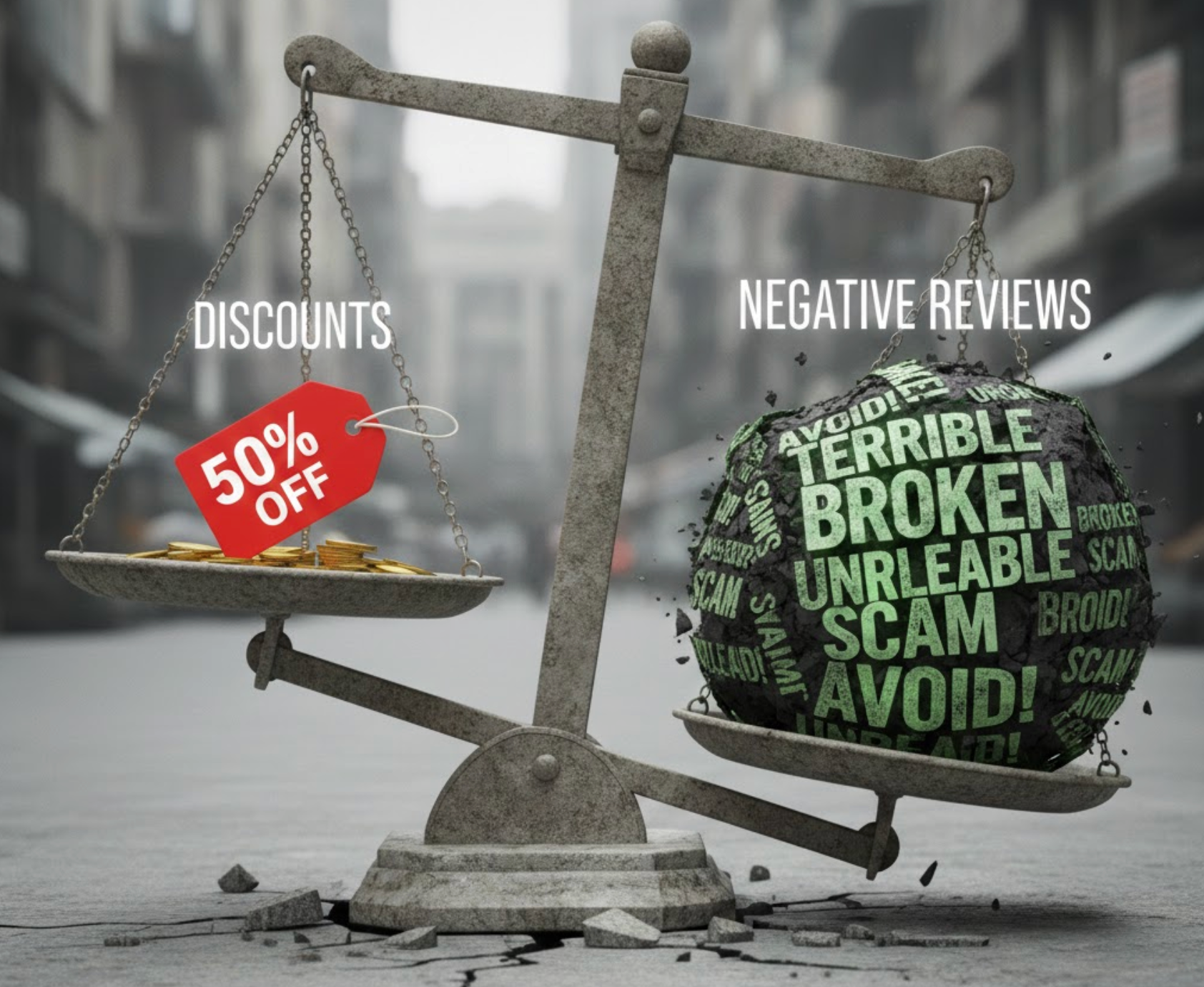
No product or brand is perfect, and customers understand this. However, a large number of negative reviews can quickly undermine trust, regardless of how low the price may be. Shoppers often interpret bad reviews as warning signs that the savings are not worth the potential problems.
Interestingly, a small number of negative reviews can actually increase credibility when balanced by positive feedback. When businesses respond professionally to criticism, it demonstrates transparency and commitment to customer satisfaction.
In comparison, relying on discounts to mask poor reviews rarely works. Customers are far more cautious today and tend to prioritize honest feedback over attractive pricing.
Ryviu is not only useful for importing reviews but also for helping new stores consistently collect authentic customer feedback. By reducing friction in the review process and automating key touchpoints, it allows merchants to turn more completed orders into valuable social proof.
By combining automation, visual proof, and flexible display options, Ryviu helps new stores transform customer experiences into ongoing trust signals that support long-term growth.

Price remains an important consideration, but it is no longer the dominant factor in online purchasing decisions. Modern shoppers prioritize confidence, authenticity, and real-world experiences over the lowest possible cost. Product reviews provide the trust and reassurance needed to move from consideration to purchase.
For eCommerce businesses, this shift highlights the importance of actively collecting, showcasing, and responding to customer reviews. Rather than competing solely on price, brands that invest in trust-building through reviews are better positioned for long-term success. In today’s competitive market, trust consistently outperforms discounts, and product reviews are the strongest foundation for that trust.