New to Shopify? Free trial, then $1/month for your first 3 months. Start free trial →
 Where is your store?
Ryviu works with both – pick yours to continue.








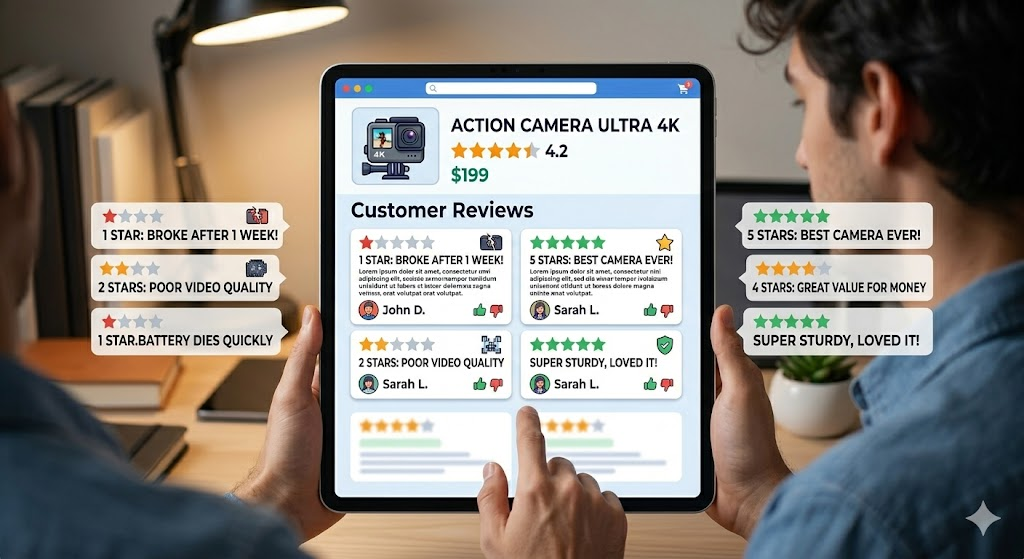
Customer reviews are one of the most influential elements in modern eCommerce decision-making. However, not all reviews align neatly; many product pages feature a mix of glowing praise and sharp criticism. While this diversity reflects real customer experiences, it can also create confusion and hesitation for potential buyers.
Understanding how to manage and present conflicting reviews is essential for maintaining trust and guiding customers toward confident decisions. Instead of viewing contradictions as a problem, businesses can treat them as an opportunity to provide transparency and depth. When handled correctly, conflicting reviews can actually strengthen credibility rather than weaken it.
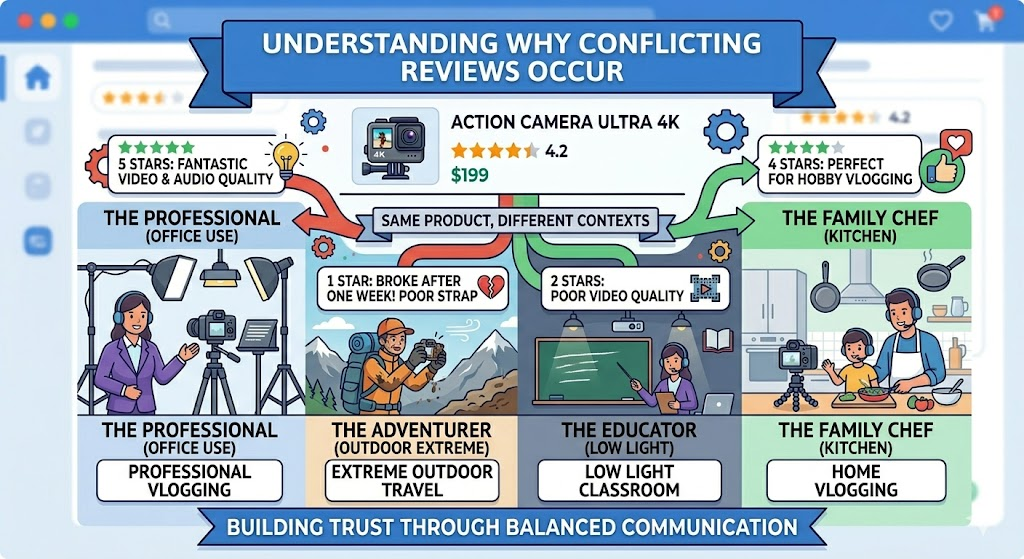
Conflicting reviews are not random; they are rooted in the diverse expectations and experiences of customers. Different users evaluate the same product based on unique needs, preferences, and contexts. What works perfectly for one person may fall short for another.
Additionally, factors like product usage scenarios, individual biases, and even timing can influence how a review is written. A customer who uses a product daily may have a very different perspective compared to someone who uses it occasionally. Recognizing these differences is the first step toward managing contradictions effectively.
To better interpret conflicting reviews, consider the following underlying causes:
Transparency is one of the most powerful tools when dealing with conflicting reviews. Instead of hiding or filtering out negative feedback, brands that openly display all opinions tend to gain more credibility. Customers are more likely to trust a product that shows both strengths and weaknesses.
When users see a balanced mix of reviews, they perceive the brand as honest and confident. This openness reduces skepticism and helps customers feel more informed. It also signals that the business values real feedback rather than curated perfection.
To build trust through transparency, focus on these practices:
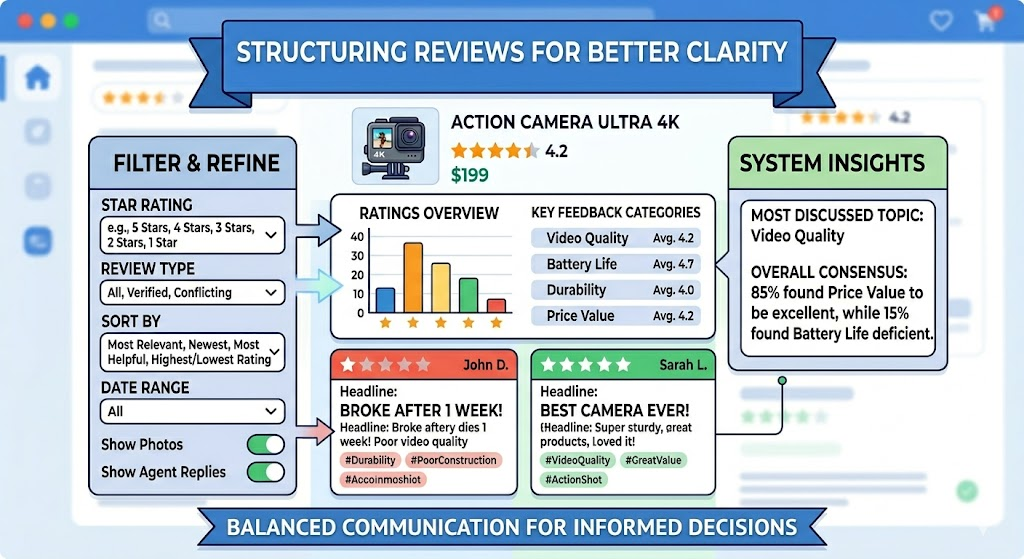
A cluttered review section can amplify confusion instead of resolving it. When conflicting opinions are presented without structure, users struggle to extract meaningful insights. Organizing reviews effectively transforms raw feedback into a useful decision-making tool.
Clear formatting allows customers to quickly scan, compare, and understand different viewpoints. It also ensures that both positive and negative experiences are contextualized properly. This structure helps reduce cognitive overload and improves overall user experience.
To enhance clarity when presenting conflicting reviews, consider the following elements:
Not all reviews are equally helpful. Short, vague comments like “good product” or “not worth it” add little value, especially when conflicting opinions exist. Context-rich reviews, on the other hand, provide detailed insights that help others understand the reasoning behind each perspective.
When customers explain how and why they used a product, their feedback becomes more actionable. This depth allows future buyers to determine whether a particular review is relevant to their own needs. Encouraging this level of detail can significantly reduce confusion.
To promote more meaningful reviews, focus on these strategies:
How a brand responds to reviews can be just as important as the reviews themselves. Thoughtful responses show that the company is listening, learning, and willing to improve. This interaction can turn negative feedback into a positive brand experience.
When customers see consistent and respectful responses, they are more likely to trust the business. It also demonstrates accountability and professionalism. Even unresolved issues can be softened through empathetic communication.
To handle responses effectively, consider these approaches:
As the volume of reviews grows, managing conflicting feedback manually becomes challenging. This is where technology plays a crucial role. Modern review platforms help businesses collect, organize, and display user-generated content in a structured and scalable way.
Instead of simply hosting reviews, advanced tools can analyze sentiment, highlight trends, and surface the most relevant insights. This reduces the burden on both businesses and customers. It also ensures that conflicting reviews are presented in a way that adds value rather than confusion.
To effectively manage reviews at scale, consider using tools that offer:

In this context, platforms like Ryviu provide a practical solution by helping businesses organize reviews in a structured, user-friendly manner. Rather than overwhelming visitors with raw data, such tools enable clearer presentation and better interpretation of mixed feedback.
Conflicting reviews are not necessarily a barrier to conversion; they can actually enhance it. When customers see a realistic mix of opinions, they feel more confident that the product page reflects genuine experiences. This authenticity can reduce hesitation and increase trust.
Moreover, conflicting feedback allows customers to self-segment. They can identify which reviews align with their own needs and make more informed decisions. This process leads to higher satisfaction and fewer post-purchase regrets.
To turn review conflicts into advantages, focus on these tactics:
Conflicting reviews often reveal valuable insights about product performance. Instead of dismissing inconsistencies, businesses can analyze them to identify areas for improvement. Patterns within the feedback can highlight recurring issues or unmet expectations.
This data-driven approach turns customer feedback into a strategic asset. It enables continuous product refinement and better alignment with customer needs. Over time, this leads to improved satisfaction and stronger brand loyalty.
To extract value from conflicting reviews, consider these actions:
Handling conflicting reviews is not a one-time effort; it requires ongoing attention. As new reviews are added, the balance of opinions can shift. Consistent management ensures that the review section remains clear, relevant, and trustworthy.
Regular updates and monitoring help maintain quality and accuracy. It also allows businesses to adapt their strategies based on evolving customer feedback. This continuous process is essential for long-term success.
To maintain consistency in review management, focus on:
A well-integrated review system does more than display feedback; it becomes a core part of the customer experience. By embedding review management into your overall strategy, you can create a more cohesive and effective product page.
This integration ensures that reviews are not treated as an afterthought. Instead, they become a dynamic element that informs, reassures, and guides customers. The right tools can make this process seamless and scalable.
To successfully integrate review platforms, consider:
Solutions like Ryviu support this integration by offering customizable features that align with different eCommerce strategies. By organizing and presenting reviews effectively, such platforms help businesses turn conflicting feedback into a structured and valuable resource.
Conflicting customer reviews are an inevitable part of any product page. Rather than viewing them as a challenge, businesses should see them as an opportunity to build trust, provide transparency, and improve decision-making. When managed effectively, these contradictions can enhance credibility and support conversions.
By focusing on structure, context, responsiveness, and technology, brands can transform scattered opinions into meaningful insights. Tools like Ryviu play a supportive role in this process, helping organize and present reviews in a way that benefits both businesses and customers.
Ultimately, the goal is not to eliminate conflicting reviews but to make them understandable and useful. When customers feel informed rather than confused, they are far more likely to make confident and satisfying purchase decisions.