New to Shopify? Free trial, then $1/month for your first 3 months. Start free trial →
 Where is your store?
Ryviu works with both – pick yours to continue.









Testimonials are now more than just a "nice-to-have" feature in today's crowded digital marketplace; they are a key factor in building conversion and trust. Consumers are constantly evaluating whether the feedback they see is genuine, relevant, and reflective of real experiences. As skepticism toward online content grows, the credibility of testimonials becomes a decisive factor in purchasing decisions.
However, not all testimonials are created equal, and subtle elements can dramatically influence how believable they appear. Real names, authentic photos, and meaningful context can transform a generic review into a powerful trust signal. Together, these components help bridge the gap between anonymous claims and relatable human experiences.
To better understand how these elements shape perception, let’s break down the specific roles each one plays in strengthening testimonial credibility.
Because they appeal to basic psychological concepts like relatability and social proof, testimonials are effective. People are more likely to trust others than brand messaging, particularly those who seem genuine and like them. This is why even a simple review can influence behavior more than a polished advertisement. When testimonials lack identifiable details, they often trigger doubt instead of confidence. Users may question whether the review is fabricated, incentivized, or selectively curated. On the other hand, adding humanizing elements reduces uncertainty and increases emotional connection.
To see how this plays out in practice, consider the key psychological drivers that make testimonials more credible:
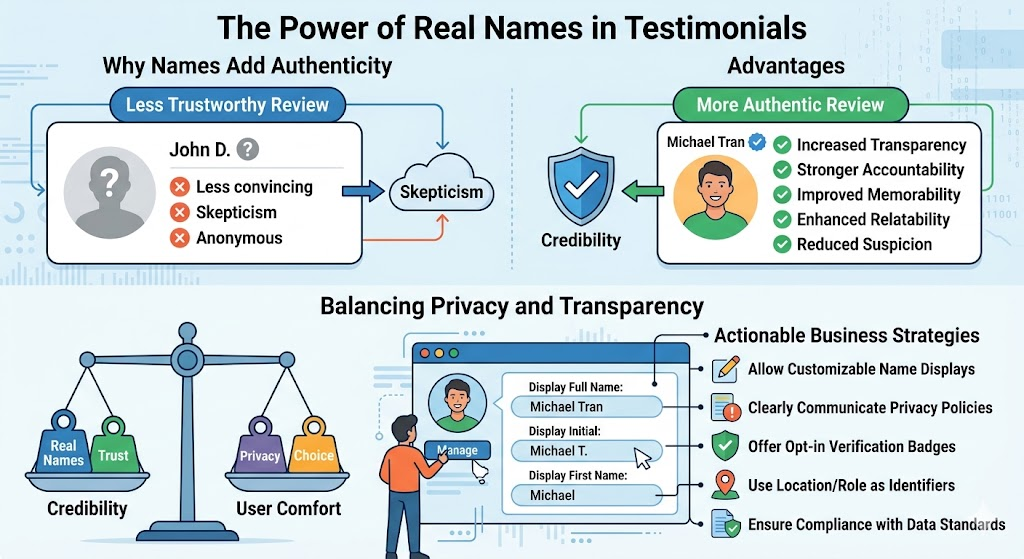
A testimonial attributed to “John D.” feels far less convincing than one credited to “Michael Tran.” Real names signal accountability, suggesting that the reviewer is a genuine individual willing to stand behind their opinion. This small detail can significantly reduce skepticism. Names also make testimonials more relatable by adding a human identity. Instead of reading abstract praise, users feel like they are hearing from a real person with a voice and perspective. This creates a subtle but powerful shift in perception.
To understand how real names enhance credibility, consider the following advantages:
While real names improve credibility, privacy concerns cannot be ignored. Some customers may hesitate to share their full identity, especially in sensitive industries or regions with strict data awareness. Brands must strike a balance between authenticity and user comfort. Offering flexible options, such as partial names or initials with additional context, can help maintain credibility while protecting privacy. Transparency about how data is used also builds trust and encourages participation.
To navigate this balance effectively, businesses can:
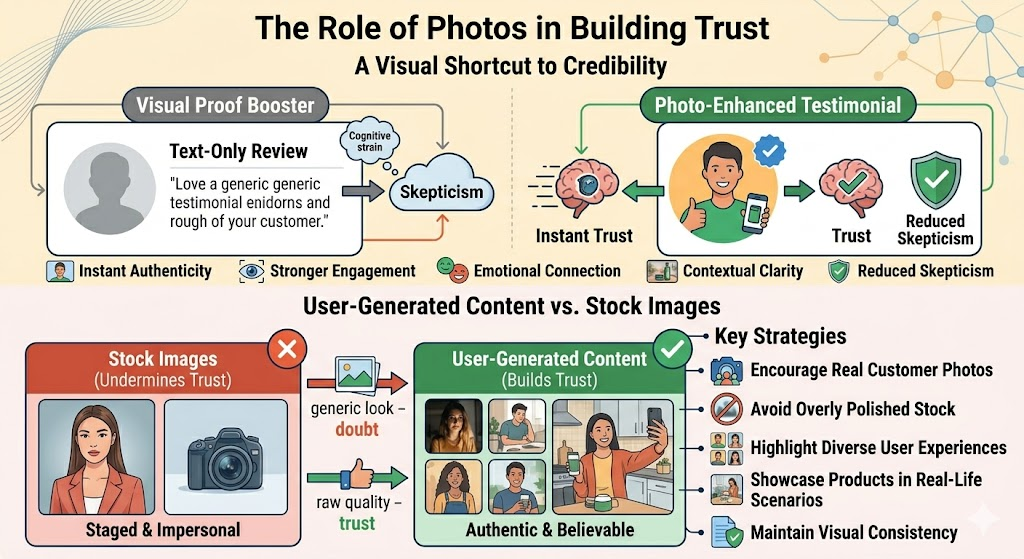
Photos add an immediate layer of authenticity that text alone cannot achieve. A face, a product in use, or a real-life setting provides visual confirmation that the testimonial is grounded in reality. This reduces the cognitive effort required to trust the review. Human brains process images faster than text, making photos a powerful shortcut to credibility. Even a simple profile picture can make a testimonial feel more personal and less scripted. In many cases, visuals are the deciding factor in whether a user continues reading.
To see why photos are so impactful, consider these benefits:
Not all images contribute equally to credibility. Stock photos, while visually appealing, often undermine trust because they feel staged and impersonal. Users are increasingly skilled at recognizing generic imagery, which can create doubt. User-generated content (UGC), on the other hand, carries an inherent sense of authenticity. Imperfect lighting, casual settings, and natural expressions make these images more believable. This rawness is precisely what builds trust.
To maximize the impact of photos, brands should prioritize the following:
A testimonial without context is often too vague to be persuasive. Statements like “Great product!” provide little insight into why the product is valuable or who it is best suited for. Context transforms generic praise into actionable information. By including details such as use case, timeframe, or customer background, testimonials become more informative and relatable. This helps potential buyers determine whether the product fits their own needs.
To understand the value of context, consider these key elements:
Providing context entails not only adding more information but also effectively presenting it. Well-structured testimonials and how you display product reviews guide readers through a clear narrative, making them easier to understand and trust. Clarity is just as important as detail. Breaking testimonials into digestible sections or highlighting key points can improve readability. This ensures that users quickly grasp the most important insights without feeling overwhelmed.
To structure contextual testimonials effectively, businesses can:
Individually, real names, photos, and context each enhance testimonial credibility. When combined, their impact multiplies, creating a comprehensive trust signal that is difficult to ignore. This synergy transforms testimonials into compelling, persuasive content. A testimonial with a real name, authentic photo, and detailed context feels complete. It answers key questions, reduces uncertainty, and builds confidence in a way that isolated elements cannot achieve. This holistic approach is what sets high-performing review systems apart.
To leverage this synergy, consider the combined benefits:
While combining these elements is powerful, poor implementation can backfire. Overloading testimonials with excessive information or forcing uniform formats can reduce authenticity. Balance and flexibility are key. It’s also important to ensure consistency and quality across all testimonials. A mix of high-quality and low-quality entries can create confusion rather than trust.
To avoid common pitfalls, businesses should:
Managing testimonials at scale requires the right tools and systems. Modern review platforms help businesses collect, organize, and display user-generated content, as seen in comparisons between tools like Ryviu and other solutions. They also streamline the process for customers, making it easier to share authentic feedback. A platform that supports real names, photo uploads, and contextual tagging can significantly enhance testimonial quality. Automation features further ensure consistency while maintaining authenticity.
To understand how technology supports credibility, consider these capabilities:

Building a credible testimonial system doesn’t have to be complex when the right tools are in place. Platforms like Ryviu are designed to help businesses integrate authenticity into every aspect of their review strategy. By focusing on real user experiences, they make it easier to build trust at scale. Ryviu enables brands to collect reviews that include names, photos, and detailed context without adding friction to the user experience. Its flexible display options allow businesses to showcase testimonials in a way that feels natural and engaging.
To see how this translates into practical benefits, Ryviu offers:
In an era where consumers are increasingly cautious, the credibility of testimonials can make or break a brand’s reputation. Real names, authentic photos, and meaningful context are not optional enhancements; they are required components of credible reviews. Together, they elevate testimonials from generic statements to compelling, human-centered stories, human-centered narratives.
By understanding the psychological impact of these elements and implementing them thoughtfully, businesses can create a more persuasive and engaging review experience. The result is not only higher trust but also stronger customer relationships and improved conversion rates.
Ultimately, investing in testimonial credibility is an investment in long-term success. With the right strategy and tools, brands can turn everyday customer feedback into one of their most powerful assets.