 New to Shopify? Free trial, then $1/month for your first 3 months. Start free trial →
 Where is your store?
Ryviu works with both – pick yours to continue.









As Shopify stores scale, review management becomes a strategic challenge rather than a simple feature. Multi-product catalogs introduce complexity in relevance, organization, and customer interpretation that smaller stores rarely face. Reviews still heavily influence trust and conversion, but only when they are clearly connected to the right products and experiences. Without a structured approach, reviews can create confusion instead of confidence.
The following strategies explain how to manage reviews effectively across large Shopify catalogs while maintaining clarity, trust, and scalability.
Managing reviews is especially critical when your Shopify store offers multiple products across different categories. As catalogs grow, unstructured reviews can confuse shoppers, dilute trust, and weaken the impact of social proof. Customers rely heavily on reviews to compare options, validate quality, and reduce purchase risk, particularly when many similar products are available. Without proper review management, even positive feedback may fail to influence buying decisions.
To understand why review management matters at scale, consider the following key reasons:
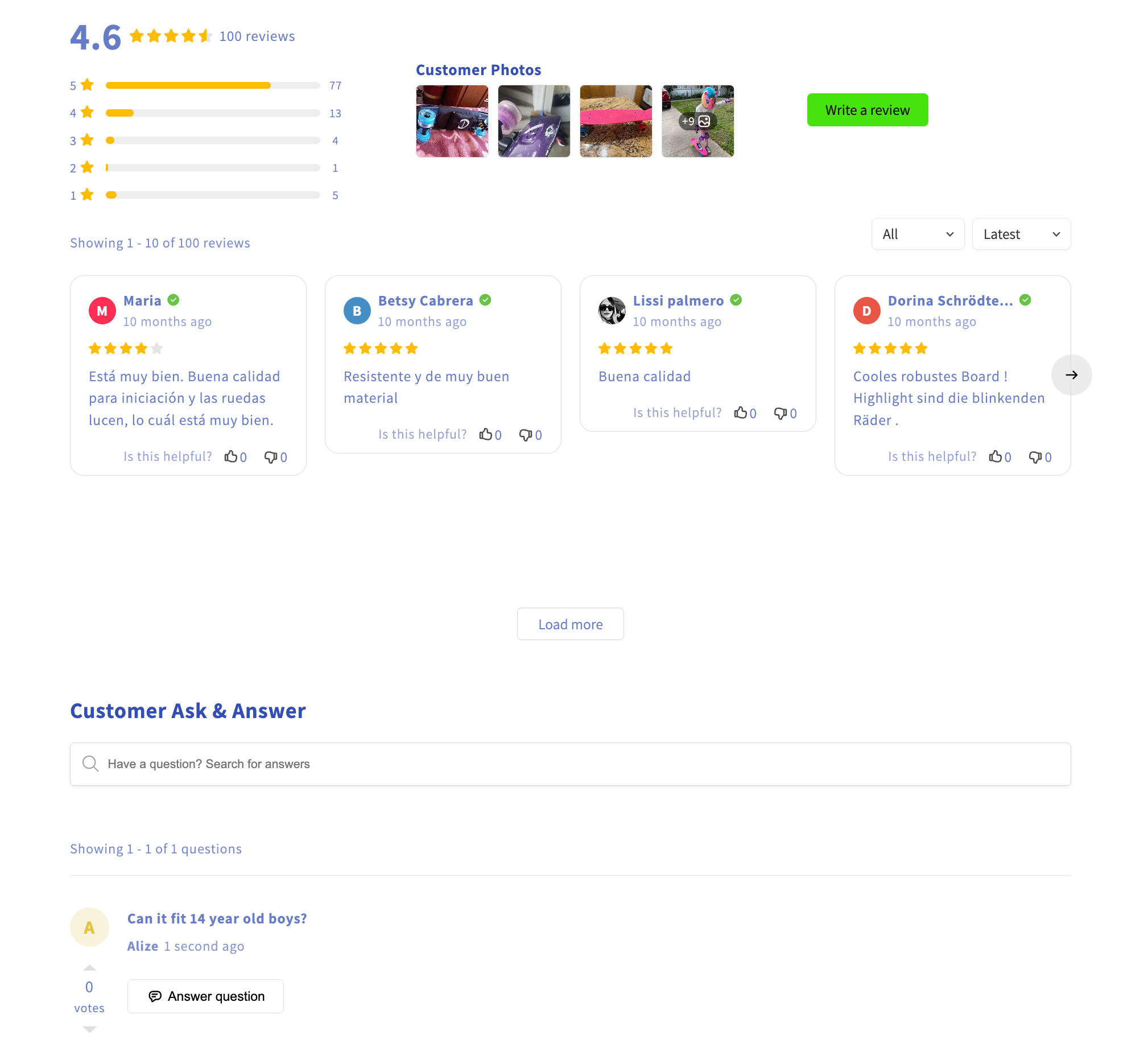
In a multi-product Shopify store, each product must stand on its own when it comes to customer feedback. Shoppers expect reviews to reflect the exact product they are viewing, not a loosely related alternative. When reviews are shared or improperly grouped, credibility drops and purchase hesitation increases. A dedicated review structure ensures accuracy, relevance, and transparency across the catalog.
To keep product reviews trustworthy and clear, structure must be deliberate:
Many Shopify products offer multiple variants such as size, color, material, or configuration. While variants expand choice, they also introduce uncertainty when reviews lack context. A review praising fit or quality may not apply equally across all options. Variant-level reviews solve this issue by aligning feedback with the exact customer selection.
To improve clarity and reduce buyer hesitation, variant reviews must be intentional:
As catalogs grow, review moderation becomes operationally demanding. Managing reviews individually across dozens or hundreds of product pages leads to inconsistency and delays. Centralized moderation allows merchants to oversee all incoming reviews from one location. This approach improves efficiency while maintaining consistent quality standards.
To scale moderation effectively, centralization is essential:
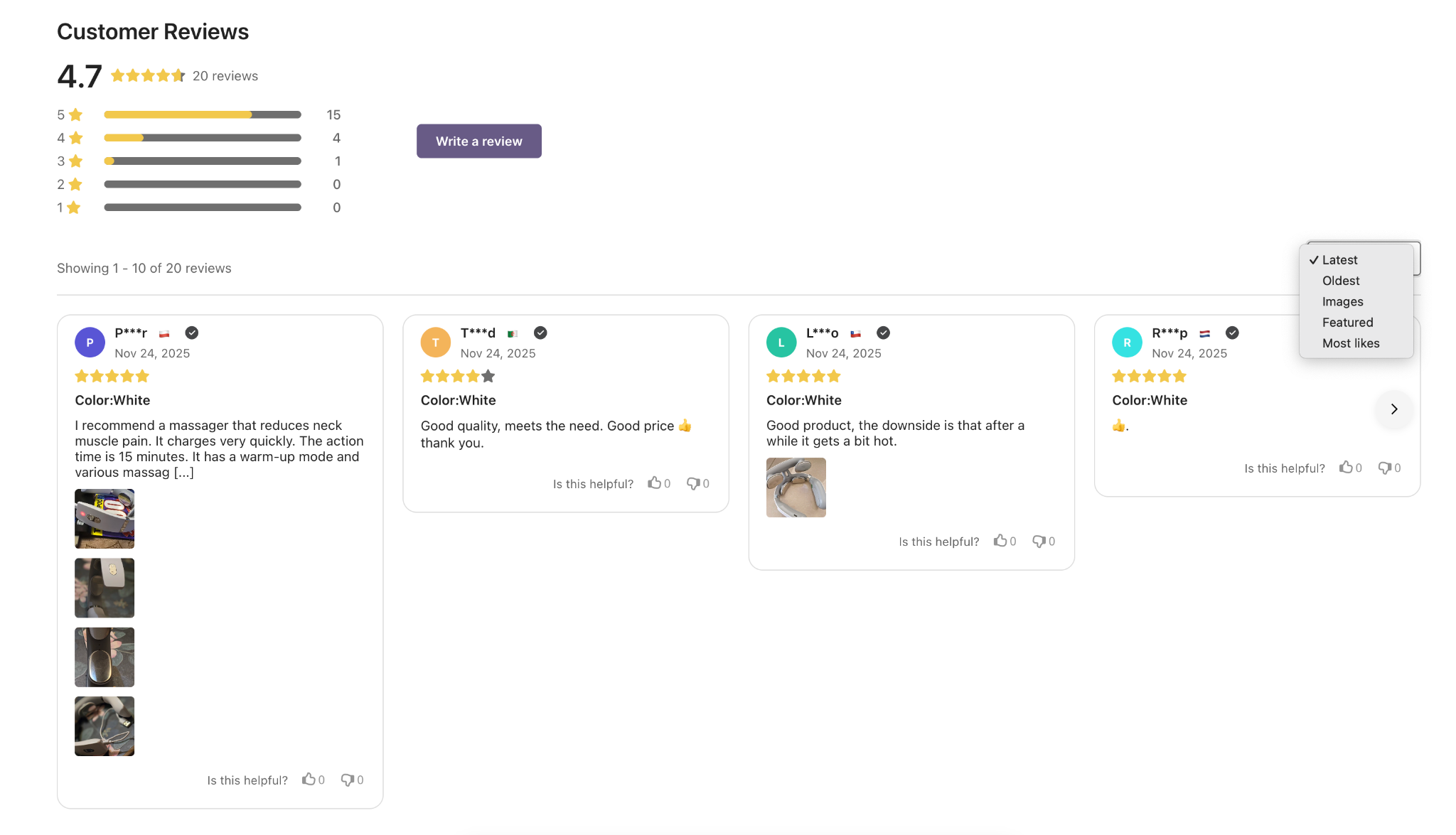
Large catalogs often result in long review sections that overwhelm shoppers. Without filtering tools, customers may abandon the page before finding useful information. Filters transform reviews into a navigable resource rather than a wall of text. This is especially important for high-involvement or technical products.
To improve usability, filtering reviews should be flexible and intuitive:
Reviews influence decisions long before customers land on a product page. In large catalogs, shoppers often browse collections, compare options, and narrow choices quickly. Limiting reviews to product pages delays trust-building. Strategic placement allows reviews to guide decisions earlier in the journey.
To support discovery and comparison, reviews should be visible across the store:
Reviews represent a continuous stream of customer insight. When viewed across multiple products, they reveal patterns that individual reviews cannot. These insights inform product development, merchandising, and marketing decisions. Treating reviews as data unlocks long-term competitive advantages.
To extract value, analysis must go beyond individual products:
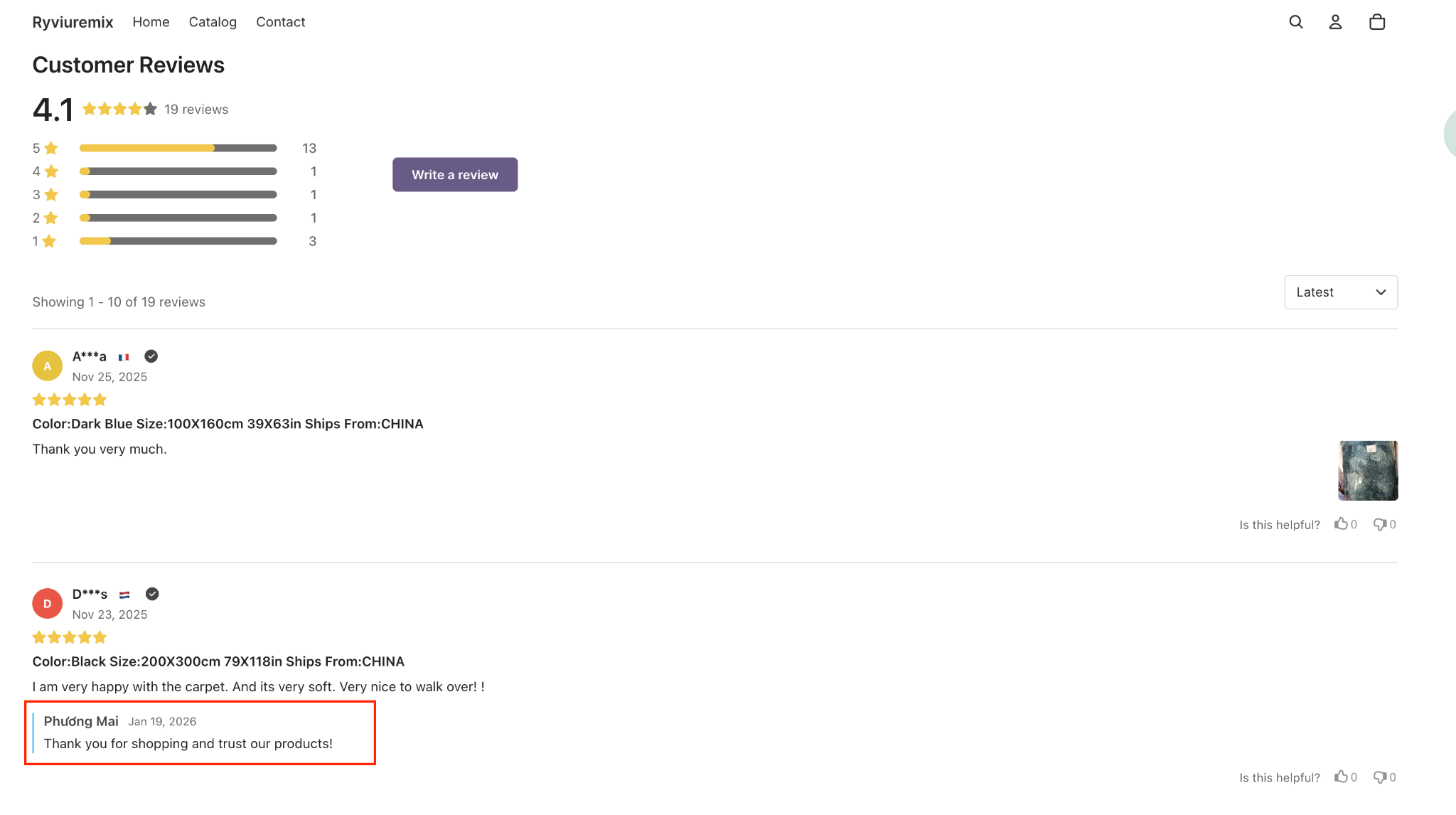
Customers expect acknowledgment when they leave reviews, especially detailed or negative ones. As catalogs grow, responding consistently becomes more difficult without a system. Inconsistent responses weaken brand perception and trust. A scalable response strategy ensures professionalism across all products.
To manage responses efficiently, consistency is critical:
Customer expectations, product quality, and policies change over time. Reviews written years ago may no longer reflect the current experience. In large catalogs, outdated reviews can mislead shoppers or create unnecessary doubt. Keeping reviews fresh ensures continued accuracy and relevance.
To maintain up-to-date review content, consistency matters:
As catalogs expand, review dilution becomes a hidden risk. New products may struggle to gain traction while older products accumulate the majority of feedback. This imbalance can distort perception and disadvantage newer listings. Intentional review distribution helps maintain fairness and clarity.
To prevent dilution, proactive management is required:
Not all products are at the same stage of maturity. New launches, bestsellers, and clearance items require different review strategies. Treating all products the same can reduce review effectiveness. Aligning review management with product lifecycle improves relevance.
To match reviews with lifecycle needs, strategy matters:
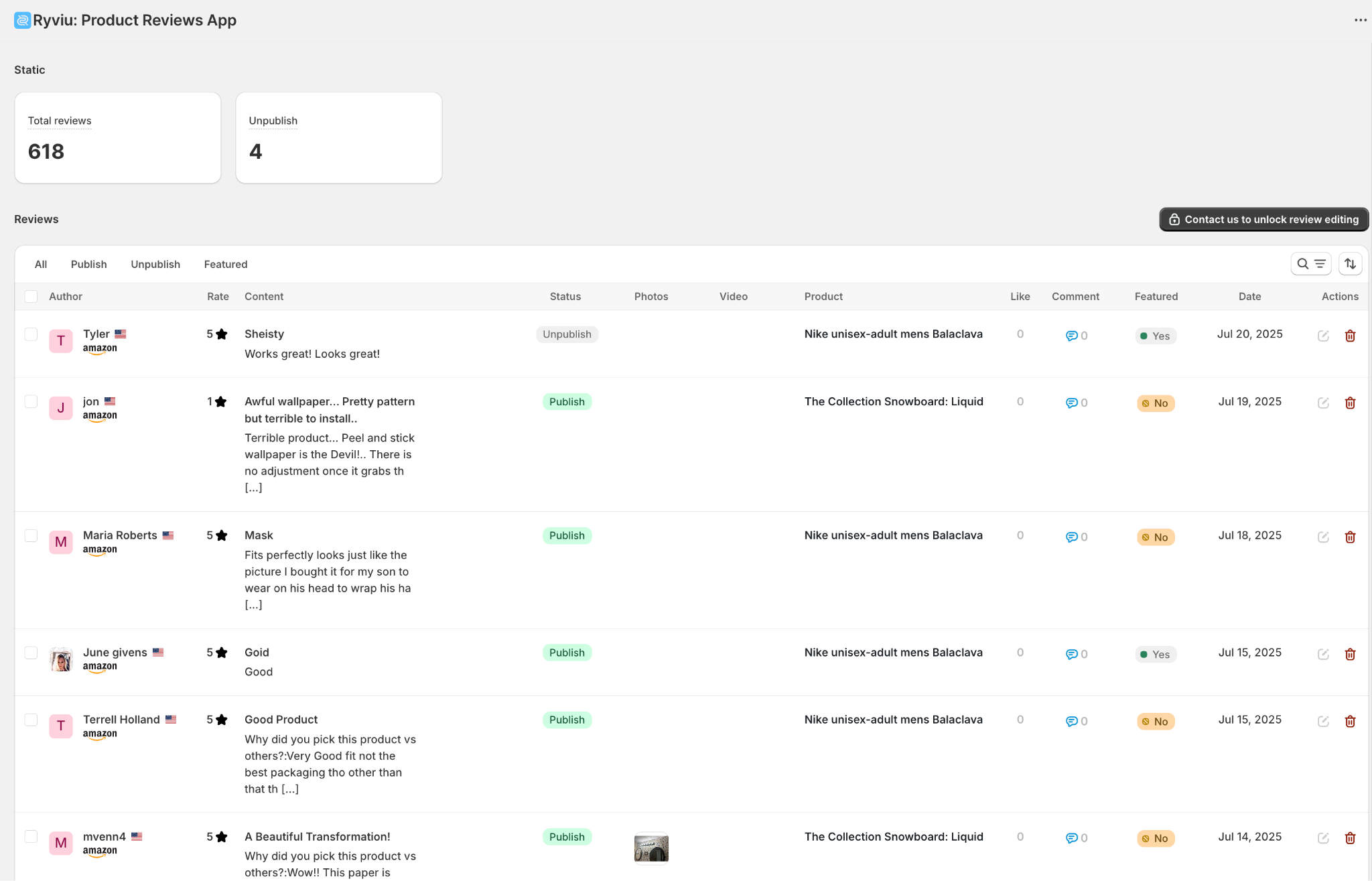
As catalogs grow, manual review management becomes unsustainable. Ryviu is designed to support Shopify merchants handling multiple products, variants, and high review volumes. It focuses on organization, relevance, and scalability rather than simple review collection. This makes it suitable for stores transitioning from small catalogs to complex inventories.
To support large Shopify catalogs, Ryviu provides practical review management tools:
Managing reviews for multi-product Shopify catalogs requires a strategic, scalable approach. Reviews must be structured per product, contextualized by variant, moderated centrally, and displayed thoughtfully across the store. When analyzed collectively and refreshed consistently, reviews become more than social proof, they become a growth engine.
With a strong review management framework, and scalable solutions like Ryviu, Shopify merchants can confidently turn complex catalogs into clear, trust-driven shopping experiences that convert and retain customers.




