New to Shopify? Free trial, then $1/month for your first 3 months. Start free trial →
 Where is your store?
Ryviu works with both – pick yours to continue.









In digital commerce, customers expect answers to appear quickly and effortlessly. When product questions are buried or poorly ordered, even strong content can lose its impact. Structuring and prioritizing questions thoughtfully helps shoppers find reassurance, reduces friction, and supports confident decision-making.
To achieve this, merchants need a strategic approach that balances customer intent, engagement data, and content clarity. The following sections explain how to surface the most helpful questions first in a structured and scalable way.
Before deciding which questions deserve top placement, it’s important to define what makes a question genuinely helpful. From a customer’s perspective, helpful questions are those that remove uncertainty, address common objections. These questions often arise at moments when customers are close to making a purchase but need final confirmation.
Helpful questions often relate to shipping timelines, sizing or compatibility, return policies, warranty coverage, and real-world usage scenarios. These questions typically appear repeatedly across customer support tickets, reviews, and live chats. When stores align their Q&A ordering with real customer intent rather than internal assumptions, the content immediately feels more relevant and trustworthy.
To identify these questions accurately, merchants should analyze historical data and observe where customers tend to hesitate or abandon pages. The clearer the insight, the easier it becomes to prioritize the right questions.
With this perspective in mind, stores can begin identifying which questions truly deserve top placement.
Customer behavior provides clear signals about which questions matter most. Instead of relying solely on assumptions, engagement data reveals what shoppers actively interact with and value. Questions that receive views, likes, or upvotes naturally indicate higher usefulness.
This data-driven approach ensures that the most relevant questions rise to the top organically. It also allows the Q&A section to adapt over time without constant manual reordering.
By trusting engagement signals, merchants can create a system that continuously reflects real customer needs.

Some questions play a direct role in conversion decisions, while others are informational only. Purchase-barrier questions address fears, risks, or doubts that stop customers from clicking “Buy Now.” When these questions appear first, they immediately reduce hesitation.
These high-impact questions often relate to trust, fulfillment, or post-purchase outcomes. Elevating them ensures customers feel reassured early in their journey.
Once barriers are removed, customers are more likely to continue browsing with confidence.
As Q&A sections grow, they often become crowded with repeated or slightly varied questions. While repetition signals importance, it can also overwhelm users and hide valuable answers. Consolidating similar questions helps keep content focused and readable.
A single, well-written answer can address multiple variations of the same concern. This improves clarity while allowing the most useful topics to remain visible at the top.
By simplifying the structure, stores make it easier for customers to scan and absorb information.
Customers place higher trust in information that appears current and actively maintained. Older answers, even if correct at the time, can create doubt when policies or products change. Highlighting updated answers improves both credibility and usefulness.
Fresh content signals that the store is attentive and responsive. It also reassures customers that they are not relying on outdated information.
With freshness as a priority, question ordering becomes more aligned with reality.
Different customers have different informational needs depending on where they are in the buying journey. New visitors often seek reassurance, while returning customers may want deeper or more specific details. Smart sorting allows stores to match questions to intent.
Context-aware ordering improves relevance without increasing content volume. It ensures customers see what matters most to them at that moment.
By adapting dynamically, Q&A sections become more personalized and effective.
Managing and prioritizing questions manually becomes difficult as stores scale. Specialized tools help automate sorting, tracking, and optimization based on real customer data. This is where review and Q&A platforms add significant value.
Ryviu allows merchants to identify frequently asked and highly engaged questions across both reviews and Q&A sections. By analyzing these insights, merchants can surface high-impact questions at the top and ensure answers remain aligned with customer expectations.
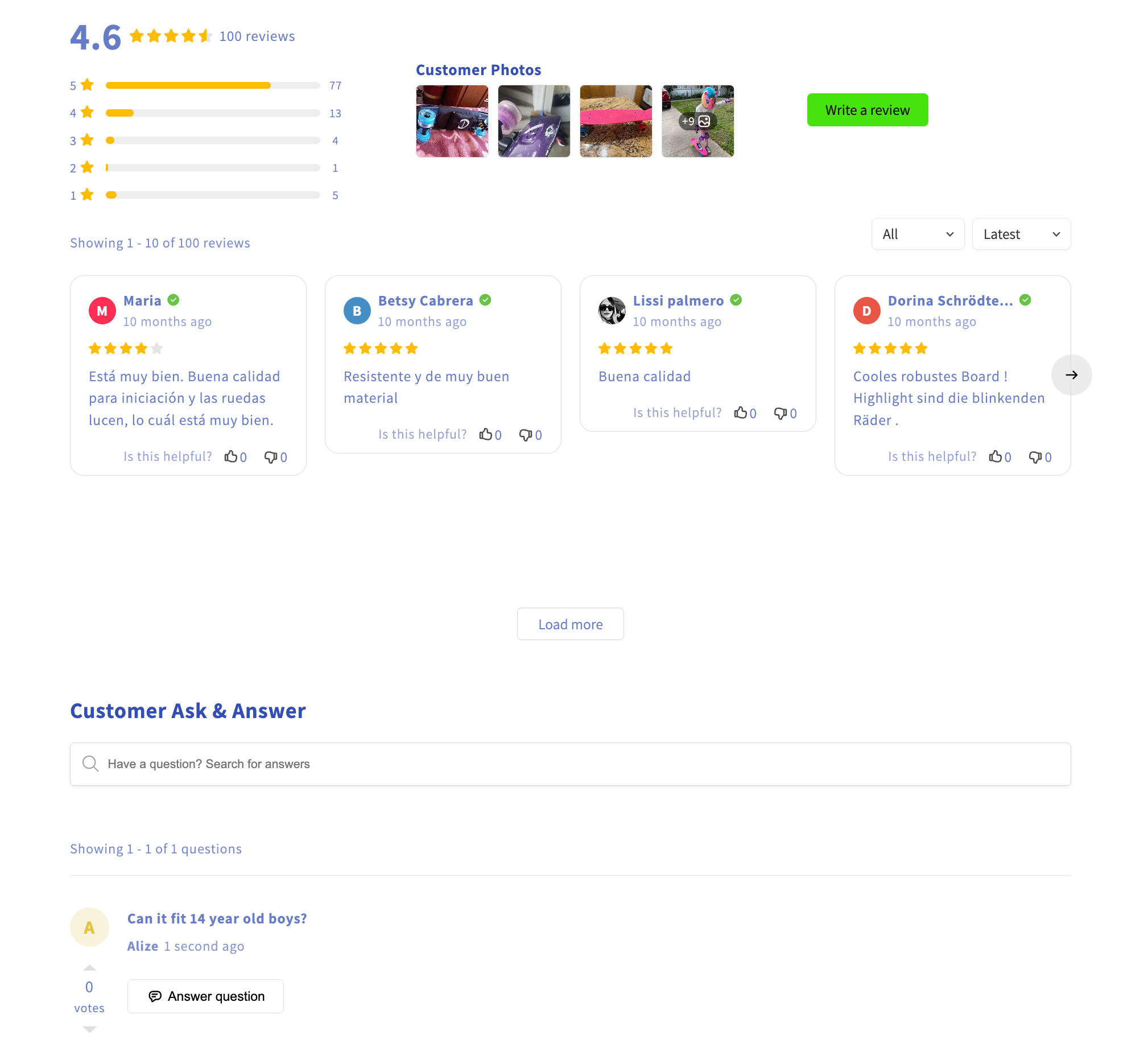
With the right tools, optimization becomes both efficient and consistent.
Customer needs change as products evolve, markets shift, and seasons fluctuate. A static Q&A order quickly becomes outdated if it is not reviewed regularly. Continuous refinement keeps the most helpful questions visible at all times.
Routine audits help identify outdated answers, new recurring questions, and shifting priorities. This ongoing process ensures long-term relevance and usability.
By treating question ordering as an ongoing strategy, merchants maintain a high-quality customer experience.
Surfacing the most helpful questions first is a strategic effort that blends empathy, data, and clarity. When questions are prioritized thoughtfully, customers find answers faster and feel more confident in their decisions. Over time, this leads to higher trust, better engagement, and improved conversion rates.
By understanding customer intent, leveraging engagement signals, and refining content continuously, merchants can transform Q&A sections into powerful decision-support tools rather than passive content blocks.