New to Shopify? Free trial, then $1/month for your first 3 months. Start free trial →
 Where is your store?
Ryviu works with both – pick yours to continue.








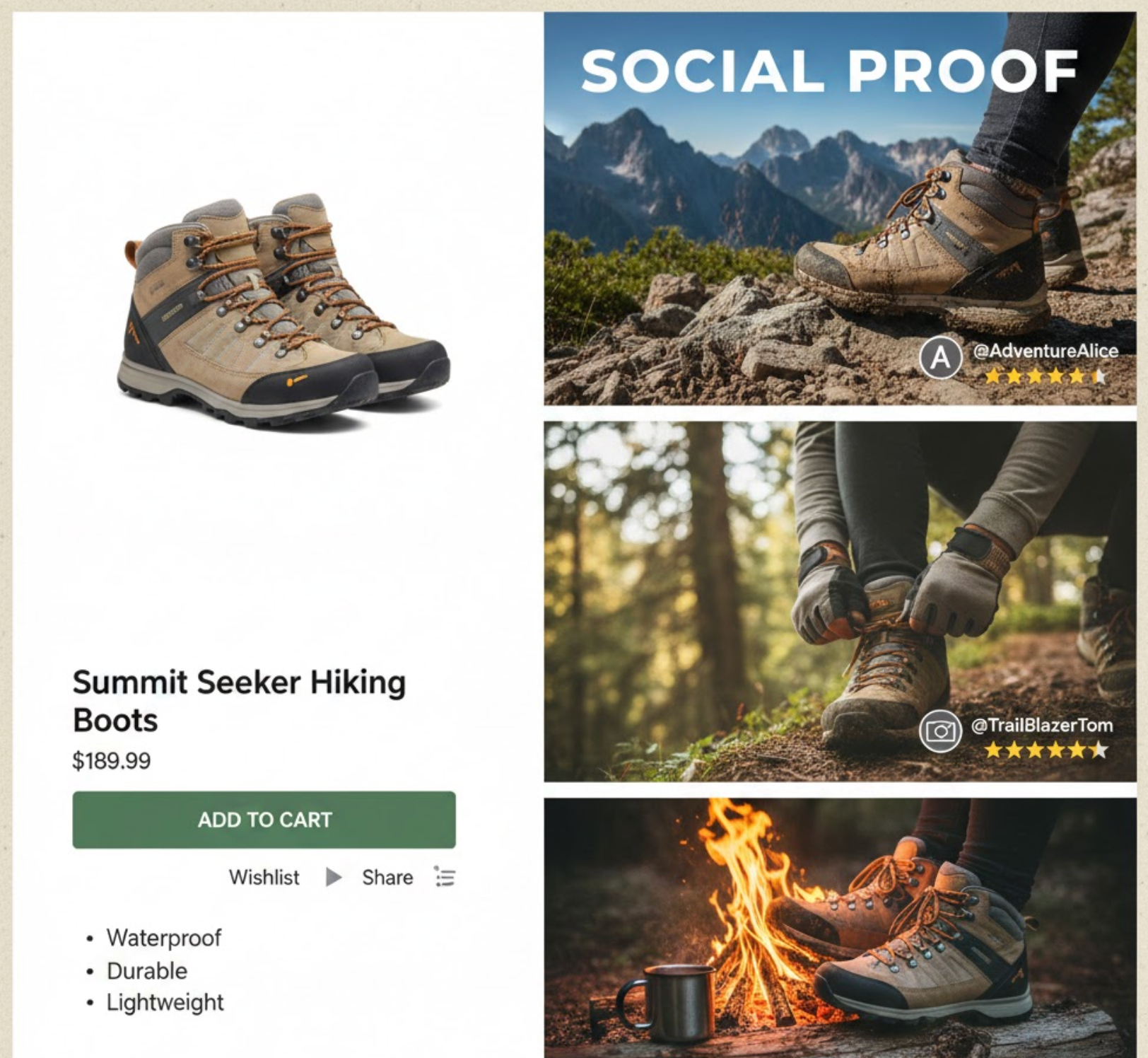
In modern eCommerce, shoppers are no longer satisfied with perfectly styled studio images alone. While professional photos help present a brand’s identity and product quality, they often feel distant and idealized. Customers today crave realism. They want to see how products look, feel, and function in real life, on real people, in real homes, and under everyday conditions.
This is where user-generated photos (UGP) become incredibly powerful. Photos taken and shared by customers add authenticity, credibility, and emotional reassurance to product pages. When used correctly, they don’t just enhance visual appeal, they actively influence purchasing decisions, reduce hesitation, and improve long-term customer satisfaction.
Below, we’ll explore in detail how user-generated photos improve product pages and why they’ve become an essential part of high-converting eCommerce strategies.
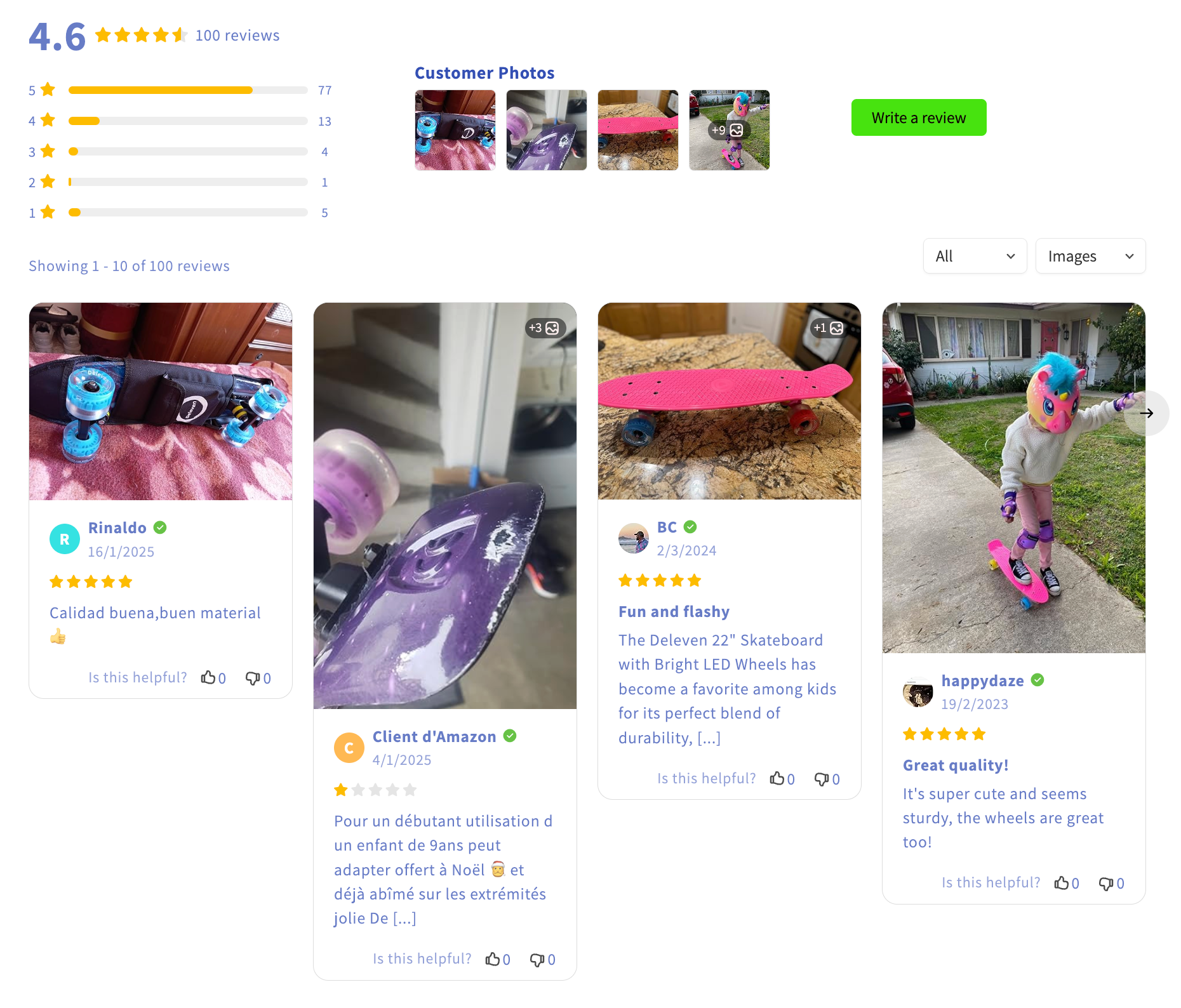
Trust is one of the biggest barriers in online shopping. Customers cannot physically touch, try, or test products, so they rely heavily on visual cues to determine whether a product is worth buying. User-generated photos help bridge this trust gap by offering honest, experience-based visual proof.
Unlike brand-created images, customer photos are not overly polished or staged. They show products as they are, sometimes imperfect, sometimes messy, but always real. This authenticity makes them far more believable in the eyes of shoppers. Seeing real customers confidently using a product sends a clear signal that the product is reliable and meets expectations.
Over time, consistently displaying authentic customer photos helps establish brand credibility and reduces skepticism, especially for first-time visitors who are still deciding whether to trust your store.

One of the most common reasons shoppers hesitate is uncertainty. They may like a product but struggle to imagine how it will look or work in their own lives. User-generated photos solve this problem by providing real-world context.
For fashion brands, customer photos reveal how clothing fits different body types, how fabrics drape, and how items look when styled casually rather than professionally. For home and lifestyle products, user photos show scale, placement, and practical usage in real environments.
These visuals answer unspoken questions that product descriptions often can’t fully address. As a result, customers feel more informed and confident, making it easier for them to move from browsing to buying.
Confidence plays a major role in conversion rates. When shoppers feel unsure, they delay decisions or abandon carts. User-generated photos help eliminate that uncertainty by reinforcing that others have already purchased and enjoyed the product.
Seeing multiple customer photos creates a strong sense of social validation. It subtly communicates popularity, satisfaction, and trustworthiness. Shoppers begin to feel reassured that they are making a safe and informed choice.
When combined with ratings and reviews, user-generated photos strengthen the overall persuasive power of a product page, often leading to higher add-to-cart rates and completed purchases.
Returns are costly and often stem from mismatched expectations. When customers rely solely on idealized images, they may feel disappointed when the product arrives looking slightly different than imagined.
User-generated photos provide a more realistic representation of products, including variations in color, texture, size, or fit. This transparency helps customers understand exactly what they’re buying before they place an order.
By aligning expectations with reality, brands can significantly reduce return rates, improve post-purchase satisfaction, and minimize negative feedback caused by misunderstandings rather than product quality.
User-generated photos naturally attract attention. Shoppers tend to scroll through customer images, compare different photos, and zoom in to inspect details more carefully. This behavior increases engagement and keeps visitors on product pages longer.
Higher engagement often leads to stronger purchase intent. When customers interact with content instead of quickly skimming and leaving, they’re more likely to feel invested in the product.
Additionally, dynamic photo galleries that update regularly with new customer content keep product pages fresh and engaging, encouraging repeat visits and deeper exploration.

User-generated photos do more than influence individual buying decisions, they help foster a sense of community around a brand. Featuring customer photos signals that the brand values real experiences and customer voices.
When shoppers see people like themselves represented on product pages, they feel more connected and included. This emotional connection encourages repeat purchases and long-term loyalty.
Over time, customers may also feel motivated to share their own photos, knowing their content could be featured. This creates a positive feedback loop where customers become active contributors to the brand’s story.
Product pages are no longer just about listing features, they’re about telling a story. User-generated photos add depth to that story by showing how products fit into real lifestyles.
When integrated alongside professional images, videos, and reviews, customer photos create a layered and persuasive narrative. Shoppers can move seamlessly from polished brand visuals to authentic customer experiences, gaining a full understanding of the product.
This balanced approach makes product pages feel informative, trustworthy, and visually compelling rather than overly promotional.
Collecting user-generated photos consistently requires more than simply asking customers to upload images. Many shoppers are willing to share photos, but without the right timing and tools, participation often remains low. Ryviu helps remove these barriers by making photo sharing a natural and easy part of the review process.
By simplifying how and when customers are invited to upload images, Ryviu turns everyday reviews into a steady source of authentic visual content.
User-generated photos have evolved from a “nice-to-have” feature into a core element of effective product pages. They build trust, improve visualization, boost conversion rates, reduce returns, and create stronger emotional connections between brands and customers.
In an online marketplace where authenticity matters more than perfection, allowing customers to visually share their experiences gives brands a powerful competitive advantage. By actively collecting and showcasing user-generated photos, especially with the help of tools like Ryviu, brands can transform product pages into persuasive, community-driven experiences that drive sustainable growth.