 New to Shopify? Free trial, then $1/month for your first 3 months. Start free trial →
 Where is your store?
Ryviu works with both – pick yours to continue.








Running a dropshipping business, especially a model that sources products from Amazon to sell on Shopify, brings unique challenges. One of the most time-intensive tasks is transferring product information from Amazon listings into Shopify: copying images, variants, pricing, and descriptions manually can take hours. The Ryviu Amazon Products Importer app aims to simplify this process by automating the product import workflow and syncing crucial details between Amazon and your Shopify store.
Below is an in-depth look at what the app does, how it works, its pricing plans, and why it may be valuable for Amazon dropshippers.
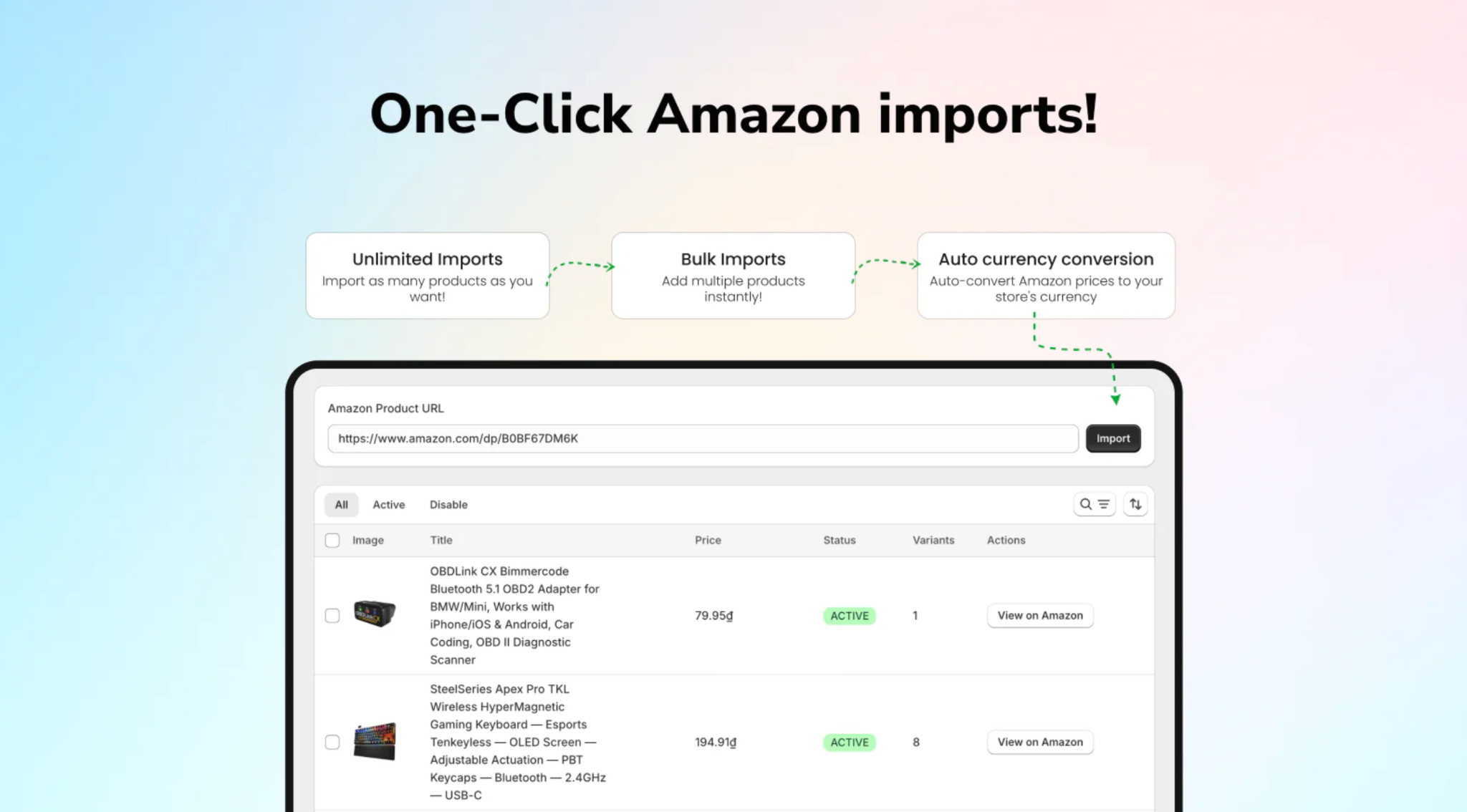
At its core, the Ryviu Amazon Products Importer is a Shopify app that allows merchants to import products directly from Amazon into their Shopify catalog, including detailed data such as:
Once imported, products are listed in your Shopify admin like any other product, ready for you to edit, organize into collections, and sell.
A key capability is automatic syncing: the app can update price and stock levels based on changes detected on Amazon, which is important for dropshippers who don’t control Amazon inventory directly.
For Amazon dropshippers who rely on Amazon as a product source while selling through Shopify, efficiency and accuracy are critical. Managing product data manually becomes increasingly difficult as the store grows. An importer like Ryviu helps streamline these processes and reduce operational friction.
Manually creating Shopify product listings can take several minutes per item, which quickly adds up. With an importer, products can be added to the store in just a few clicks. This makes it much easier to launch new stores or expand catalogs with large numbers of SKUs.
Manual data entry increases the risk of mistakes such as missing variants, incorrect prices, or mismatched images. Automated imports pull data directly from Amazon listings, preserving the original product structure. This helps ensure consistency and accuracy across your Shopify store.
Amazon prices and inventory levels can change frequently, sometimes without notice. The syncing feature helps keep Shopify listings updated based on the latest Amazon data. This reduces the chances of selling products that are no longer available or incorrectly priced.
Selling internationally often requires dealing with different currencies, which can complicate pricing. The importer automatically converts Amazon prices into your store’s default currency. This helps maintain clear and consistent pricing for customers in different markets.
As your store grows, importing products one by one becomes inefficient. Bulk importing allows you to bring in multiple products from an Amazon seller or store URL at once. This makes product testing and niche expansion significantly faster and more manageable.
Below are the core features Amazon dropshippers are most likely to use on a regular basis when managing their Shopify stores.
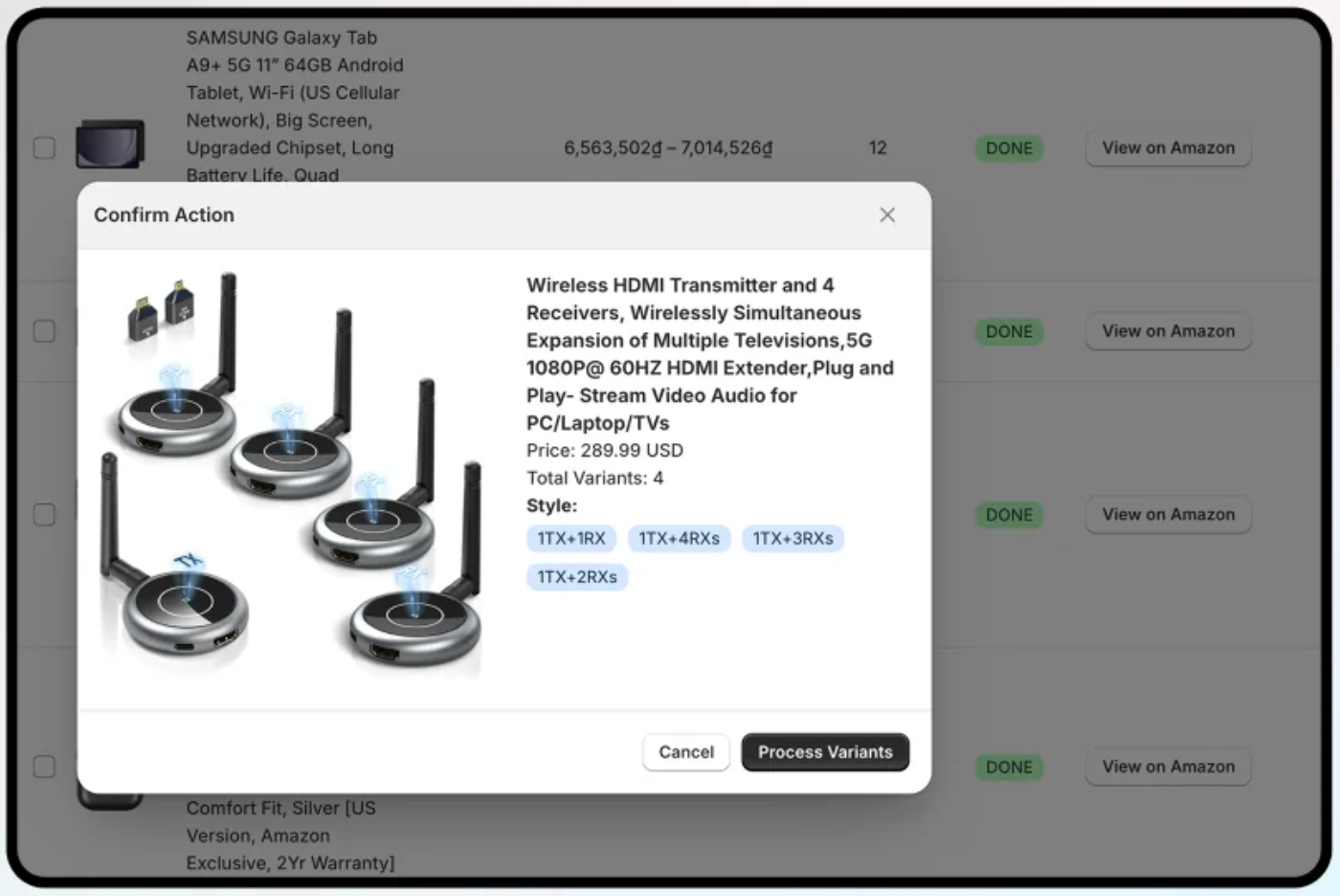
Many Amazon products come with multiple variations, such as different sizes, colors, or styles. The importer automatically brings in all available variants and organizes them correctly within Shopify. This eliminates the need to manually recreate complex option structures. As a result, product listings are more accurate and faster to publish.
Amazon product prices and stock levels can change frequently due to demand or promotions. The app periodically syncs this data to help keep Shopify listings aligned with the original Amazon source. This reduces the risk of selling products at outdated prices or when inventory is no longer available. Sync performance may vary depending on the selected plan and Amazon data updates.
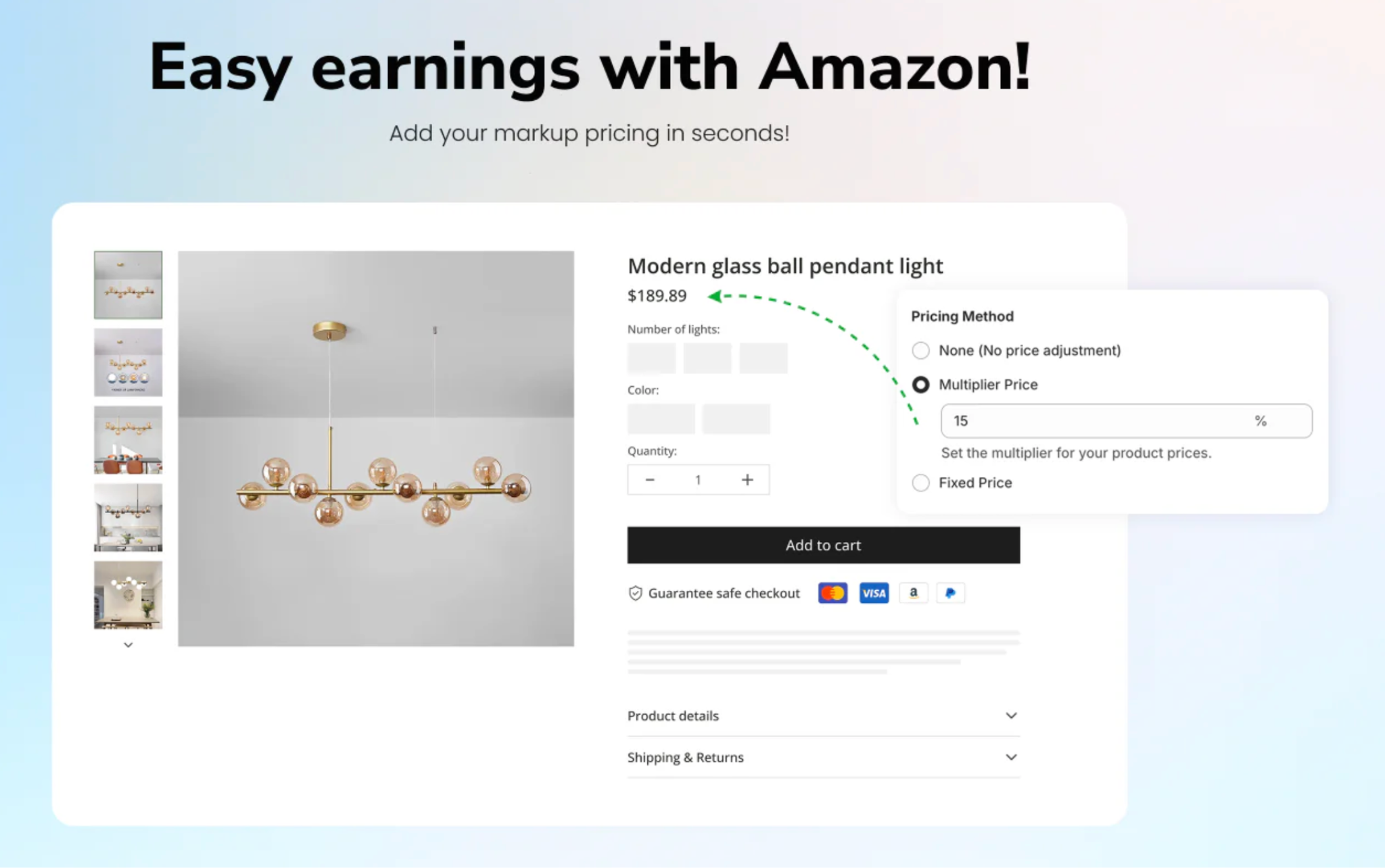
Maintaining profit margins is a key challenge in dropshipping. The app allows sellers to apply pricing rules, such as percentage markups or fixed increases, during the import process. This helps standardize pricing across multiple products without manual calculations. Sellers can later fine-tune prices directly within Shopify if needed.
Dropshippers sourcing products from international Amazon marketplaces often deal with different currencies. The importer automatically converts Amazon prices into the store’s default currency during import. This helps ensure pricing consistency and avoids confusion for customers. While conversion is automatic, sellers still retain control over final pricing adjustments.
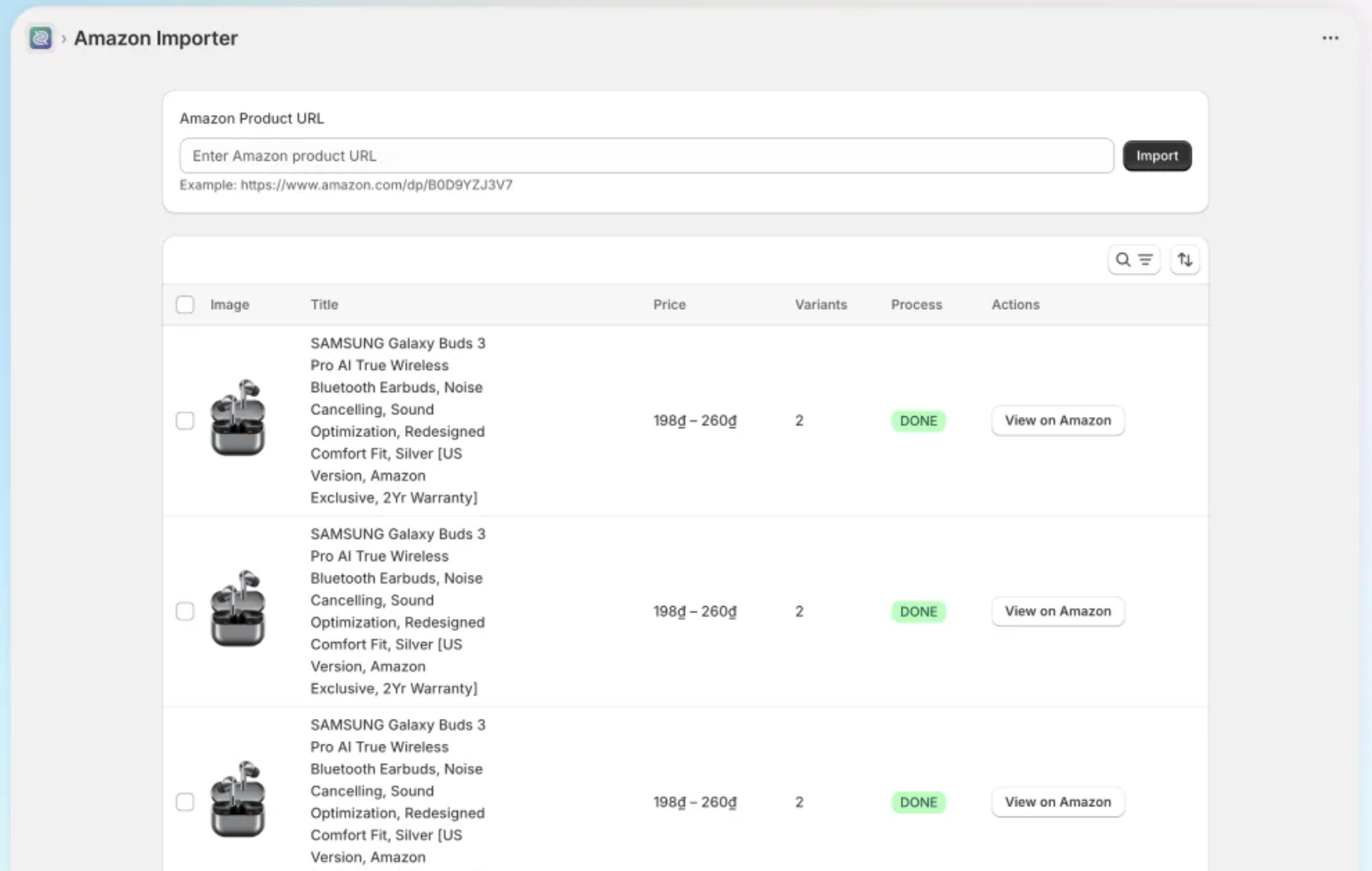
For sellers looking to scale quickly, importing products one at a time is inefficient. The bulk import feature allows merchants to import multiple products using an Amazon store or seller URL. This significantly speeds up catalog creation when testing new niches or expanding product ranges. Import limits depend on the selected pricing plan.
Understanding pricing is critical, especially for dropshippers who are often managing tight margins:
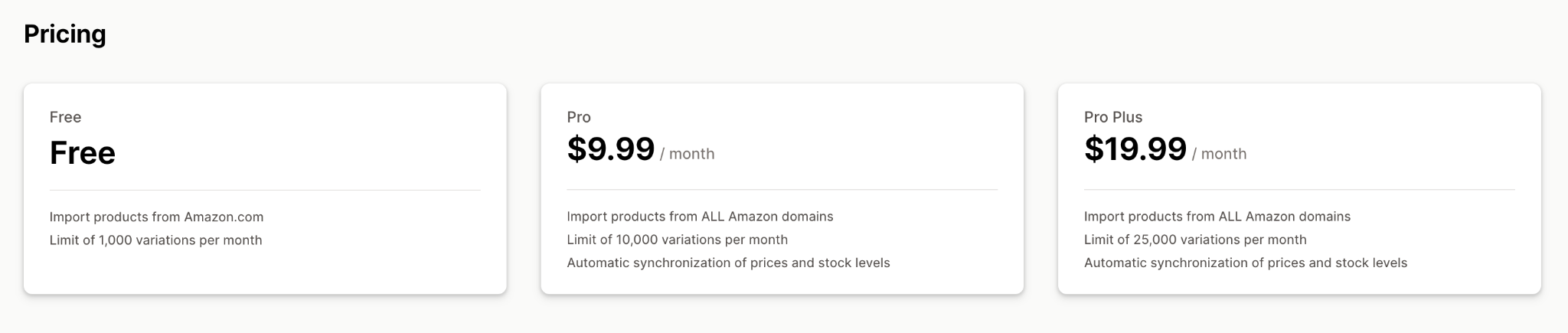
This tier is suitable if you’re just starting out and testing listings with a limited number of products at no cost.
This mid-tier plan is often sufficient for small to medium stores with moderate inventory needs.
This plan fits merchants with larger catalogs and frequent updates. All charges are billed in USD on a 30-day recurring basis.
Like most dropshipping tools, Ryviu Amazon Products Importer offers clear advantages while also having some limitations. Understanding both sides helps sellers decide whether the app fits their workflow and business scale.

Choosing the right tool depends on your business size, workflow complexity, and short-term goals, and Ryviu Amazon Products Importer is no exception.
This app is best suited for sellers who prioritize simplicity, speed, and cost efficiency in their dropshipping operations.
In particular, it works well for merchants in the following situations:
In contrast, some businesses may find the app’s feature set too limited for their operational needs.
It may not be the ideal choice for sellers who require the following:
The Ryviu Amazon Products Importer addresses one of the most tedious parts of dropshipping from Amazon: migrating product data into Shopify. Its core strengths lie in its simple import workflow, automatic syncing of prices and stock, and affordability, including a free tier that lets beginners test out product sourcing without financial risk.
However, the app should be seen as a tool within a larger dropshipping operation, not a complete solution. It doesn’t replace fulfillment systems, and its mixed user reviews suggest you should try it yourself to see if it meets your specific needs. Combined with a solid order processing strategy and customer support workflow, it can be a useful component, but not the sole foundation, of a successful Amazon-based dropshipping store.




