 New to Shopify? Free trial, then $1/month for your first 3 months. Start free trial →
 Where is your store?
Ryviu works with both – pick yours to continue.








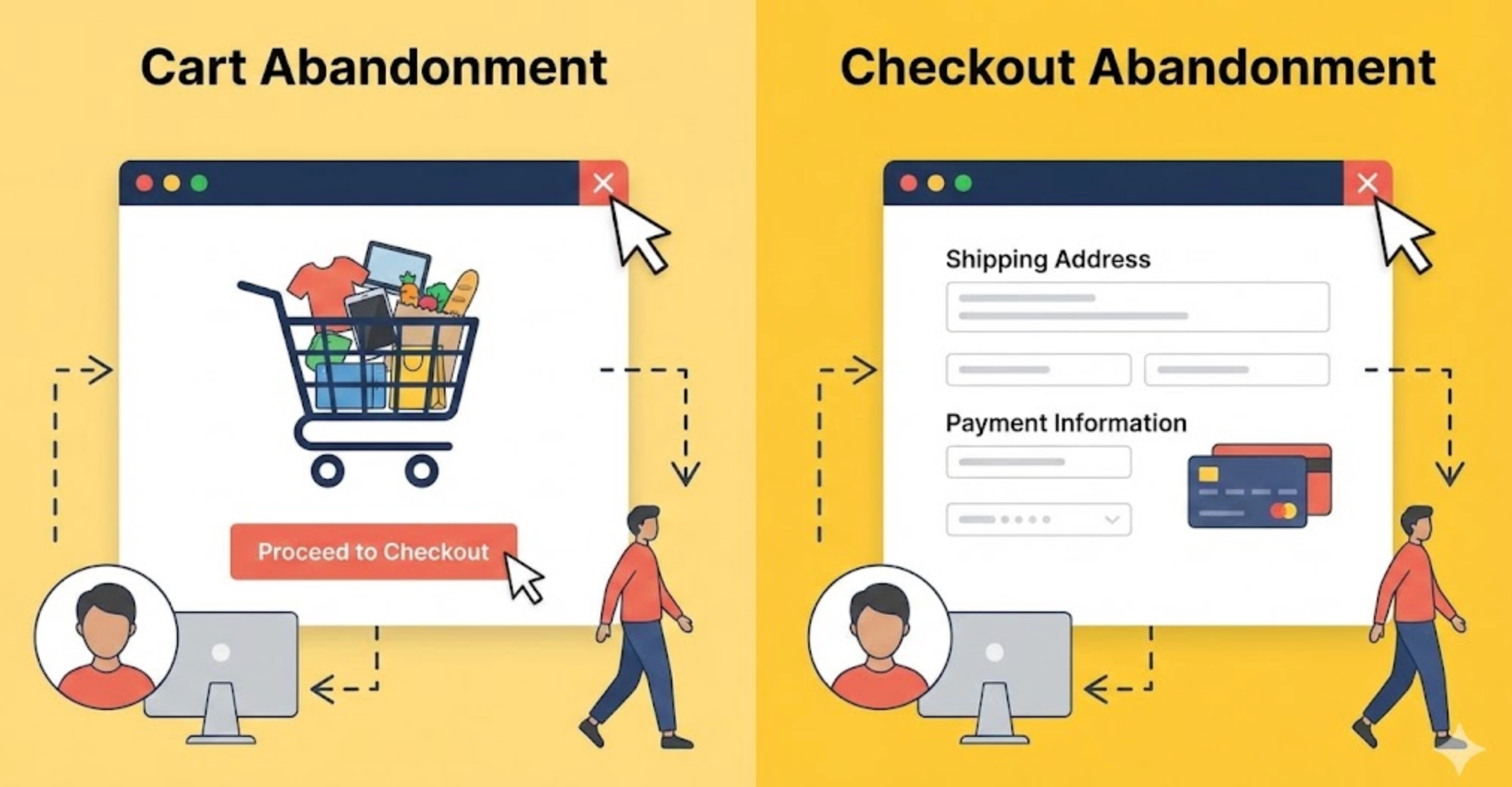
In eCommerce, attracting visitors to your store is only half the battle. The real challenge begins once shoppers start interacting with your products, and even more so when they leave without completing a purchase. Two of the most common reasons behind lost revenue are cart abandonment and checkout abandonment.
Although these terms are often grouped together, they represent different drop-off points in the customer journey and reflect different psychological and technical barriers. Treating them as the same problem can lead to ineffective optimization strategies. To truly improve conversion rates, you need to understand how they differ, why they happen, and how each one should be addressed.
Cart abandonment occurs when a shopper adds products to their shopping cart but leaves the website before initiating the checkout process. This means the customer never reaches the stage where they are asked to enter shipping details, payment information, or personal data.
At this point in the journey, shoppers are often still evaluating their options. Adding items to a cart doesn’t always indicate immediate purchase intent, it can simply be a way to bookmark products, compare prices, or calculate estimated totals.
In many cases, the cart acts like a temporary wishlist. Shoppers may plan to return later, wait for a discount, or continue researching alternatives on other websites.
Common causes of cart abandonment include:
Cart abandonment often reflects interest without urgency. The product is appealing, but the motivation to purchase isn’t strong enough yet.
Checkout abandonment happens when a shopper begins the checkout process but leaves before completing the purchase. This typically means they’ve already clicked “Checkout” and may have entered email addresses, shipping details, or even payment information.
This stage indicates high purchase intent. The customer has mentally committed to buying but encounters something that causes hesitation, frustration, or mistrust before the final step.
Unlike cart abandonment, checkout abandonment is rarely about product appeal. Instead, it’s usually tied to friction, surprises, or technical issues within the checkout experience itself.
Common causes of checkout abandonment include:
Checkout abandonment often represents lost conversions that were very close to completion, making it one of the most critical issues to address.
At the cart stage, customers are still weighing value versus cost. They are asking themselves questions like:
At the checkout stage, the questions change:
Understanding these mental shifts helps you design experiences that align with customer expectations at each point in the journey.
Combining both metrics into a single abandonment rate can mask important insights. When tracked separately, you can clearly identify whether your store struggles with:
This separation allows you to run more targeted experiments, prioritize fixes more effectively, and allocate resources where they will generate the highest return.
While both types of abandonment result in unfinished purchases, they differ significantly in timing, intent, and root cause.
Cart abandonment happens earlier in the funnel, when shoppers are still exploring. Their mindset is often casual and non-committal. They may be gathering information, comparing prices, or simply browsing without a firm intention to buy right away.
Checkout abandonment happens later, when shoppers have already decided to purchase. Their intent is much stronger, and the drop-off is usually triggered by a specific obstacle, such as cost shock, complexity, or lack of trust.
In essence:
Recognizing this difference is essential, because each problem requires a completely different optimization approach.
Cart abandonment rates are typically higher because many shoppers add items without strong buying intent. While this can inflate abandonment statistics, it doesn’t always represent a lost sale, some shoppers were never planning to buy immediately.
Checkout abandonment, on the other hand, has a direct and immediate impact on revenue. These users were on the verge of converting, and even small checkout issues can lead to significant losses.
This is why improving checkout performance often leads to faster conversion gains, while reducing cart abandonment tends to improve overall shopping experience and future purchase readiness.
Reducing cart abandonment is about nudging shoppers forward and increasing confidence before they reach checkout.
Effective strategies include:
The goal isn’t to pressure users, but to remove doubts and make the next step feel natural.
Reducing checkout abandonment requires a more technical and experience-focused approach, since shoppers are already motivated to buy.
Key improvements include:
At this stage, even small improvements can result in noticeable increases in completed purchases.
Although cart abandonment and checkout abandonment both lead to lost sales, they represent very different customer behaviors and challenges. Cart abandonment reflects hesitation and exploration, while checkout abandonment reflects readiness blocked by friction.
By understanding where shoppers drop off and why, you can design better shopping experiences, remove unnecessary barriers, and turn more high-intent visitors into paying customers.




