New to Shopify? Free trial, then $1/month for your first 3 months. Start free trial →
 Where is your store?
Ryviu works with both – pick yours to continue.








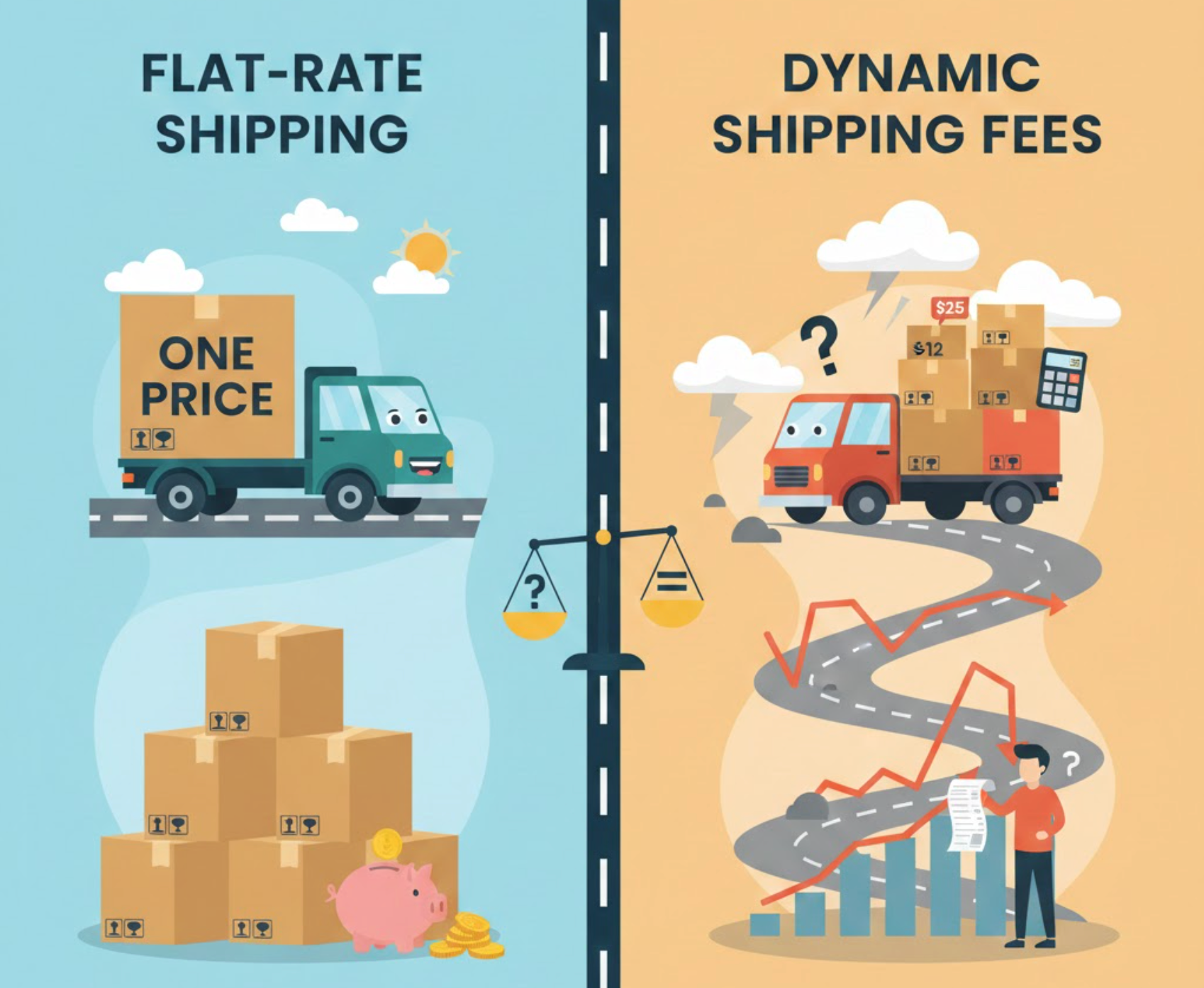
Shipping fees are one of the most influential factors in an online shopper’s decision-making process. Even when customers love a product, unexpected or confusing shipping costs can quickly lead to hesitation, or worse, cart abandonment. For store owners, shipping is equally sensitive: it directly affects profit margins, operational efficiency, and brand perception.
Among the many shipping strategies available, flat-rate shipping and dynamic shipping fees remain the two most widely used approaches. While both aim to cover delivery costs, they operate very differently and serve different business needs. Understanding how each model works, and how customers perceive them, is essential for choosing the right strategy.
This article provides a detailed, side-by-side comparison of flat-rate and dynamic shipping fees, explores their strengths and weaknesses, and helps you determine which option works better for your store.
Shipping fees are not just a logistical concern, they are deeply tied to customer psychology. Shoppers often evaluate shipping costs in relation to the product price, perceived value, and overall transparency.
Clear communication is essential. When customers understand why shipping costs what it does, they are more likely to accept it. Messaging such as “Shipping calculated based on location and package size” can help set expectations early.
Moreover, strategic incentives like free shipping thresholds can significantly increase average order value, regardless of whether flat or dynamic pricing is used underneath.
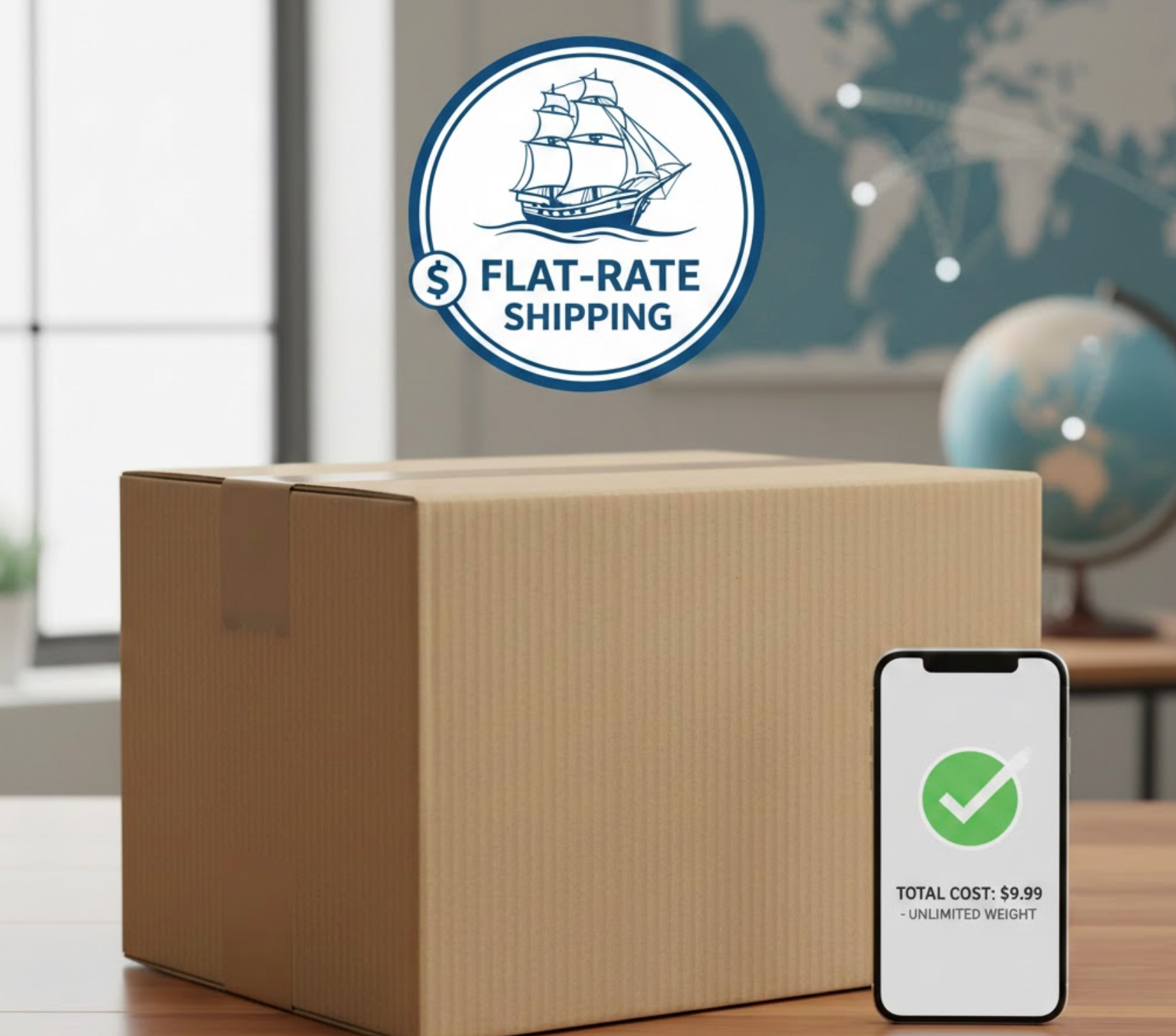
Flat-rate shipping is a pricing model where customers are charged a fixed shipping fee, regardless of how large, heavy, or far their order needs to travel. Whether a customer orders one item or several, and whether they live nearby or across the country, the shipping cost remains the same.
From a customer perspective, flat-rate shipping feels straightforward and predictable. Shoppers immediately understand what they are paying for, which reduces uncertainty during checkout. From a merchant’s point of view, this model prioritizes simplicity and consistency over precision.
One of the main reasons merchants adopt flat-rate shipping is its psychological appeal. Customers often prefer certainty, especially when comparing multiple stores. Knowing the shipping cost upfront removes a major friction point and allows shoppers to focus on the product itself.
In addition, flat-rate shipping significantly reduces operational complexity. Store owners don’t need to integrate multiple carriers or manage real-time calculations. Once the rate is set, it applies universally, making it easier to scale without constantly adjusting shipping rules.
However, this simplicity also comes with trade-offs, especially as product catalogs grow or shipping zones expand.
While flat-rate shipping is easy to manage, it does not always reflect real-world shipping costs. For lightweight or local orders, the flat fee may appear reasonable or even attractive. But for heavier products or long-distance shipments, the actual carrier cost may exceed what the customer pays.
Over time, these discrepancies can eat into profit margins. Additionally, some customers may feel the pricing is unfair, particularly when ordering small items and being charged the same shipping fee as someone ordering much more.
As a result, flat-rate shipping works best when shipping costs are relatively predictable and consistent across orders.
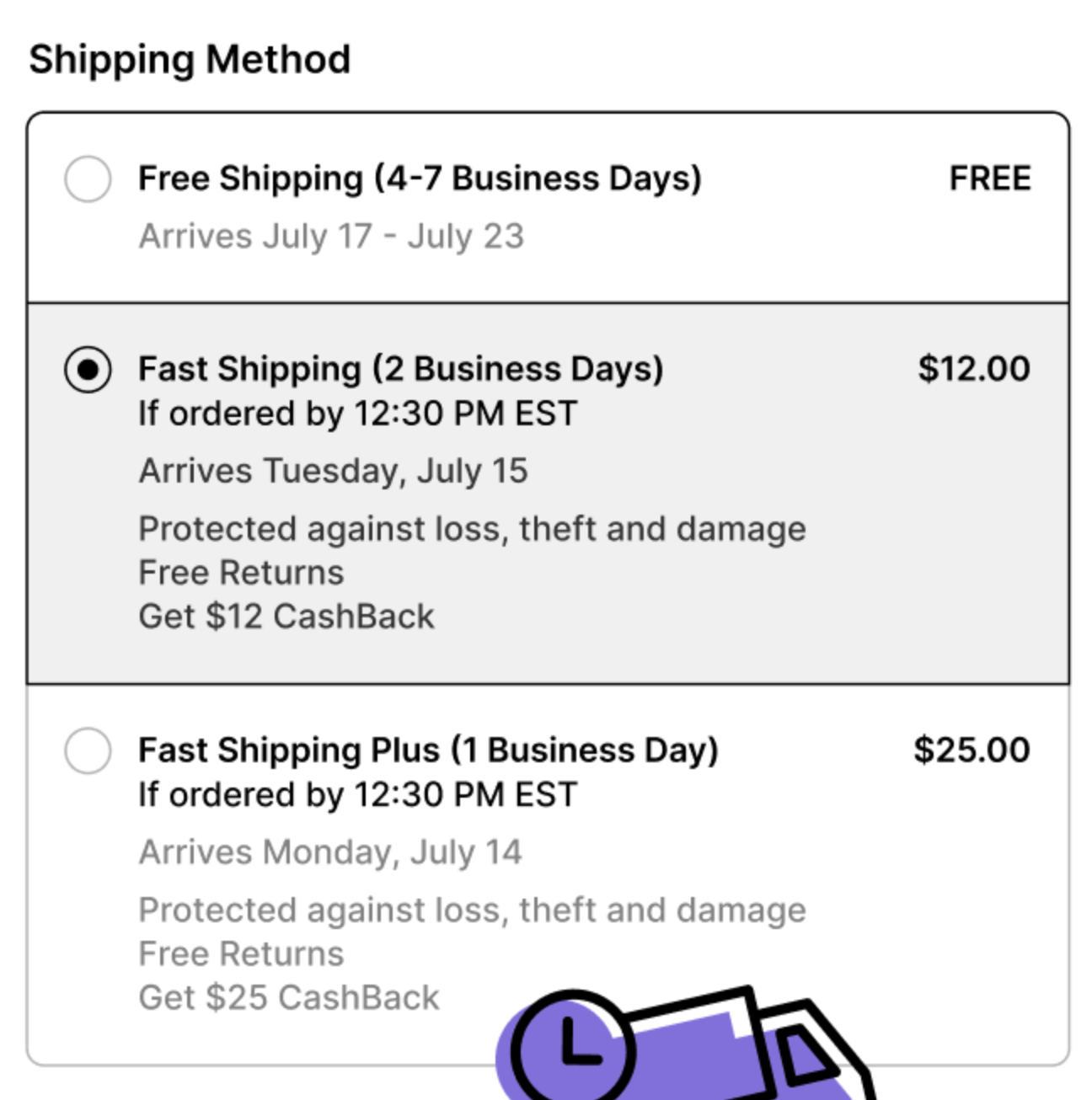
Dynamic shipping fees, also known as real-time or calculated shipping, adjust automatically based on the specifics of each order. These fees take into account factors such as product weight, package dimensions, destination, carrier pricing, and delivery speed.
Unlike flat-rate shipping, dynamic pricing aims to mirror actual shipping costs as closely as possible. This makes it a more precise and cost-conscious option for merchants with diverse product ranges.
One of the biggest advantages of dynamic shipping is accuracy. Instead of estimating or averaging shipping costs, merchants charge customers what the carrier actually charges. This significantly reduces the risk of underpricing shipping and protects profit margins.
Dynamic shipping also introduces flexibility. Customers can often choose between multiple delivery options, such as standard, expedited, or express shipping. This empowers shoppers to balance cost and speed based on their personal preferences.
As product catalogs expand and shipping destinations diversify, dynamic shipping becomes increasingly valuable.
Despite its accuracy, dynamic shipping can introduce complexity into the checkout experience. Customers may not know the shipping cost until they reach the final stage of checkout, which can cause hesitation, especially if the price is higher than expected.
From a technical standpoint, dynamic shipping requires more setup. Merchants need to integrate carrier services, define packaging rules, and ensure product weights and dimensions are accurate. Any errors in data can lead to incorrect pricing.
For some stores, the added complexity may outweigh the benefits, particularly if shipping costs don’t vary significantly between orders.
Choosing between flat-rate and dynamic shipping requires evaluating several key aspects of how shipping impacts both customers and business operations. While these two models serve the same purpose, they differ greatly in how they handle cost transparency, operational effort, and long-term scalability. The comparison below highlights their differences across the most important dimensions.
In practice, many successful eCommerce stores combine both models, using flat rates where simplicity matters most and dynamic fees where cost accuracy is essential.
Flat-rate shipping is most effective in scenarios where shipping costs are relatively stable and predictable. If your products are similar in size and weight, a single flat fee can cover most delivery situations without significant financial risk.
This model also works well for brands focused on conversion optimization. By removing uncertainty at checkout, flat-rate shipping encourages faster decision-making and reduces abandonment rates.
Additionally, flat-rate shipping is ideal for newer or smaller stores that want to minimize operational overhead while building customer trust.
Dynamic shipping fees are better suited for stores with a wide range of products, especially when weights, sizes, and shipping destinations vary significantly. In these cases, charging a flat fee may lead to losses on some orders and overcharging on others.
This model is particularly effective for merchants who prioritize profit protection and long-term scalability. As order volume grows, dynamic shipping ensures that each shipment remains financially sustainable.
Dynamic fees also work well for international shipping, where carrier costs fluctuate widely depending on destination and service level.
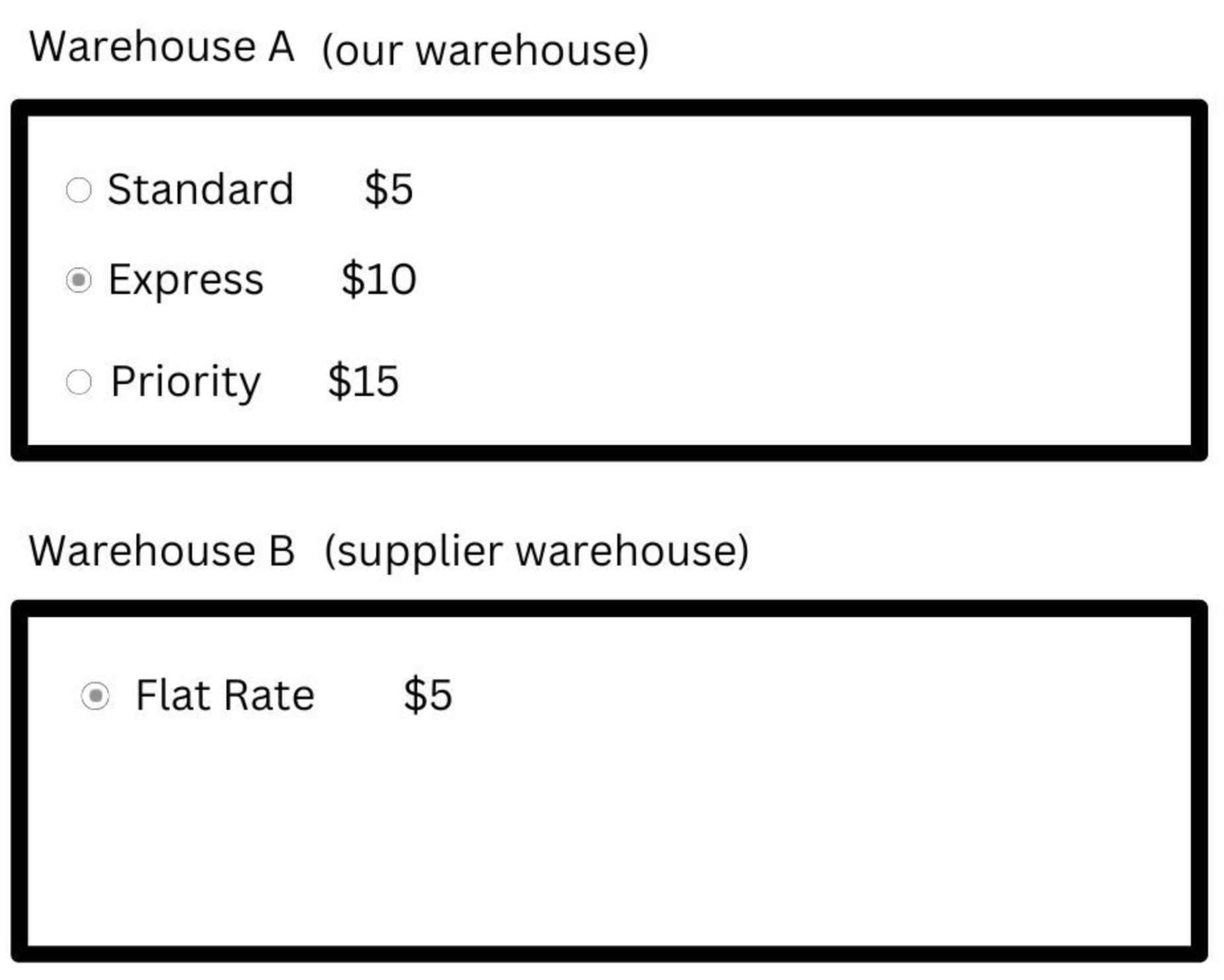
For many businesses, the best solution isn’t choosing one model over the other—but combining them strategically. A hybrid shipping approach allows merchants to balance simplicity with accuracy.
For example, stores might offer flat-rate shipping for domestic orders while using dynamic rates for international deliveries. Others may apply flat rates to lightweight products and dynamic fees to heavier or oversized items.
This blended strategy provides flexibility, improves customer experience, and helps maintain healthy margins without overcomplicating the checkout process.
There is no universal answer to whether flat-rate or dynamic shipping works better. Each model serves different business goals and customer expectations.
Flat-rate shipping excels in simplicity, predictability, and conversion-focused strategies. Dynamic shipping stands out for accuracy, fairness, and scalability. The most successful stores evaluate their product mix, shipping behavior, and customer preferences, and often adopt a hybrid approach that evolves over time.
By aligning your shipping strategy with both operational realities and customer psychology, you can turn shipping from a pain point into a competitive advantage.