New to Shopify? Free trial, then $1/month for your first 3 months. Start free trial →
 Where is your store?
Ryviu works with both – pick yours to continue.








A UX optimization roadmap is a structured plan that helps teams improve user experience in a deliberate, data-driven way. Instead of reacting to isolated usability complaints or subjective feedback, a roadmap creates a clear sequence of improvements tied to real user behavior and business goals. It helps teams decide what to fix first, what to test later, and what impact each change is expected to have.
When built correctly, a UX optimization roadmap turns UX work into a continuous improvement system rather than a one-time redesign effort.
UX optimization only creates value when it supports broader business objectives. Without clearly defined goals, teams risk making improvements that feel useful but fail to move meaningful metrics. This step establishes a shared understanding of what success looks like and ensures UX efforts contribute directly to outcomes such as growth, retention, or efficiency.
Clear goals also help teams make better decisions later in the roadmap. When trade-offs arise, goals act as a reference point that guides prioritization and keeps everyone aligned.
Start by grounding your roadmap in concrete outcomes:
A UX roadmap should be built on evidence rather than assumptions. Users often behave differently than teams expect, and relying on intuition alone can lead to misplaced priorities. Collecting data from multiple sources helps uncover hidden friction points and validates which issues truly matter.
Centralizing UX data is equally important. When insights are scattered across tools or teams, patterns are harder to detect, and decisions become fragmented. A single, shared view of UX data enables more confident planning.
Pull insights from different perspectives to build a complete picture:
Not every UX issue deserves immediate attention. Some problems create mild inconvenience, while others prevent users from completing essential tasks. Identifying high-impact problems ensures the roadmap focuses on issues that meaningfully affect both user success and business performance.
This step requires looking beyond surface-level issues and understanding where friction intersects with critical user goals. Addressing these areas first typically produces faster and more visible improvements.
Look for problems that directly block progress or create friction:
Framing UX findings as “problems” can limit solution thinking and create a negative tone. Reframing them as opportunities encourages teams to focus on how the experience could be improved rather than what went wrong. This approach also makes UX recommendations easier to communicate to stakeholders.
Actionable opportunities clearly describe the desired improvement and the value it creates for users. They bridge the gap between insight and execution.
Rephrase friction points into improvement opportunities:
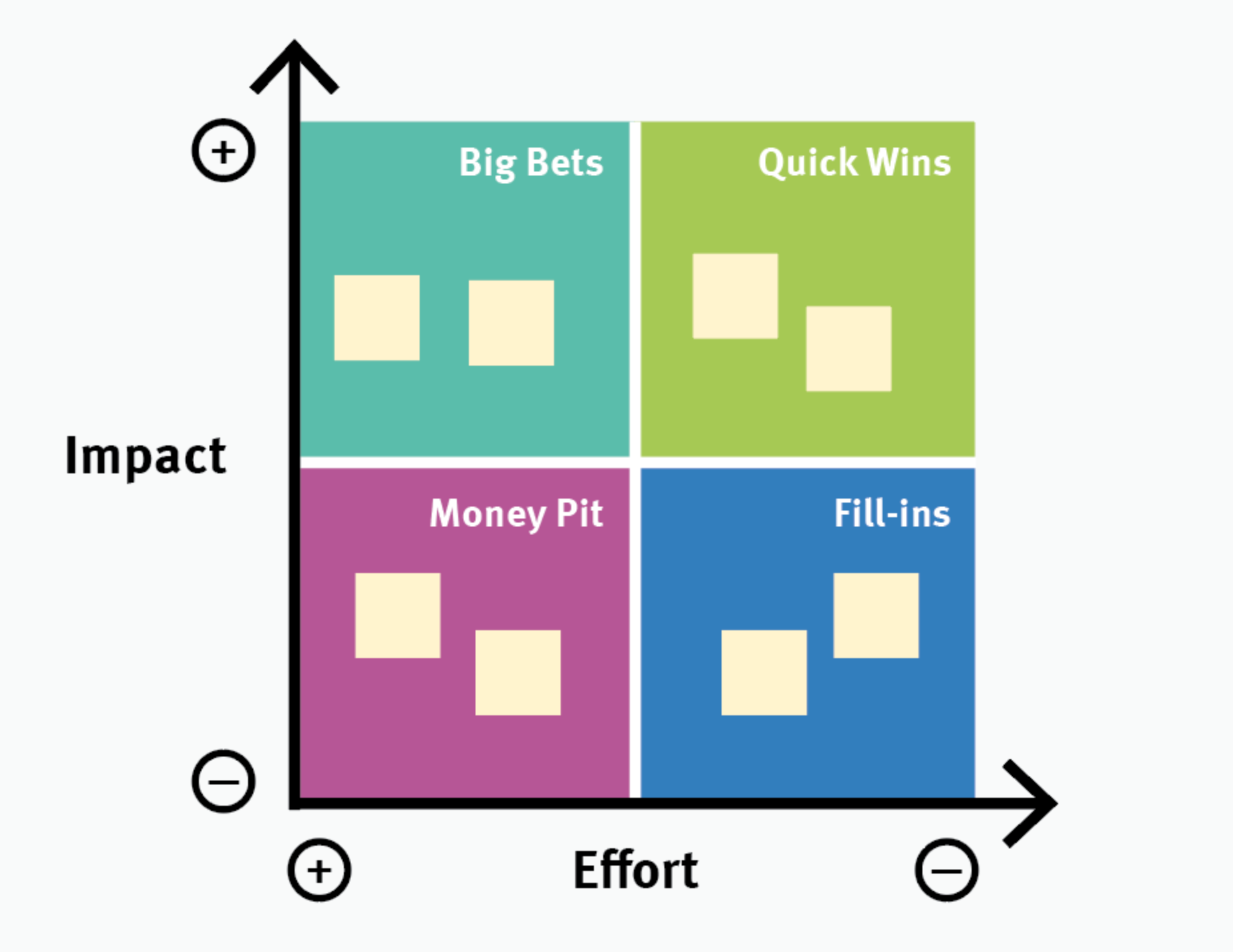
Once opportunities are identified, teams must decide what to work on first. Without prioritization, UX roadmaps quickly become unrealistic wish lists. Strategic prioritization ensures limited resources are invested in initiatives that deliver the greatest impact.
This step introduces objectivity into decision-making. Instead of relying on opinions or urgency alone, teams evaluate initiatives based on value, effort, and confidence.
Use structured methods to rank initiatives objectively:

UX optimization works best when treated as a learning process rather than a set of permanent decisions. Defining initiatives as experiments allows teams to test ideas, gather evidence, and iterate based on results. This reduces risk and builds confidence in design changes.
Clear hypotheses also help teams understand why a change is being made, not just what is being changed. This clarity improves collaboration and post-launch evaluation.
Every roadmap item should answer four key questions:
A roadmap must be executable, not just aspirational. Sequencing initiatives ensures that work progresses in a logical order and respects technical, design, and organizational constraints. Poor sequencing can stall progress or overwhelm teams.
Scheduling also helps balance short-term improvements with long-term investments. A well-paced roadmap maintains momentum while allowing room for deeper structural changes.
Plan the roadmap timeline with real-world constraints in mind:
UX optimization is a cross-functional effort. Design decisions often depend on development feasibility, marketing messaging, and customer feedback. Collaboration ensures UX improvements are realistic, aligned, and effectively implemented.
A shared roadmap helps teams understand how their work contributes to the overall experience. It also reduces friction and rework during execution.
Create alignment by involving the right teams early:

Launching a UX change is only the beginning. Measurement turns implementation into insight and allows teams to understand whether a change actually improved the experience. Without measurement, optimization becomes guesswork.
Continuous iteration ensures the roadmap evolves based on real outcomes rather than assumptions. Each result feeds learning back into the next planning cycle.
Track performance using both numbers and user signals:
User behavior, business priorities, and products change over time. A rigid roadmap quickly becomes outdated. Flexibility allows teams to adapt while staying focused on long-term improvement.
Treating the roadmap as a living document encourages ongoing refinement and responsiveness to new insights.
Review and adjust the roadmap regularly by:
A UX optimization roadmap provides structure, clarity, and direction to continuous improvement efforts. By defining clear goals, grounding decisions in data, and prioritizing initiatives strategically, teams can improve user experience in a measurable and sustainable way.
More than a planning artifact, a well-maintained roadmap becomes a strategic asset, guiding teams toward better decisions, stronger outcomes, and user experiences that steadily improve over time.