New to Shopify? Free trial, then $1/month for your first 3 months. Start free trial →
 Where is your store?
Ryviu works with both – pick yours to continue.









Scroll depth data provides insight into how far users move down a page before slowing, pausing, or leaving. While traditional metrics such as page views or bounce rate indicate whether users arrive, scroll depth reveals how they interact once they are there. It bridges the gap between traffic metrics and real content consumption.
As websites increasingly rely on long pages, storytelling layouts, and mobile-first experiences, understanding scroll behavior has become essential. Without scroll depth analysis, page layouts are often built on assumptions about attention, patience, and interest. Scroll depth data replaces those assumptions with evidence, enabling designers and marketers to create layouts that align with real user behavior.
This article explores scroll depth in detail and explains how to use it strategically to improve page layouts, strengthen content hierarchy, and guide users more effectively from entry to conversion.
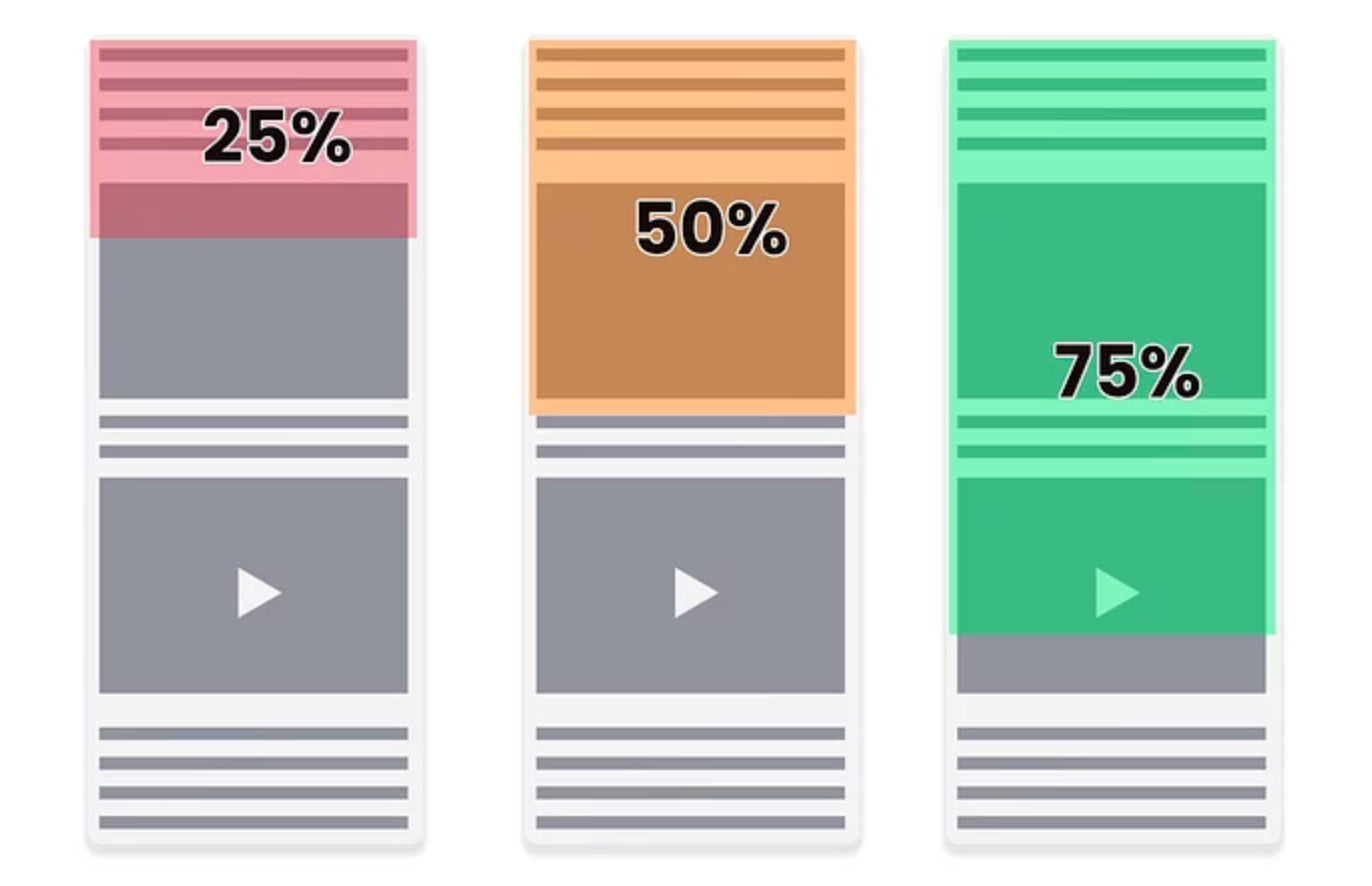
Scroll depth data measures how far users scroll down a page during a session. It is most commonly recorded as percentages of page height, such as 25%, 50%, 75%, and 100%, but can also be tracked using pixel depth or continuous scrolling metrics.
At a basic level, scroll depth answers a simple question: How much of your page is actually seen? However, its real value lies in revealing patterns of attention and disengagement.
More specifically, scroll depth data helps you understand:
Because scrolling is a natural, almost unconscious behavior, scroll depth provides a more honest picture of engagement than clicks alone.
A well-designed page layout is not just visually appealing, it actively supports comprehension and decision-making. Scroll depth data shows whether your layout is doing that job effectively.
Without scroll depth insights, teams often rely on intuition, design trends, or internal preferences. As a result, important information may be placed too far down the page, while low-impact elements occupy premium space.
Scroll depth data introduces accountability into layout design by revealing:
Because layout directly shapes the reading path, scroll depth becomes a foundational metric for optimizing structure rather than surface-level design.
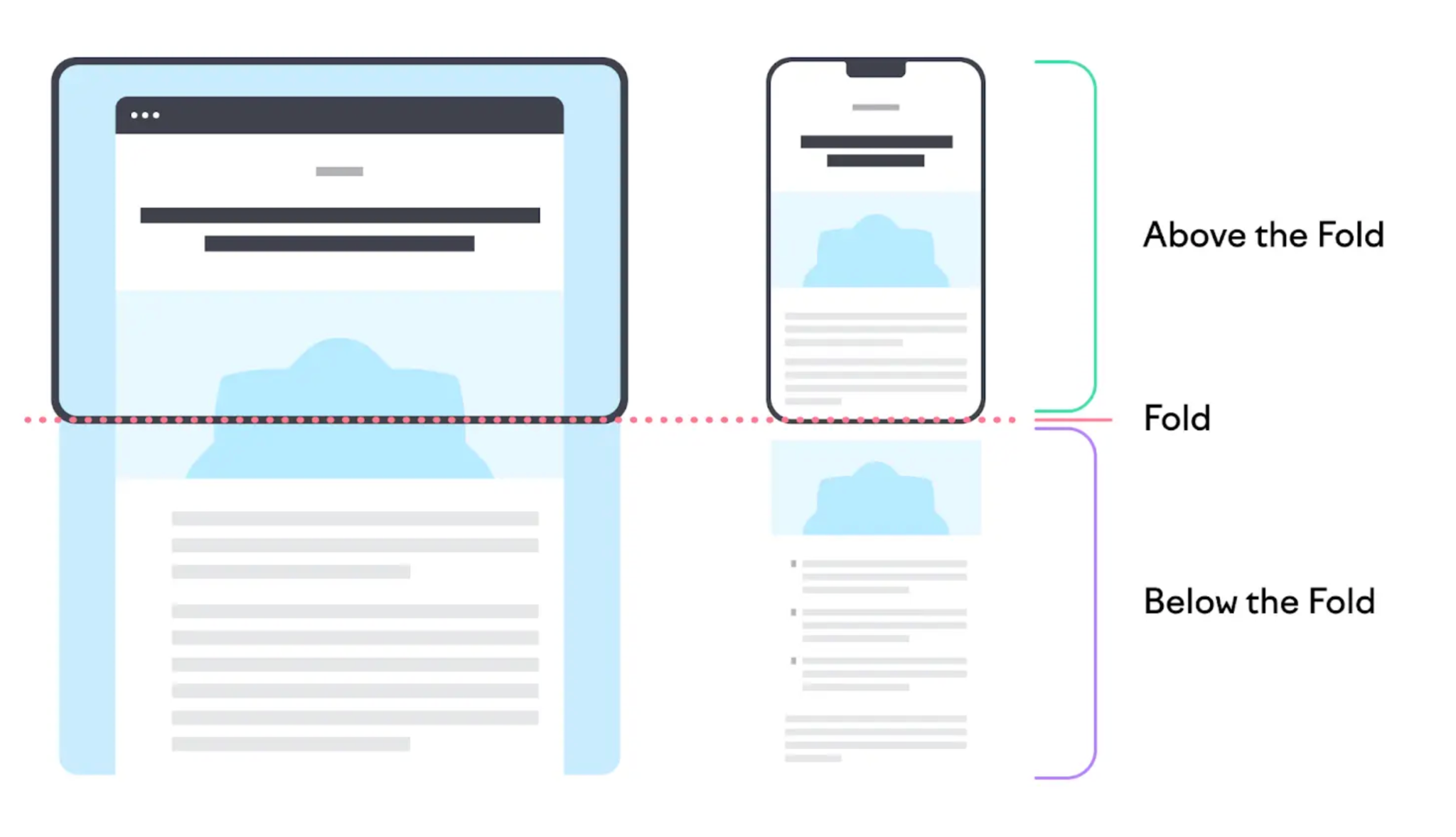
The idea of “above the fold” originated from print media, but in digital environments it is increasingly misleading. Screen sizes vary widely, and user behavior differs significantly across devices.
Scroll depth data allows you to redefine “above the fold” based on behavior instead of screen dimensions. By analyzing how quickly users scroll and where drop-offs occur, you can identify what truly functions as the first meaningful section of your page.
For example, if a large percentage of users scroll almost immediately, it suggests that the initial viewport does not provide enough clarity or motivation. On the other hand, if many users disengage before reaching 25%, it indicates that critical information may be missing or unclear early on.
This insight leads to more informed layout decisions, such as:
Scroll depth becomes even more informative when combined with scroll speed. Not all scrolling indicates engagement, sometimes users scroll quickly to locate specific information or confirm relevance.
Fast scrolling typically suggests scanning behavior, while slower scrolling indicates deeper reading or evaluation. When these patterns are mapped to layout sections, they provide clues about content effectiveness.
For instance, if users slow down consistently in one section, that area likely delivers value or answers key questions. Conversely, sections that are rapidly passed may lack relevance or visual structure.
To improve layouts using scroll speed insights:
By aligning layout density with reading behavior, pages feel more intuitive and less mentally demanding.

Drop-off points, where a significant percentage of users stop scrolling, are among the most actionable insights scroll depth data provides. These moments often indicate friction rather than lack of interest.
Layout-related friction commonly stems from:
Once a drop-off zone is identified, it becomes easier to diagnose layout issues and test targeted improvements.
Effective layout adjustments include:
Rather than redesigning entire pages, scroll depth allows for precise, low-risk refinements.
Many pages are structured according to internal logic rather than user priorities. Scroll depth data reveals whether that structure aligns with real interest.
If high-value sections are placed too low and few users reach them, the layout is working against your goals. In contrast, sections that consistently receive attention deserve more prominent placement.
By analyzing scroll depth patterns, you can:
This approach ensures that the most important messages are delivered while users are still engaged.
Calls-to-action are most effective when they appear at moments of readiness. Scroll depth data helps identify those moments.
Instead of relying on fixed positions, scroll-based CTA placement adapts to user behavior. For example, if users consistently stop scrolling after a benefits section, placing a CTA immediately afterward increases visibility and relevance.
Scroll-informed CTA strategies include:
This ensures CTAs feel timely rather than intrusive.
Page length alone does not determine success; structure does. Scroll depth data clarifies whether users perceive a page as valuable or exhausting.
Different page types require different scroll expectations:
If users rarely scroll past a certain depth, it may signal information overload or unclear prioritization.
Using scroll depth, you can decide whether to:

Mobile users scroll differently from desktop users. They tend to scroll faster, abandon sooner, and rely more heavily on visual cues.
Segmenting scroll depth data by device reveals whether your layout adapts effectively to smaller screens. Often, mobile drop-offs occur not because of content quality, but because of layout density.
Mobile-specific layout improvements include:
A mobile-optimized layout is shaped by scroll behavior, not just responsive design rules.
Scroll depth is most powerful when interpreted alongside other engagement signals.
For deeper understanding, combine it with:
Together, these metrics reveal not just where users scroll, but why it matters.
Scroll depth optimization is an ongoing process rather than a one-time fix. As content evolves and user expectations change, layouts must adapt accordingly.
A sustainable optimization cycle includes:
Over time, this process leads to layouts that feel natural, efficient, and user-centered.
Scroll depth data transforms page layout decisions from guesswork into strategy. It reveals how users truly experience your content, where attention fades, and which sections deserve priority.
By using scroll depth insights thoughtfully, you can design layouts that respect user behavior, reduce friction, and guide visitors toward meaningful outcomes. When layouts align with how people naturally scroll, engagement improves, and so do results.